Commercial · Woolwich
Panic & Exit Hardware
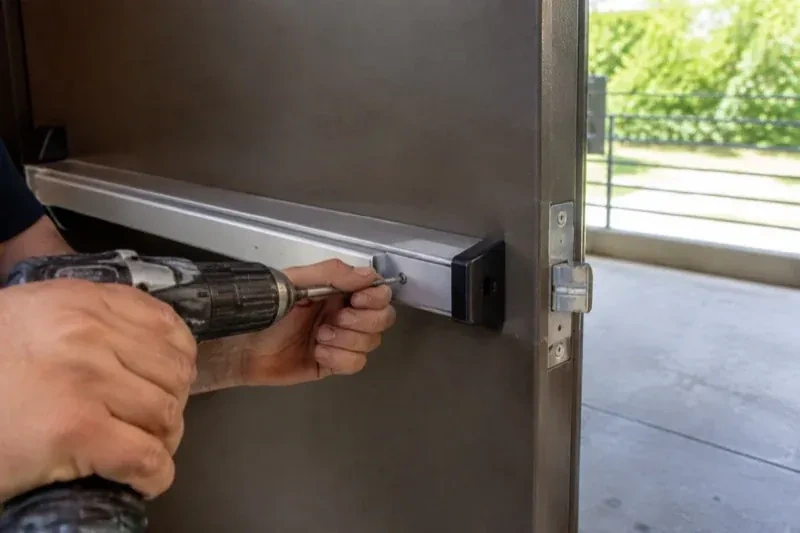
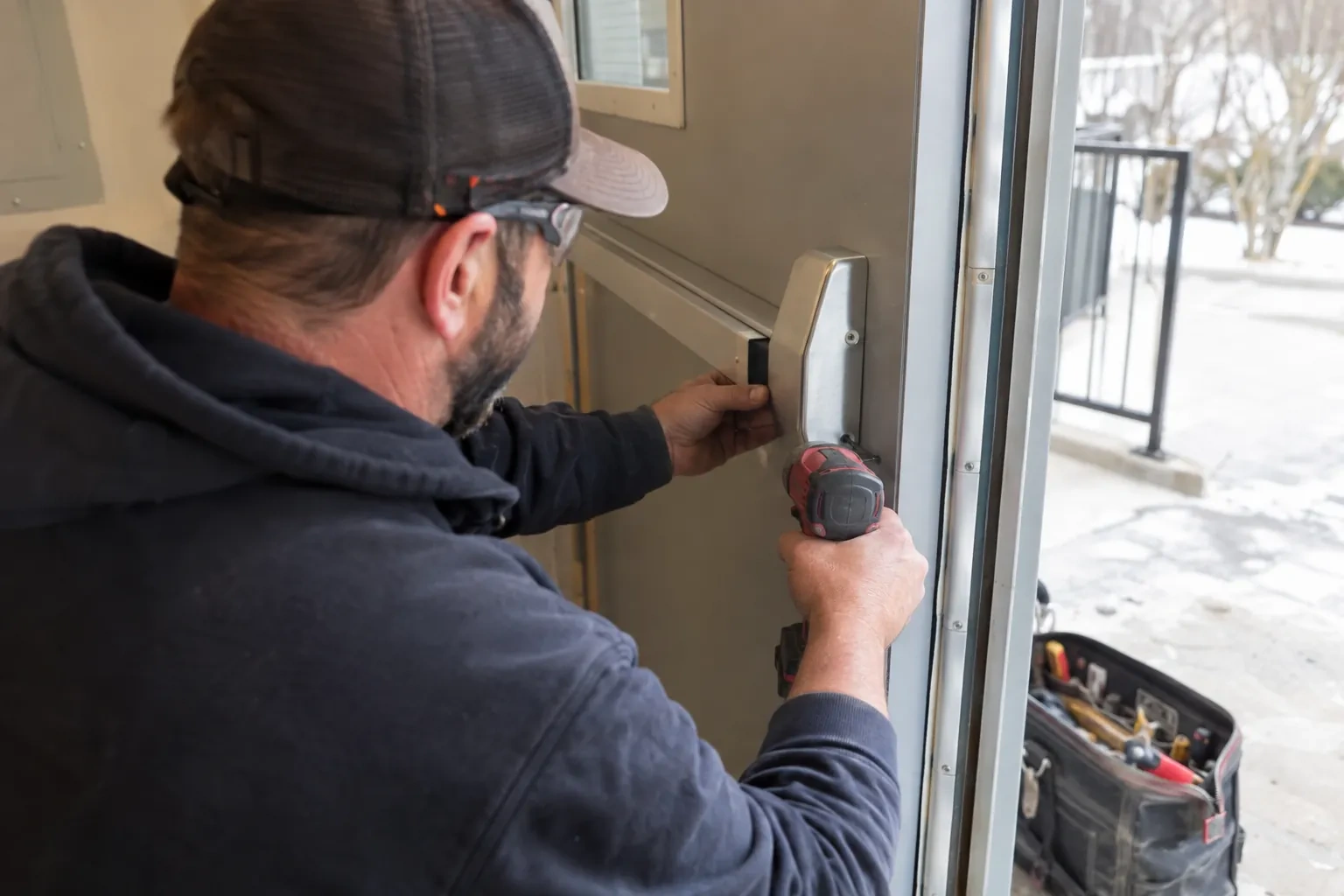
The fire inspector's note is blunt: the banquet hall's second exit still turns on a deadbolt, and the crowd it is rated to hold needs a door that opens under one motion, no key involved.
In plain words
The visit ends with a record, not just a working door. Every device fitted is logged with its type, its rating, the force and latch checks it passed, and who now holds the dogging key. That record is what a fire inspector, an insurer or a new property manager asks for later, and it is far easier to hand over on the day of installation than to reconstruct afterward from memory of what went on which door.
How the visit goesThe fire inspector's note is blunt: the banquet hall's second exit still turns on a deadbolt, and the crowd it is rated to hold needs a door that opens under one motion, no key involved.
Panic & Exit Hardware
How the visit goes
What the access-control side of the door needs
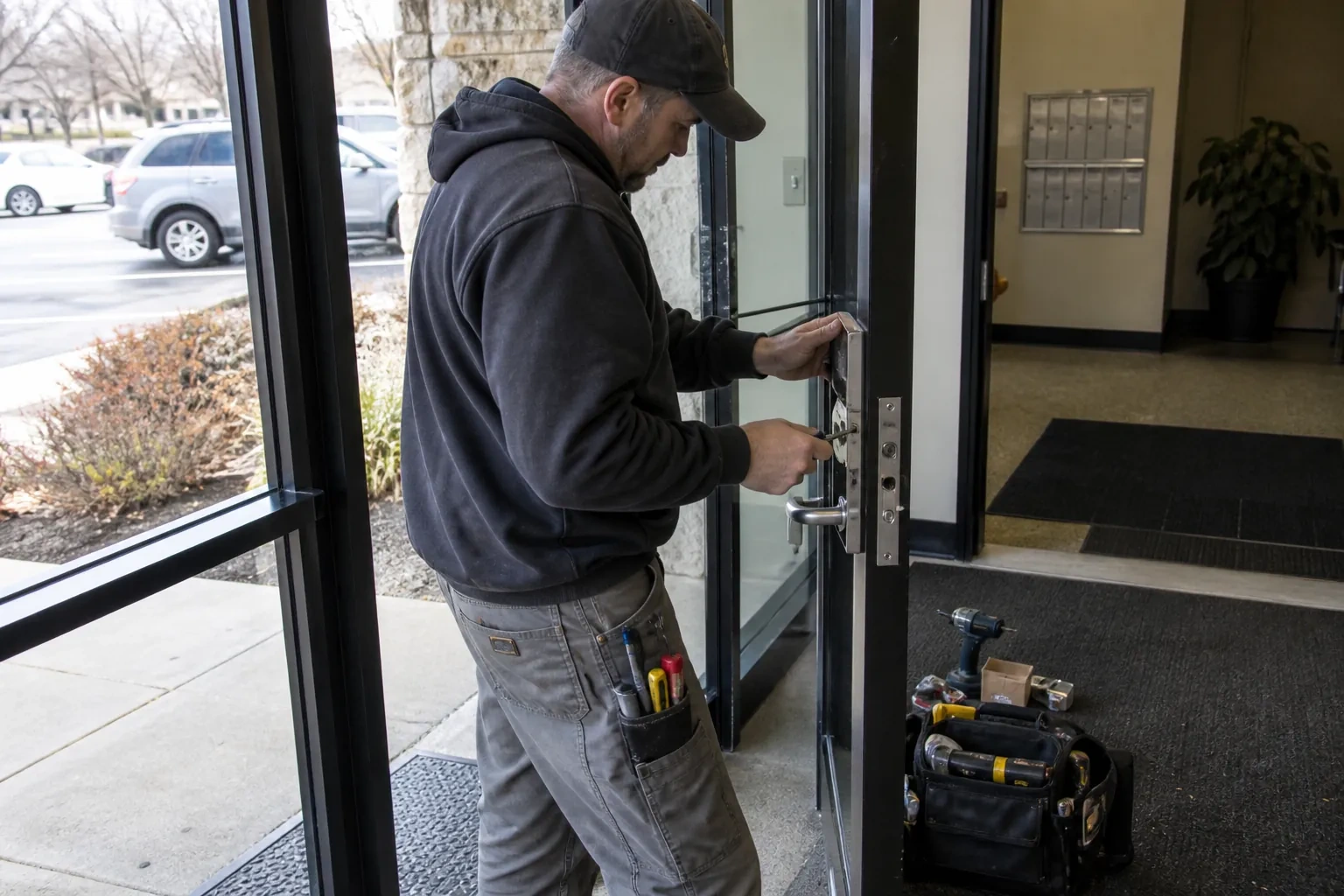
When a card reader, keypad or intercom is part of the plan, the assessment includes a conversation about the exit side of the same door: does the reader need a request-to-exit signal so the panel knows someone left rather than forced the door, and does the door need electric latch retraction so it can be released remotely without ever compromising the crossbar's push-to-exit function. These questions are answered before the device is ordered, because retrofitting an electrified function onto hardware chosen without it in mind rarely goes cleanly.
Adding electrified functions
Where the plan includes access control or an alarm, the wiring is run and terminated to the device without touching its mechanical exit function: a request-to-exit switch reports that the pushpad or crossbar was actuated, electric latch retraction lets an authorized signal release the latch for entry, and an alarm module sounds locally when the crossbar is used. On a fire-rated opening, electric latch retraction is arranged to relatch automatically the instant a fire-alarm signal comes in, since a fire door has to keep its active latch and cannot rely on a mechanical dogging function to do that.
Electrified functions folded into the building's other systems
Any request-to-exit signal, latch retraction or alarm added during the visit now does its own specific job rather than one combined function: an alarm module can sound locally on its own power the moment the crossbar is used, latch retraction lets an authorized signal release the latch for entry, and a request-to-exit signal tells the access-control panel that the pushpad was actuated. None of them alone proves who passed through or from which side, and the exit function itself remains entirely mechanical underneath, so a power interruption still leaves the door able to be pushed open by hand from the inside.
Panic & Exit Hardware
In the van
Request-to-exit switch
Force gauge
Astragal and mullion hardware
Strike and reinforcement
Through-fixings and mounting hardware
Panic & Exit Hardware
What affects the quote
Access-control integration
Where the door ties into an existing access-control panel, coordinating the exit hardware's signals with that system takes planning with whoever maintains it, which the quote accounts for separately from the device itself.
Condition of the existing hardware
A device that only needs adjustment, cleaning and new fasteners costs less in labour than removing a seized or badly worn device and fitting a replacement in its place.
New preparation or existing cut-outs
A door with no prior hardware needs new holes cut and reinforced to the device's template. A door already prepared for a similar device, even an old one, is often a simpler fit with less new drilling.
What to have ready
- Do you want outside entry by pull, lever or keyed cylinder?
- Which doors are involved, and are any of them fire-rated?
- Does any door already have a hasp, padlock or extra deadbolt fitted?
Panic & Exit Hardware: questions
QuestionsCan a padlock or extra deadbolt stay on a door that has this hardware?
No additional fastening should stay on an exit door that does not release the same way the primary device does. A hasp, padlock or separate deadbolt added at some point for extra security is a common finding on an older door, and removing or replacing it with something that releases under the same push is part of bringing that opening back to a single, reliable exit.
What counts as panic hardware?
Panic hardware is a door-latching device, usually a crossbar or touchpad running most of the door's width, that releases the latch the moment someone pushes on it from the inside. It is built and tested so a light, even push anywhere along the bar opens the door, which is why it is chosen for doors serving rooms with enough people that fumbling for a key during an exit is not acceptable.
How high should the crossbar or touchpad be mounted?
Exit-device makers publish a mounting range for their own models, and in practice a crossbar or touchpad sits no higher than about 1200 mm above the finished floor. The locksmith sets the hardware inside the maker's range and below that ceiling, allowing for anyone in the space who needs a lower reach, a wheelchair user or a shorter staff member among them.
Related services
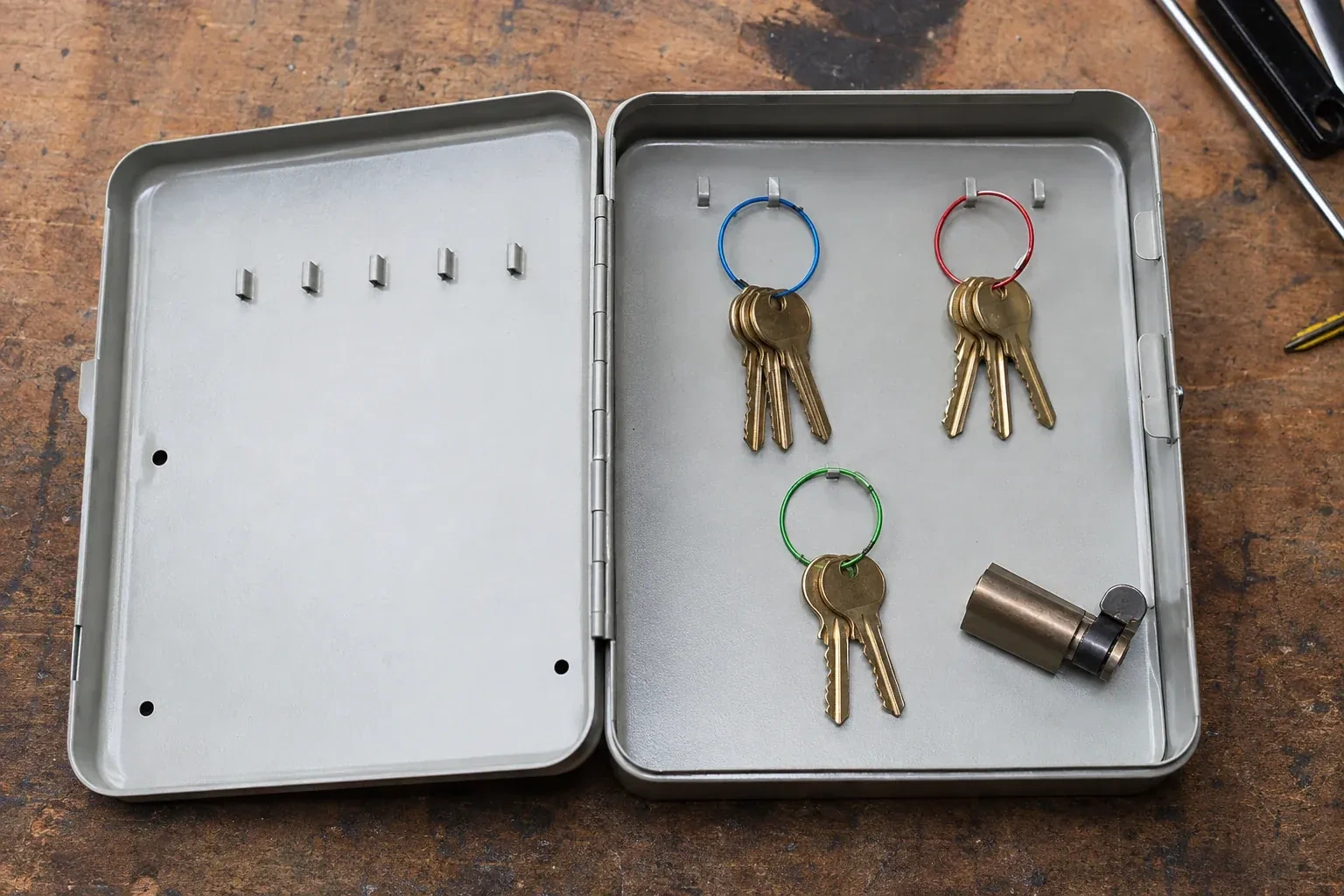
- Master Key System DesignA dental office wants the front desk to lock up at night without ever holding a key to the room where patient records and controlled supplies are stored.
- Access Control InstallationHead office wants a record of who opens the branch and when, tied to an actual name rather than a shared code scrawled on a sticky note taped under the till.
- Commercial-Grade Lock ReplacementThe kitchen delivery door gets shouldered open more than a hundred times a shift, and lately the latch slips past the strike plate instead of catching it on the first push.