Change or rekey · Woolwich
Vintage Mortise Lock Service
Someone painted the door years ago without removing the hardware.
In plain words
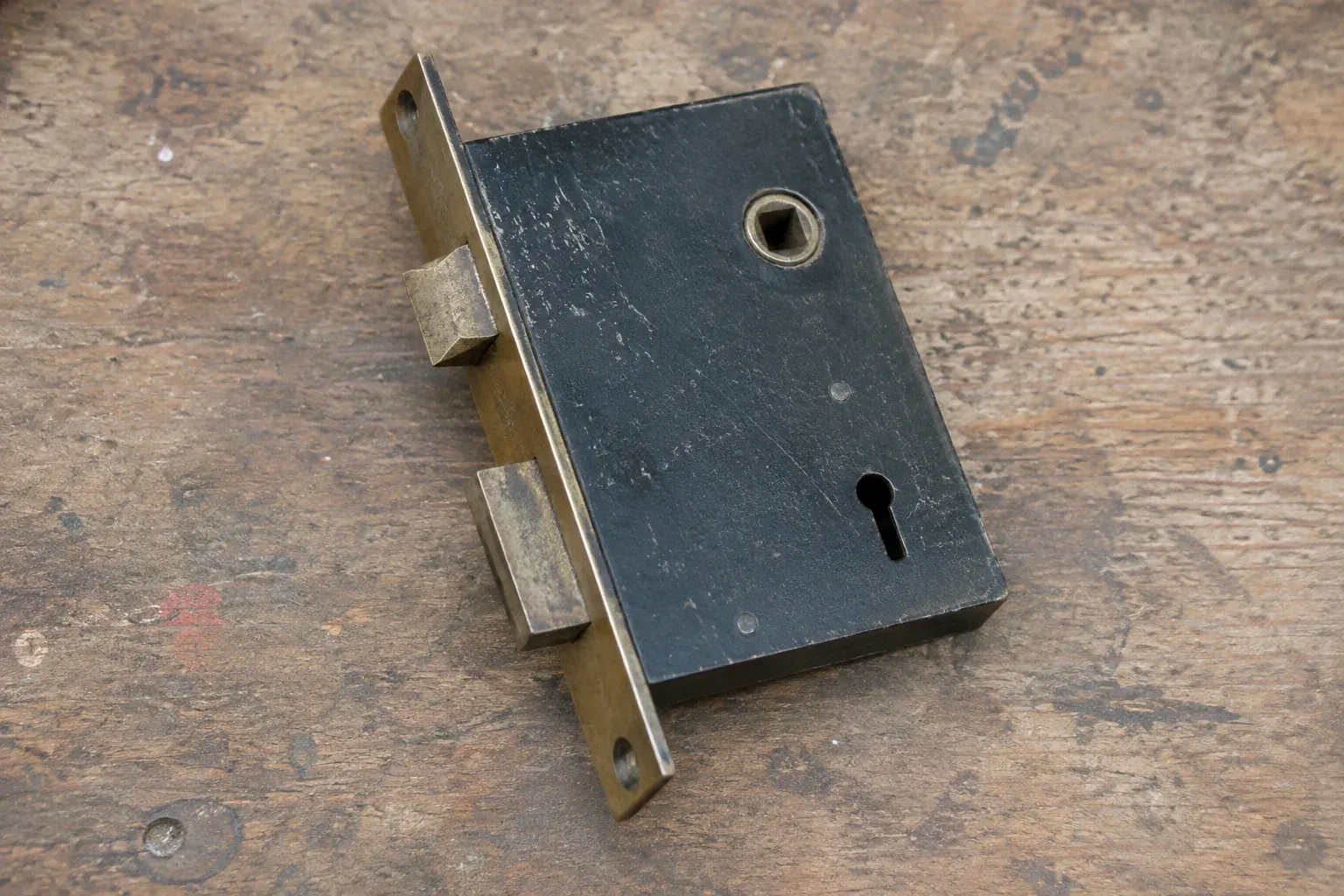
Servicing the original lock is usually the better choice for an older home, for practical reasons as much as sentimental ones. Cutting a period door for a modern cylindrical lockset means boring a large hole through the stile and leaves the old mortise to be filled; a repaired mortise case avoids all of that. Where the home is a designated heritage property, keeping the hardware may also be what the municipality expects. The service treats the door as something to preserve: minimal disturbance, parts matched to the original, a strike adjusted rather than replaced, and the old lock left running smoothly for decades to come.
How the visit goesThe key turns freely in the round cylinder on the door, all the way around and back, without the bolt shifting at all. The cylinder itself wobbles slightly when you press it, as if it has come loose inside the door.
Vintage Mortise Lock Service
How the visit goes
Repair, replacement cylinder or replacement case
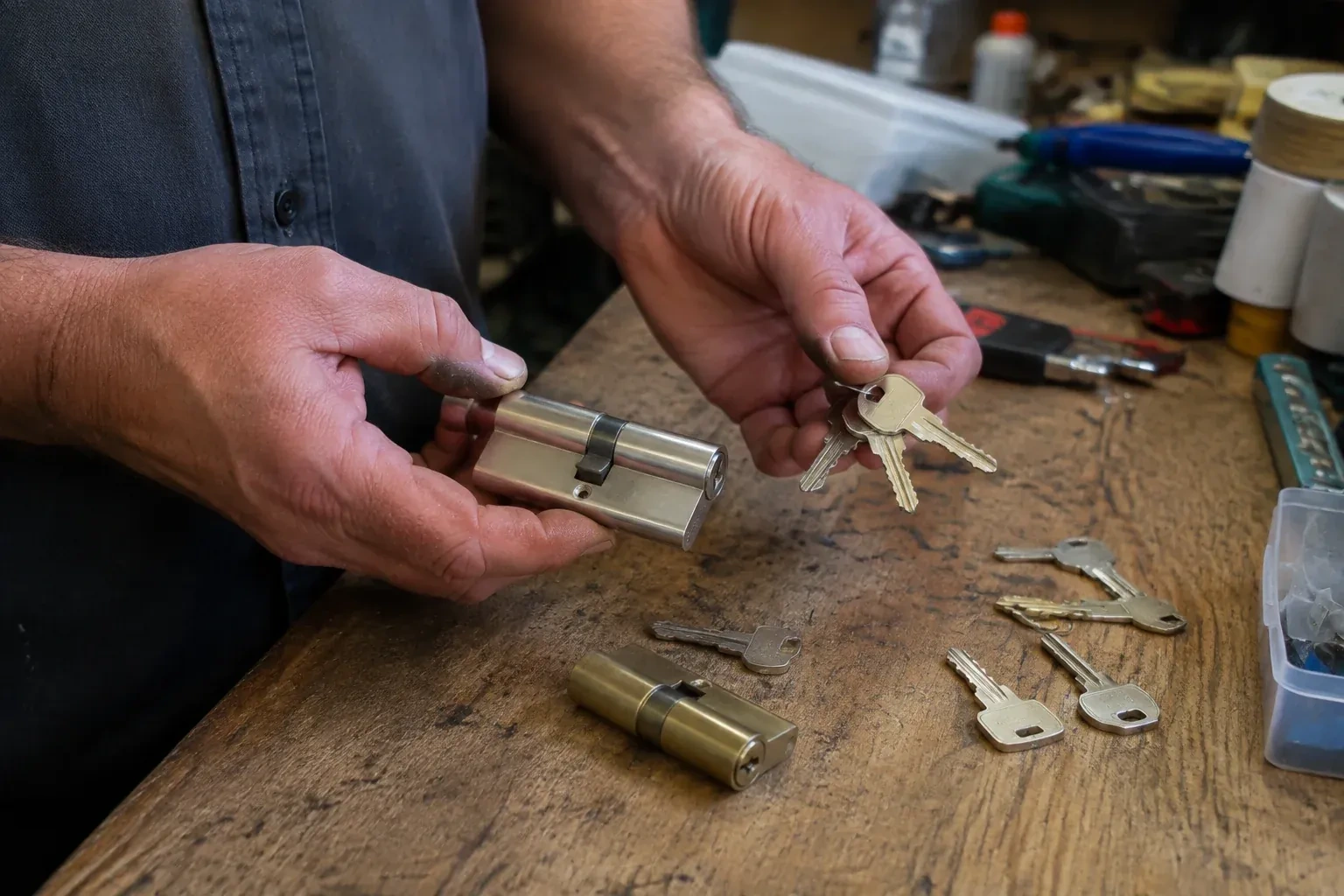
The last step of the check is deciding what the lock needs, in plain terms, before any of it is done. Most cases need cleaning, springs and adjustment, and that is the recommendation. A cylinder lock with a worn plug may be better served by a new mortise cylinder of the same thread and cam, keeping the case. A cracked case, a bolt worn thin or a hub broken through calls for a replacement case in the same pocket, and the locksmith measures for it on the spot. You hear which of these applies and why, and if the answer is a replacement case, the choice between a reproduction and a modern case is yours to make.
Reassembly and setting the trim
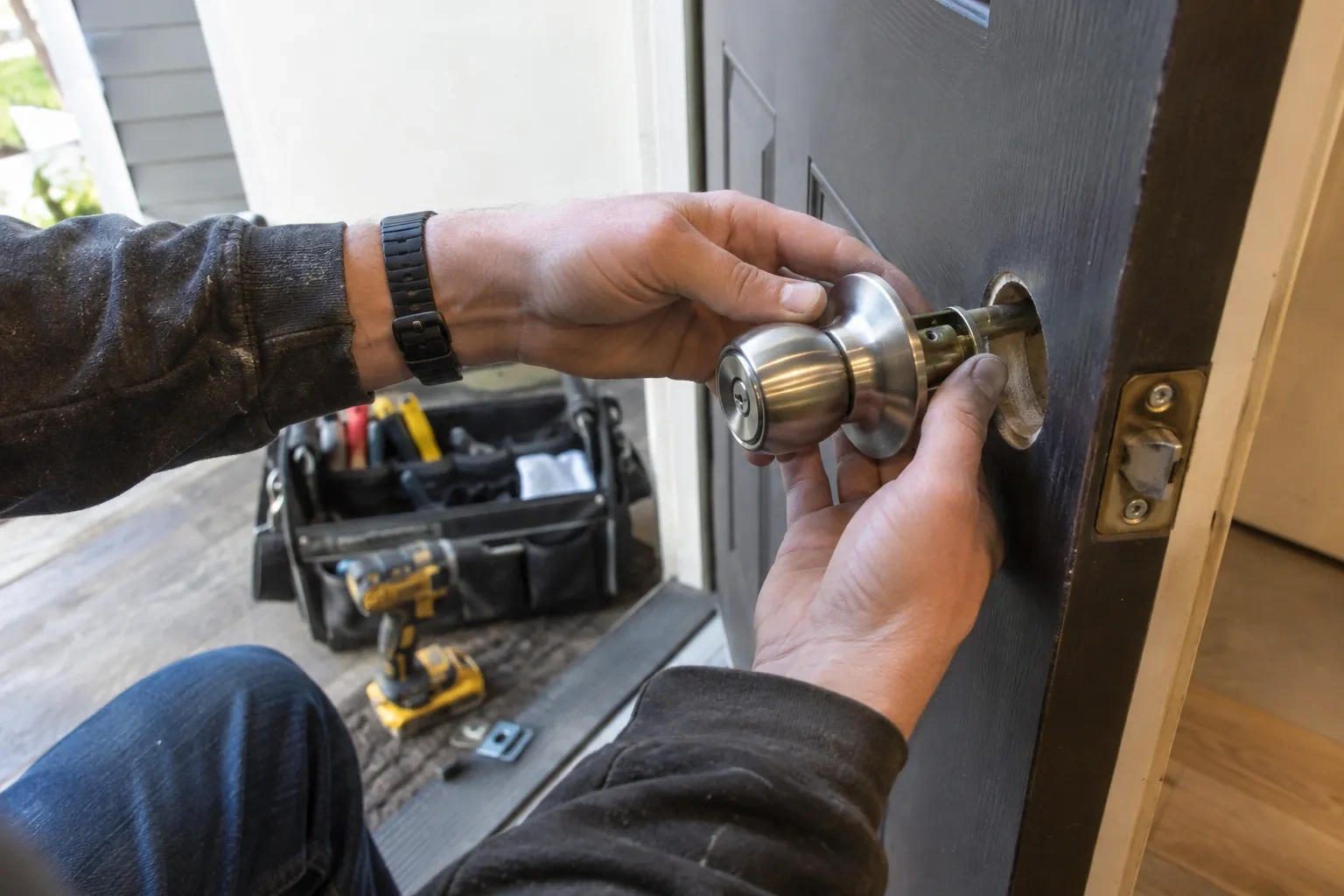
The case slides home and is screwed off, then the cylinder or keyhole escutcheon goes on, followed by the spindle, knobs and rosettes. The spindle is trimmed to length so the knobs sit against the door without pinching, and the set screws are tightened so there is no free play before the latch moves. The thumb-turn is aligned with the deadbolt tail so it throws with a light touch. Paint is cleared from the faceplate and strike edges where it was catching. Then the door is closed and the whole lock is worked from both faces with the key, the knobs and the turn, several times, listening for the latch to seat.
Parts, records and the house file
Anything that came out of the lock, a broken spring, a worn lever, the old cylinder, is offered to you rather than thrown away; some owners keep the originals with the house's papers. The locksmith leaves a short account of what was done: the case type and size, what was replaced, whether keys were made or a cylinder rekeyed, and how the strike was adjusted. For a designated heritage property this record shows the original hardware was retained. For everyone else it is simply the sheet you hand to the next locksmith, or the next owner, so nobody has to rediscover what is inside the door.
Vintage Mortise Lock Service
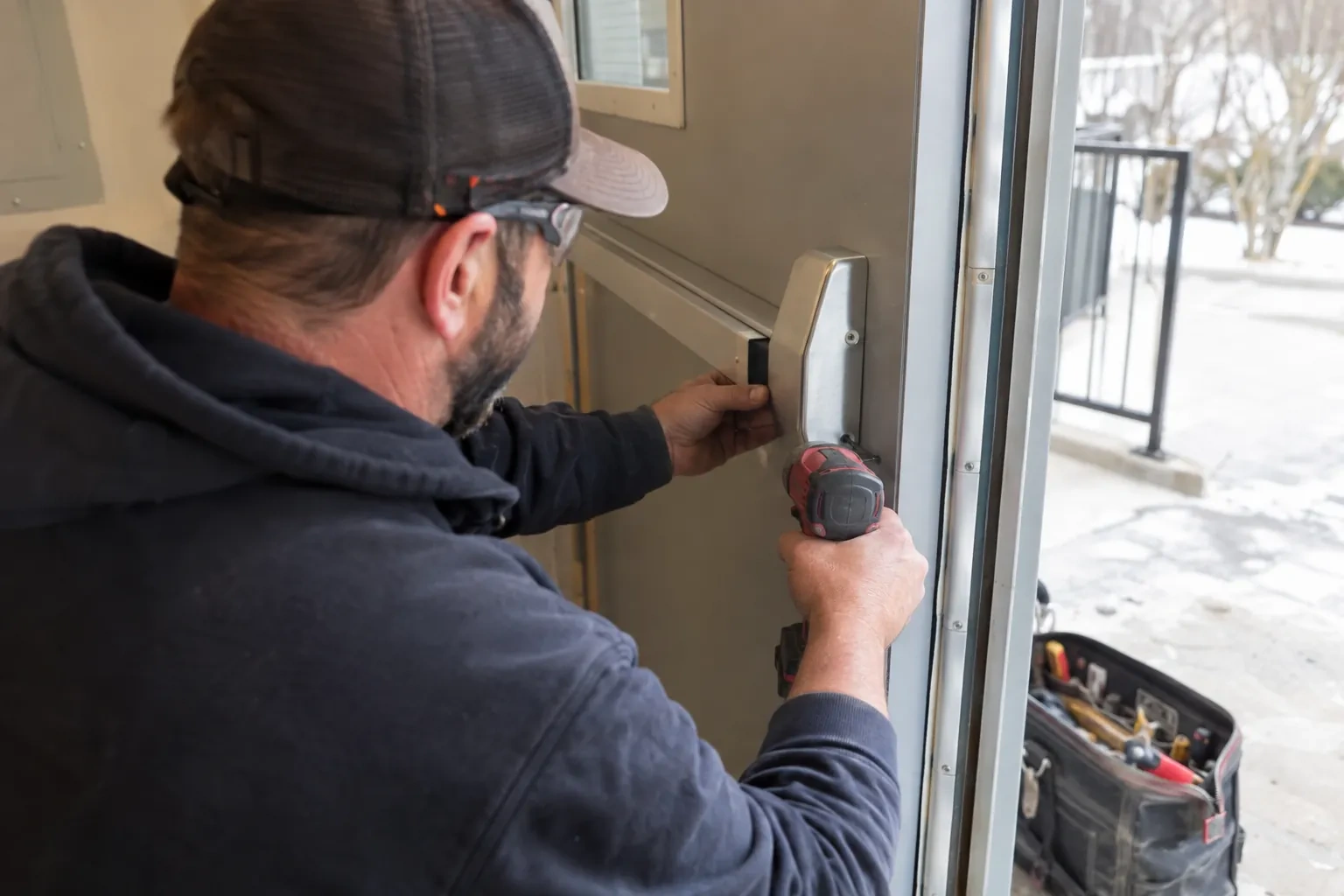
In the van
Latch and hub springs
Hub followers and lever packs
Spindle and knob set screws
Warding files
Hardwood dowel and wood glue
Vintage Mortise Lock Service
What affects the quote
Strike and hinge work
Where the door has dropped or swelled, adjusting or moving the strike and tightening or packing hinges is part of the fix. It is small work but it is listed, so you see what was done to the door.
Keying doors alike
Bringing several interior locks onto one bit key, or several cylinders onto one flat key, is extra bench work per lock and is simplest to arrange while all the cases are out on the same visit.
What is actually broken inside
A clean and new springs is the lightest job. A worn hub, a cracked lever or a part that has to be fabricated to match the original adds bench time, and the assessment names which applies before any of it starts.
What to have ready
- Does the deadbolt throw fully with the key or the thumb-turn?
- Do you own the home or rent it, and who should receive the keys?
- How many doors need attention, and are any of them interior doors?
Vintage Mortise Lock Service: questions
QuestionsWhy does the deadbolt scrape or need a shove to throw?
Two causes cover most cases. Either paint has built up on the faceplate, the bolt or the strike so the bolt drags across it, or the door has dropped so the bolt is entering the strike pocket at an angle and rubbing its edge. Occasionally a bent deadbolt lever inside the case adds friction. Cleaning the paint back, adjusting the strike and checking the lever all happen as part of the service.
The lock works with the door open but not when it is closed. Is the lock broken?
Almost certainly not. That pattern means the door has moved in its frame so the latch and bolt no longer meet the strike squarely. Solid wood doors in older houses swell in humid weather and settle on their hinges over the years. The service adjusts or shims the strike and tightens or packs the hinges so the bolt throws without lifting the door, and the lock itself is usually cleaned and lubricated at the same time.
Can you match a missing knob, plate or thumb-turn?
Often, yes. Locksmiths who work on older hardware keep salvage and reproduction trim in the common patterns and finishes, and a knob, rosette or escutcheon can usually be found close enough that the pair on one door match. Where nothing suitable exists, the trim from a less visible door can be moved to the entry and the reproduction fitted where it is seen less. Bring or photograph the surviving piece so it can be matched.
Related services
- Deadbolt InstallationThe front door has a handsome lever and a keyed knob, and that is all.
- Lock Replacement & UpgradeThe keys the seller handed over came in a sandwich bag: six unlabelled copies for two locks of different makes from different decades.
- Smart Lock InstallationHalf the evenings someone asks whether the back door got locked, and nobody is sure.