Locksmith
Help yourself first
These are notes, not lectures. Each one takes something people often get wrong about locks and keys, explains it in a paragraph or two, and leaves you better placed to decide what your doors need and what they can happily do without.
Your questions, our answers
What should I have ready when I call about a lockout?
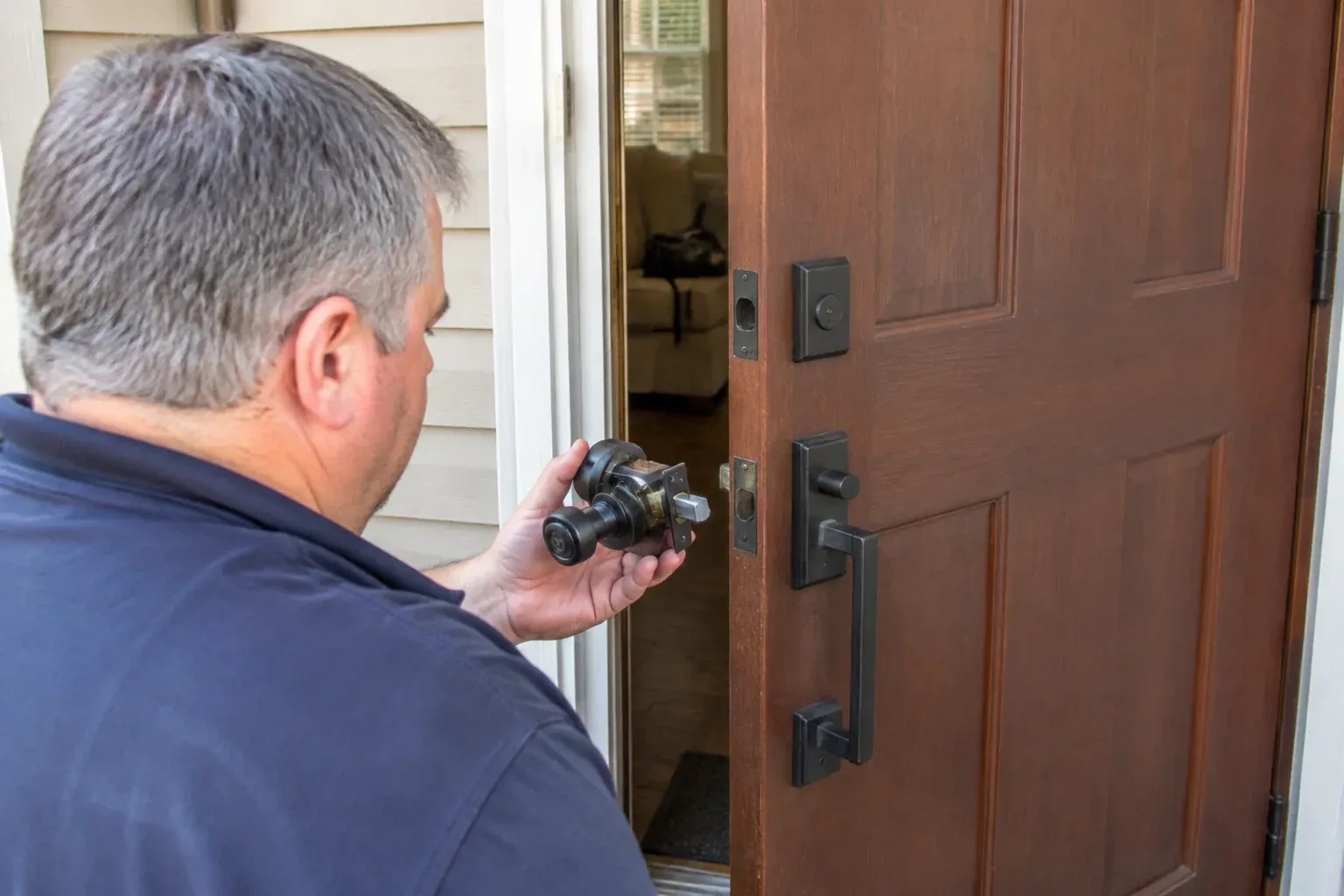
The address and which door you are outside of, what kind of lock is on it as far as you can tell, and where the key is: inside, lost, broken or simply refusing to turn. Mention whether the door is a rental, whether anyone is inside, and whether the lock is electronic. If you have photo identification on you, say so; if not, say that too so the verification route is agreed before the locksmith arrives.
What is a restricted keyway and is it worth having for a business?
A restricted or patented keyway is one whose blanks are supplied only through the manufacturer's authorised channels, so duplication is controlled rather than available at an ordinary counter, though the exact authorisation step varies by program and is not always a signed letter. For a company with staff turnover, cleaners and contractors, it means the keys in circulation are far easier to track. It can be introduced during a rekey, on the exterior doors only or across the whole premises, and works alongside a key register.
How do I stop keys breaking in future?
Look after the lock and the key ages slowly. Keep the cylinder lubricated with the product its maker specifies and free of grit, and have a binding door adjusted, since resistance raises the risk, though a worn, bent or fatigued key can still fail under normal use. Retire copies that have gone thin or kinked instead of straightening them. Cut spares from code, and rotate them so one key is not doing all the work. Take the ring weight off a car key. Small habits, but they add years.
Should I keep the broken lock and strike?
Yes, unless the insurer has already said they are not needed. Insurers generally ask policyholders to retain damaged property until the claim is settled, and a bag holding the twisted cylinder, torn strike and split wood answers an adjuster's questions more clearly than any description. The locksmith hands them over at the end of the visit along with a written note of what was replaced. Photographs of the parts in place, before removal, complete the record.
Can an old mortise lock in a century home be serviced rather than replaced?
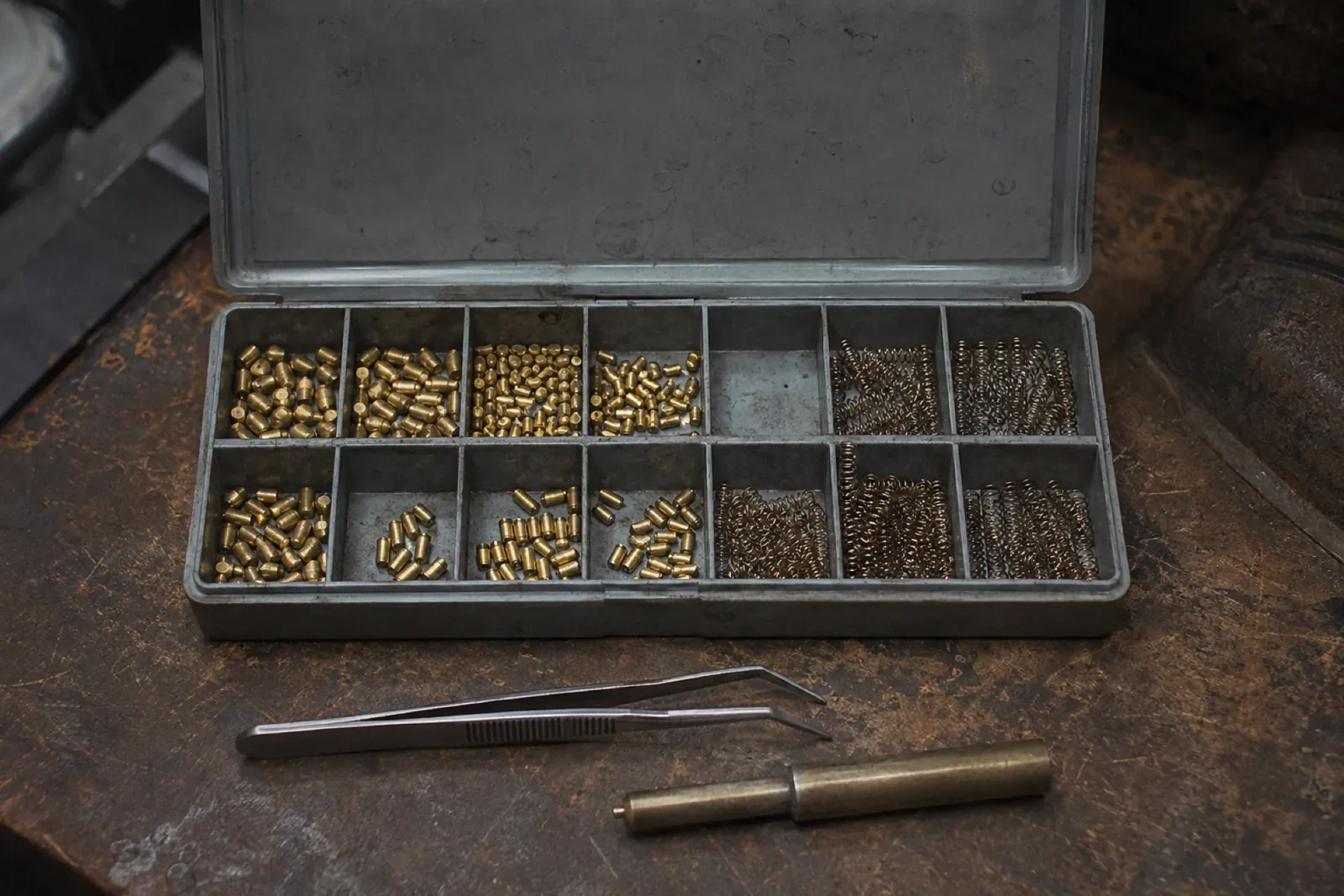
Often, and keeping the original hardware is usually worth trying first, since it fits the door and suits the house, though condition and the availability of matching parts decide whether a repair is realistic. The case comes out of the door edge, the decades of dust and hardened grease are cleaned away, a broken spring or worn hub is replaced with a matching part, and the contact surfaces get fresh grease. If a bit key or a cylinder has worn, a new key is cut or the cylinder rebuilt.
Can all my doors work on one key afterwards?
Usually, yes. Cylinders that share a keyway family accept the same blank, so they can be pinned to one combination during the rekey. The front door, back door, garage entry and a gate padlock of the same family become a single key. Where a door uses a different family, the locksmith can swap its cylinder for a compatible one in the same visit, or you can choose to keep two keys for that door.
I am a landlord. Should I rekey between tenants?
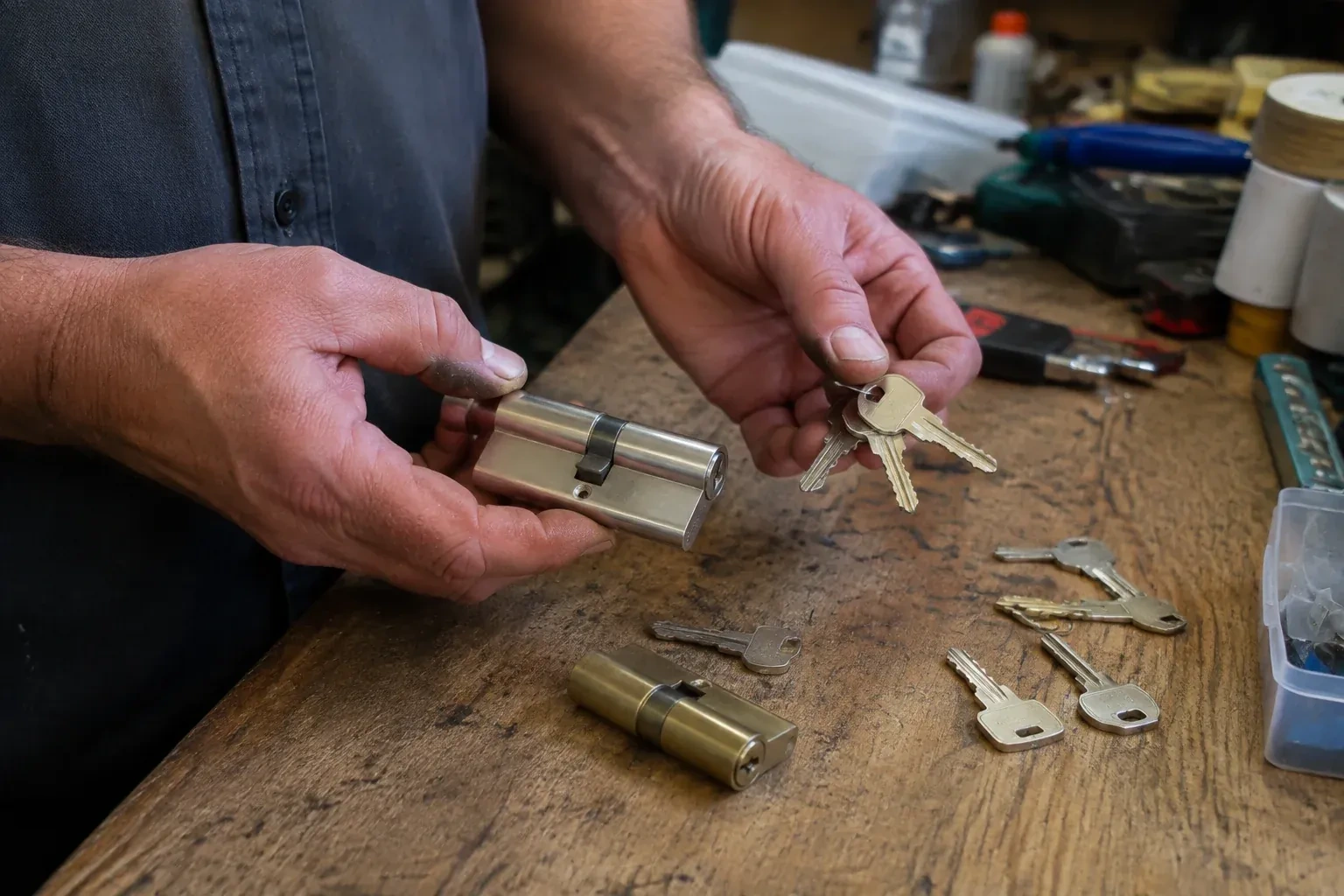
Many landlords do, and it removes the question of whether every copy came back. The locksmith rekeys the unit's cylinders so the incoming tenant holds the only working keys, cuts the copies you want, and notes the count for your move-in record. Because provincial tenancy rules expect the tenant to be handed replacement keys whenever a landlord changes a lock, the visit ends with keys for both of you and a clear list of which doors were done.
Do I need a deadbolt on the door from the garage into the house?
It is worth having. The door between an attached garage and the living space is in practice often the softest way in, since a garage door left open leaves a passage knob as the only barrier. A thumb-turn deadbolt there costs a few minutes a day and closes that gap.
How long does a lock replacement take?
A straightforward like-for-like deadbolt or knob set on a standard door is often a matter of an hour or less including testing. Add time for a reinforced strike, for keying several locks alike and cutting keys, for a smart lock's setup and pairing, and for repairing a split jamb or adapting an older door. When several entrances are done together, the locksmith gives a realistic window before starting so you can plan the day.
Why does the deadbolt scrape or need a shove to throw?
Two causes cover most cases. Either paint has built up on the faceplate, the bolt or the strike so the bolt drags across it, or the door has dropped so the bolt is entering the strike pocket at an angle and rubbing its edge. Occasionally a bent deadbolt lever inside the case adds friction. Cleaning the paint back, adjusting the strike and checking the lever all happen as part of the service.
Is a smart lock as secure as a regular deadbolt?
The part that resists force is the same: a steel bolt, a solid strike with long screws and a door that closes true. Smart deadbolts meet the same residential hardware standards as mechanical ones, and a reinforced strike goes in regardless of which you choose. Where a smart lock adds is on the human side: codes that can be revoked and a door that locks itself, plus, on a key-free model, no keys to copy or lose. Good habits, such as unique codes and updates, keep the electronic side tidy.
Someone tried to force our gate open. What happens now?
The locksmith first looks over the damage without disturbing it, noting pry marks, a bent strike or a cylinder that has been scored or spun, since that record is useful to have regardless of what else follows. Any hardware that was compromised is replaced rather than trusted, and a weak point the attempt exposed, such as an undersized hasp or a strike with too little bite, is addressed at the same time so the same approach would not work a second time.
Can you fix a mailbox door that is bent or won't close?
Yes. A compartment door that has been pried at, dropped on a loose hinge, or pushed out of square over time is straightened or adjusted as part of the same visit, since a bent door will fight even a brand new lock. The door is worked back into alignment, the hinge or latch checked, and the new lock fitted only once the door closes flush again.
What should I have ready before the visit?
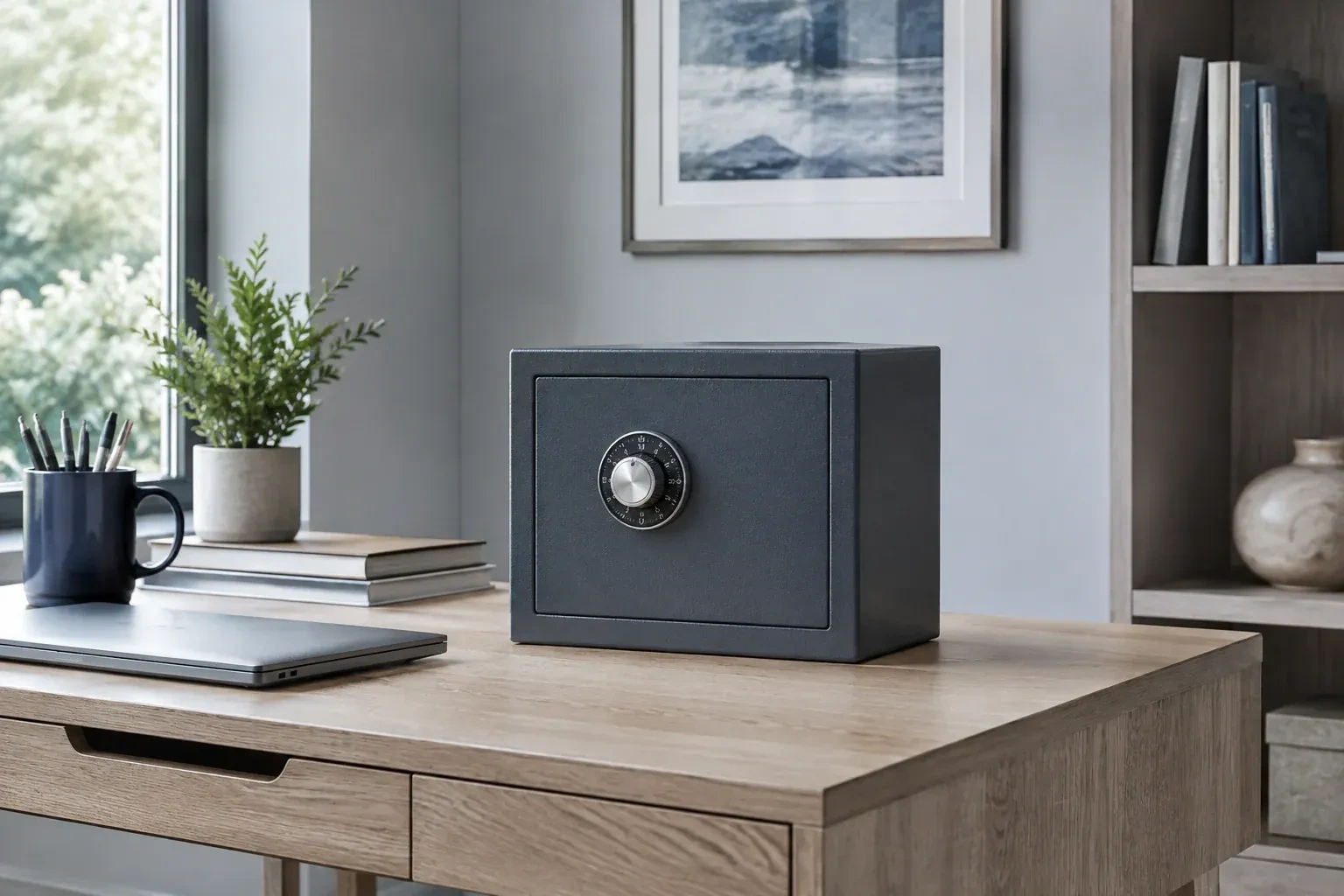
The safe's brand and model if you know them, whether the lock is a dial, a keypad or a key, roughly how old the safe is, and how the combination was lost or forgotten. Mention whether the safe holds anything with its own handling needs, such as firearms or business records, and how many people should have the new code afterward.
Can an existing safe be bolted down after years of sitting loose?
In most cases, yes. The floor or wall behind it is checked the same way as for a new installation, anchor points on the safe itself are located, and hardware suited to that surface is fitted without needing to move the unit far from where it already sits. An older safe occasionally has anchor holes that were never used, which makes this part of the job simpler than starting from scratch.
Can a hardware store or kiosk copy my new key?
No. The blank for a patented keyway is distributed only through the manufacturer's network to locksmiths who hold the system, and the side milling or angled cuts need a machine set up for that line. A kiosk would have neither the blank nor the cut. Extra keys come through your locksmith, cut from code, once an authorised person has approved the order. That routine is a small inconvenience compared with never knowing who has a copy.
Can the aluminum storefront door on our unit be rekeyed?
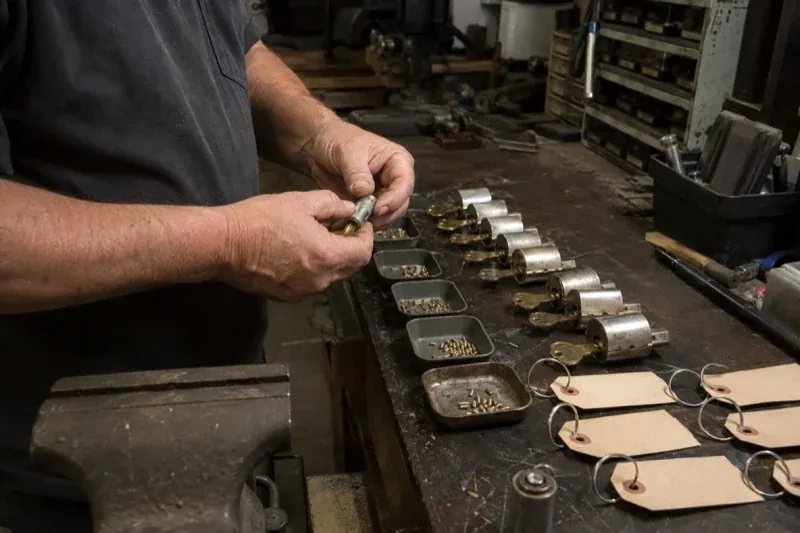
Yes. The narrow stile of a storefront door houses a screw-in mortise cylinder secured from the edge, and it unthreads, is repinned and screws back in like any other. What the locksmith watches is the cam: it has to suit the hook or deadbolt mechanism inside the door and sit at the correct depth, or the bolt throws short. Weather-facing cylinders showing salt wear are pointed out so you can decide on replacement.
Can cleaners or contractors get limited access without a master key?
Yes. A change key or a narrow sub-master covering only the areas they service is the usual approach, rather than handing over a level that reaches further than the job requires. Where the property uses keypad or card access alongside mechanical keys, a time-limited or role-specific electronic credential can serve the same purpose without a physical key changing hands at all.
What information should we have ready before the visit?
It helps to know which doors should be controlled, roughly how many people will need a credential, whether any of those doors are also fire exits, and who in the business will administer the system afterward. A floor plan or a walk-through on site fills in anything easier to show than describe, and neither is required in advance.
Can a padlock or extra deadbolt stay on a door that has this hardware?
No additional fastening should stay on an exit door that does not release the same way the primary device does. A hasp, padlock or separate deadbolt added at some point for extra security is a common finding on an older door, and removing or replacing it with something that releases under the same push is part of bringing that opening back to a single, reliable exit.
Can a tenant request commercial lock replacement, or does it have to go through the landlord?
This depends on the lease and on which doors are involved. A tenant can generally arrange work on hardware inside their own leased space, while entry doors, shared corridors and building-wide systems usually involve the property manager or landlord, since a change there can affect other tenants' access as well. Confirming this before the visit avoids hardware being installed that has to be redone.
I have lost my only key. Can a locksmith make a new one at the roadside?
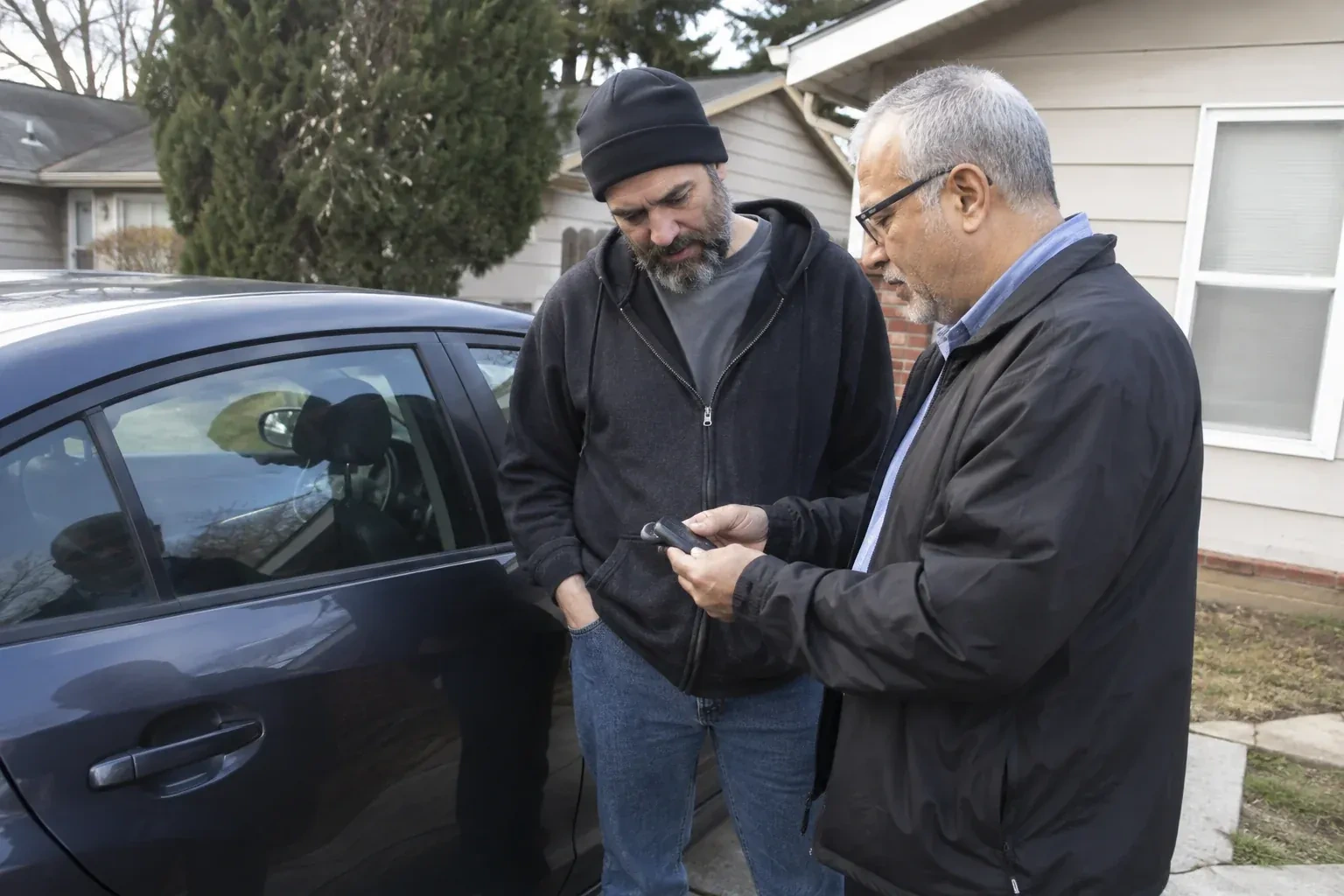
For most cars, yes. After the car is opened, the door cylinder is decoded to read the cuts, or the key code is drawn from the vehicle records against your proof of ownership, and a blade is cut in the van. A transponder key or fob is then programmed through the diagnostic port so the engine will start. Some newer or high-security models need dealer-only parts; you are told that up front rather than after.
The car is leased or belongs to my employer. Can you still make me a key?
Yes, with the right paperwork. For a leased car, the lease agreement in your name together with your identification and the permit covers it. For a company vehicle, the locksmith needs authorization from the business: a work order, purchase order or letter naming the VIN and the person collecting the key. Mention the arrangement when you call so the correct document is ready and the record can be completed properly.
Is cloning the same as programming a new key?
They solve the same problem differently. Cloning copies the working key's existing code onto a new chip, which some vehicles' systems permit directly. Programming instead has the vehicle itself learn a brand-new code and accept it as an additional valid key, which is how most recent vehicles with rolling codes or added cryptography are handled, since their systems are built specifically to resist straightforward copying.
What does testing remote start or passive entry actually involve?
Each function the vehicle offers is tried in person once the fob is registered: trying whatever passive-entry action that vehicle actually needs, approach alone, or a handle touch, grip or button press, pressing the remote start button and confirming the engine turns over, and checking that the vehicle re-locks or shuts down the way it is meant to. Nothing is assumed to work simply because the fob was accepted by the vehicle's memory.
What does a flashing security light on the dashboard usually mean?
Most commonly it means the immobilizer does not recognize the key currently in the ignition, whether because the chip has failed, the key was never programmed, or the vehicle's module is looking for a different identity than the one it is being shown. It is a useful, specific signal rather than a general warning, and it points fairly directly at a transponder issue.
Do you need to confirm that I own the vehicle before starting?
Yes, and it takes only a moment when the paperwork is on hand. A vehicle permit or registration document matched to identification settles it in most cases. If the vehicle is a rental, a fleet vehicle or belongs to someone else, a lease, a work order or a call to the registered owner fills the gap. This step protects every vehicle owner who might one day call about their own ignition.
Why has my key fob suddenly stopped working?
A dead coin-cell battery is the most common reason, and it is a straightforward fix once the fob is opened. Less often, the fob has lost its pairing with the vehicle or its case has cracked and let in moisture, both of which a locksmith can check and address.
Can the seat, fuel cap and ignition all be set to the same key?
On many serviceable, compatible systems, yes. Each lock is opened and its internal wafers are replaced with a set cut to match the ignition's combination, the same principle used to rekey a house lock applied to smaller hardware. Every lock is tested individually afterward so the finished key is confirmed against each one rather than assumed to work. Locks that were never on the same key from the factory can usually be brought together this way during one visit.