Locksmith in Woolwich, OntarioPatient withold hardware.
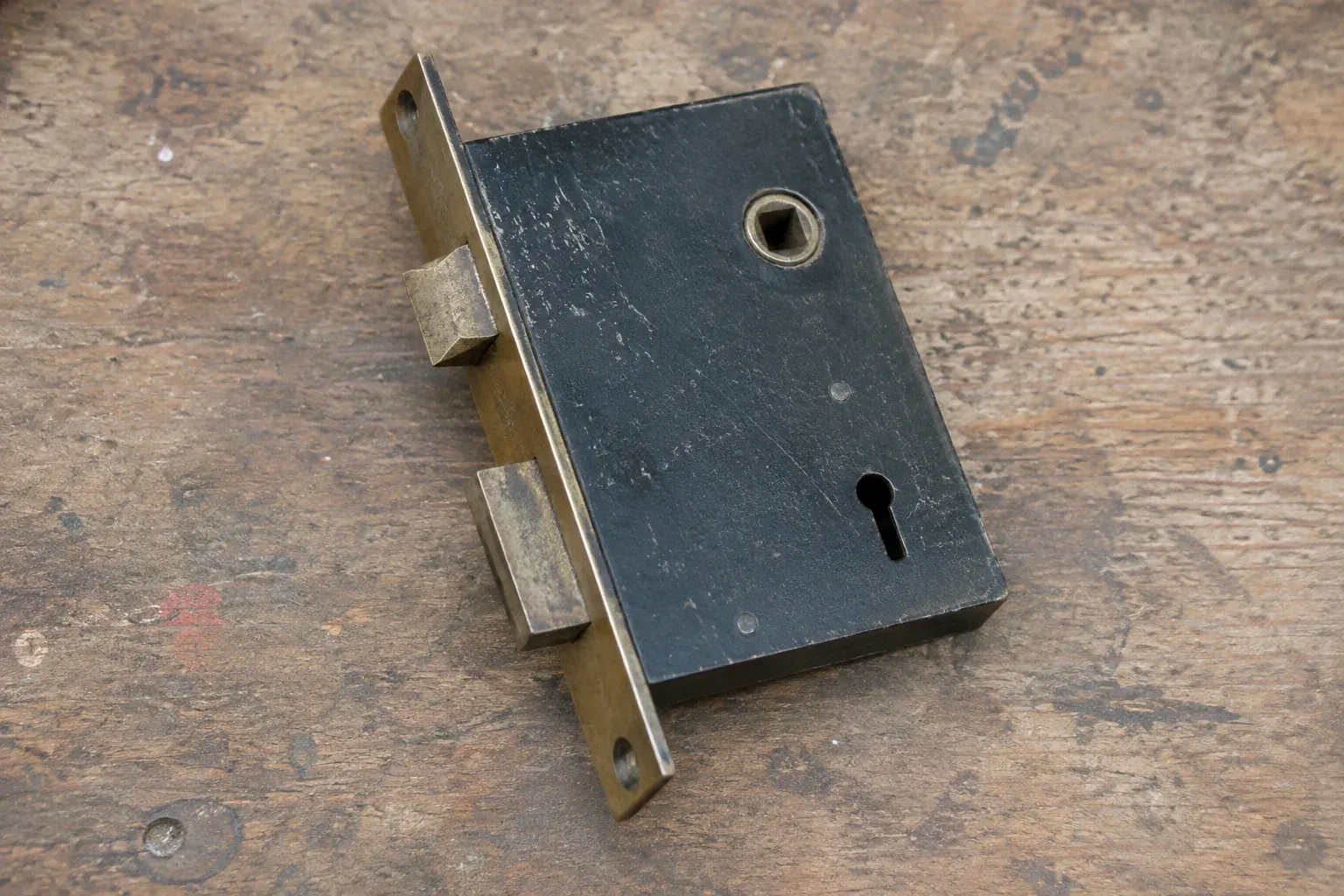
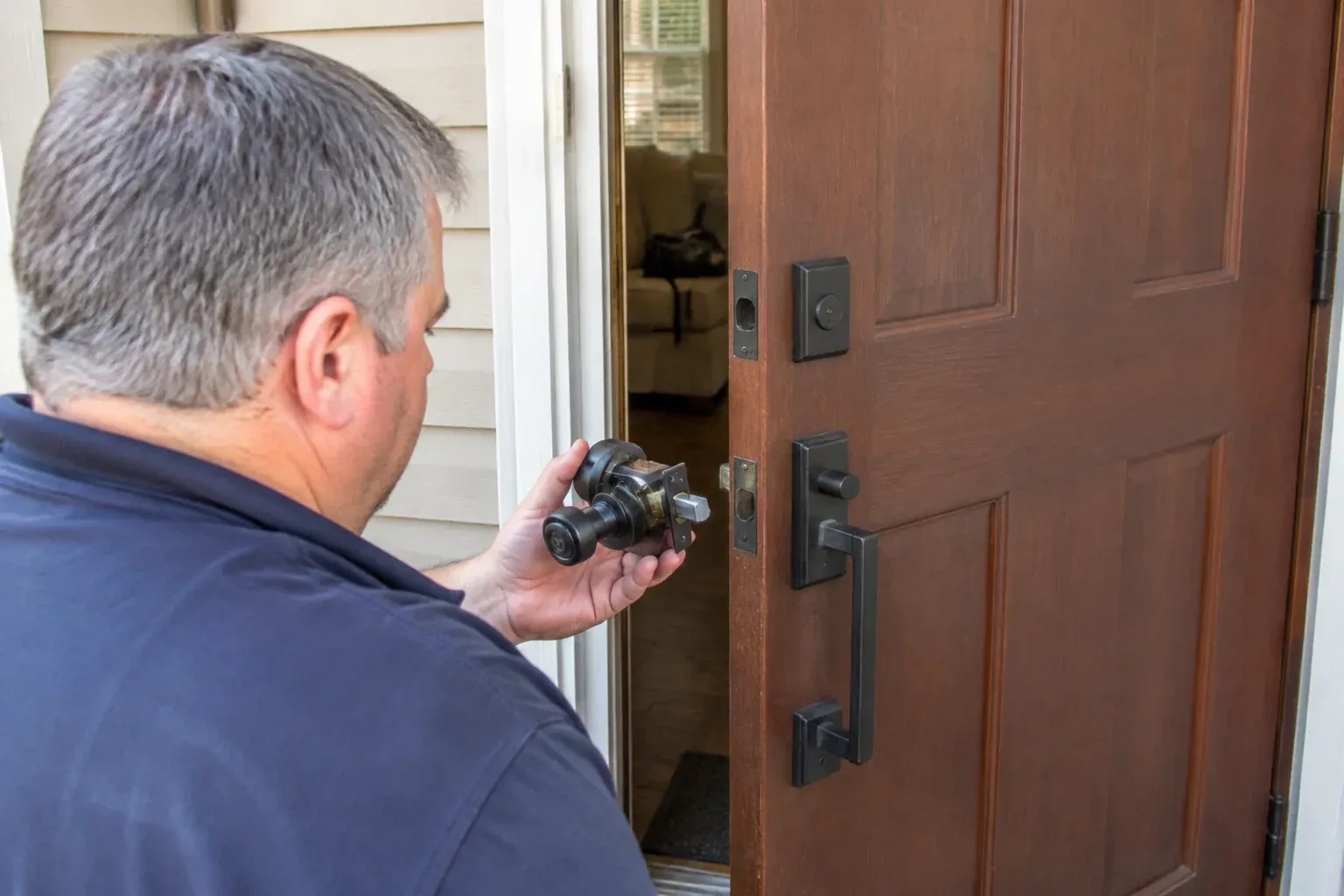
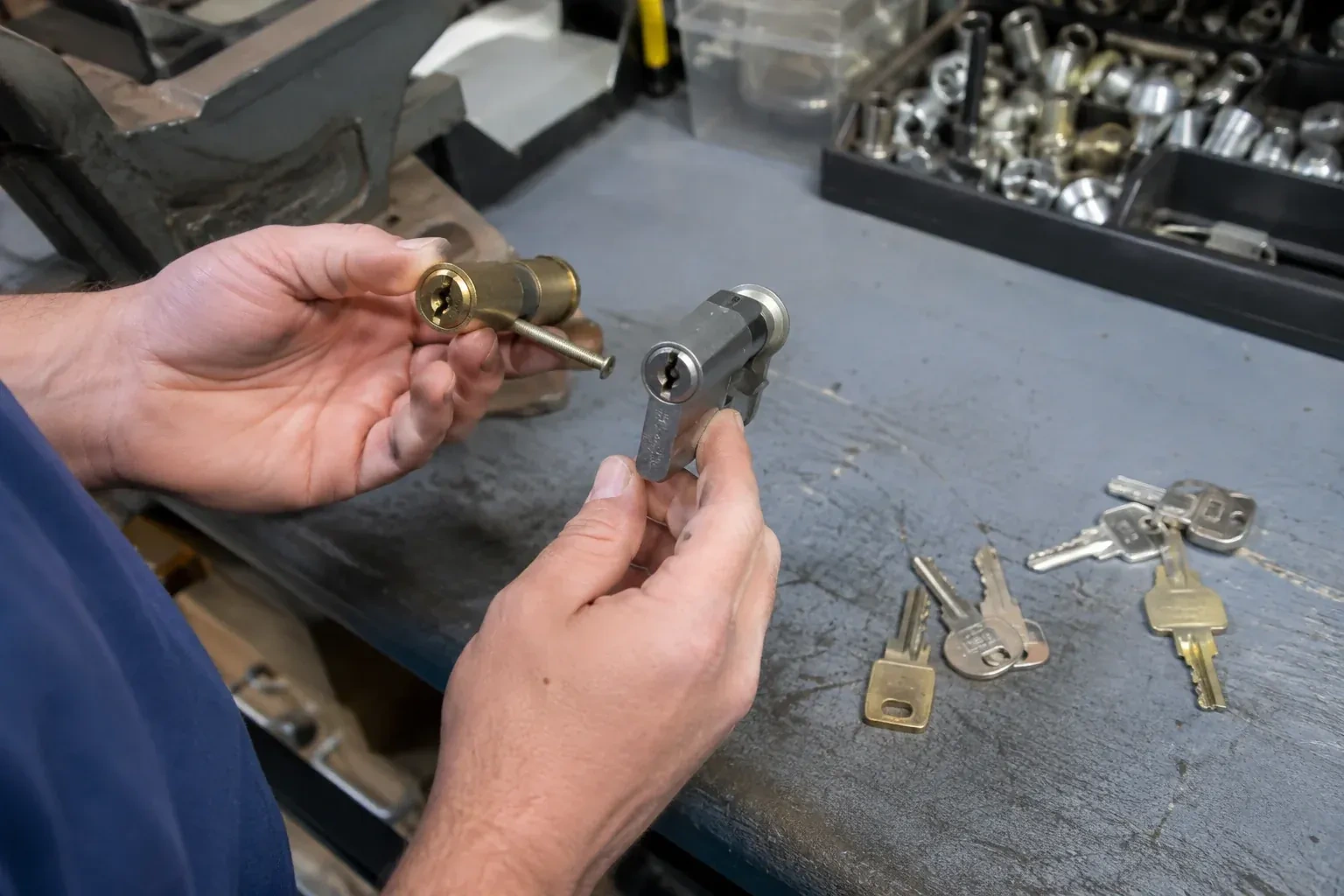
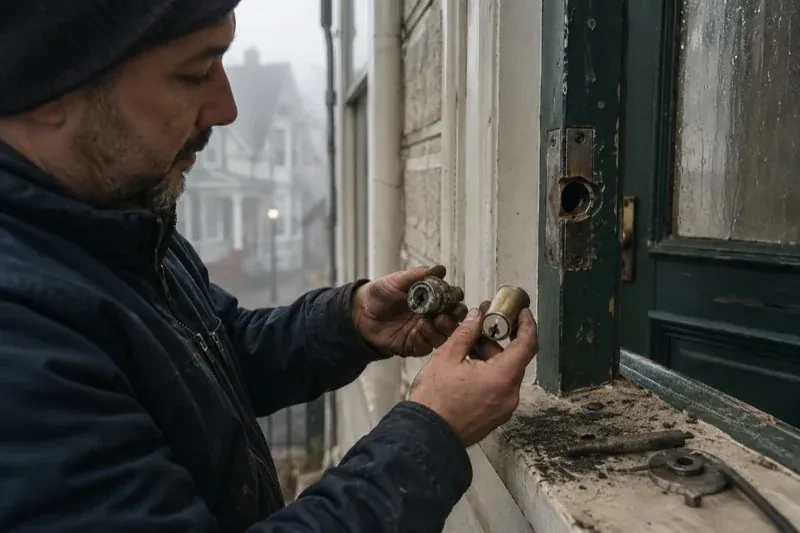
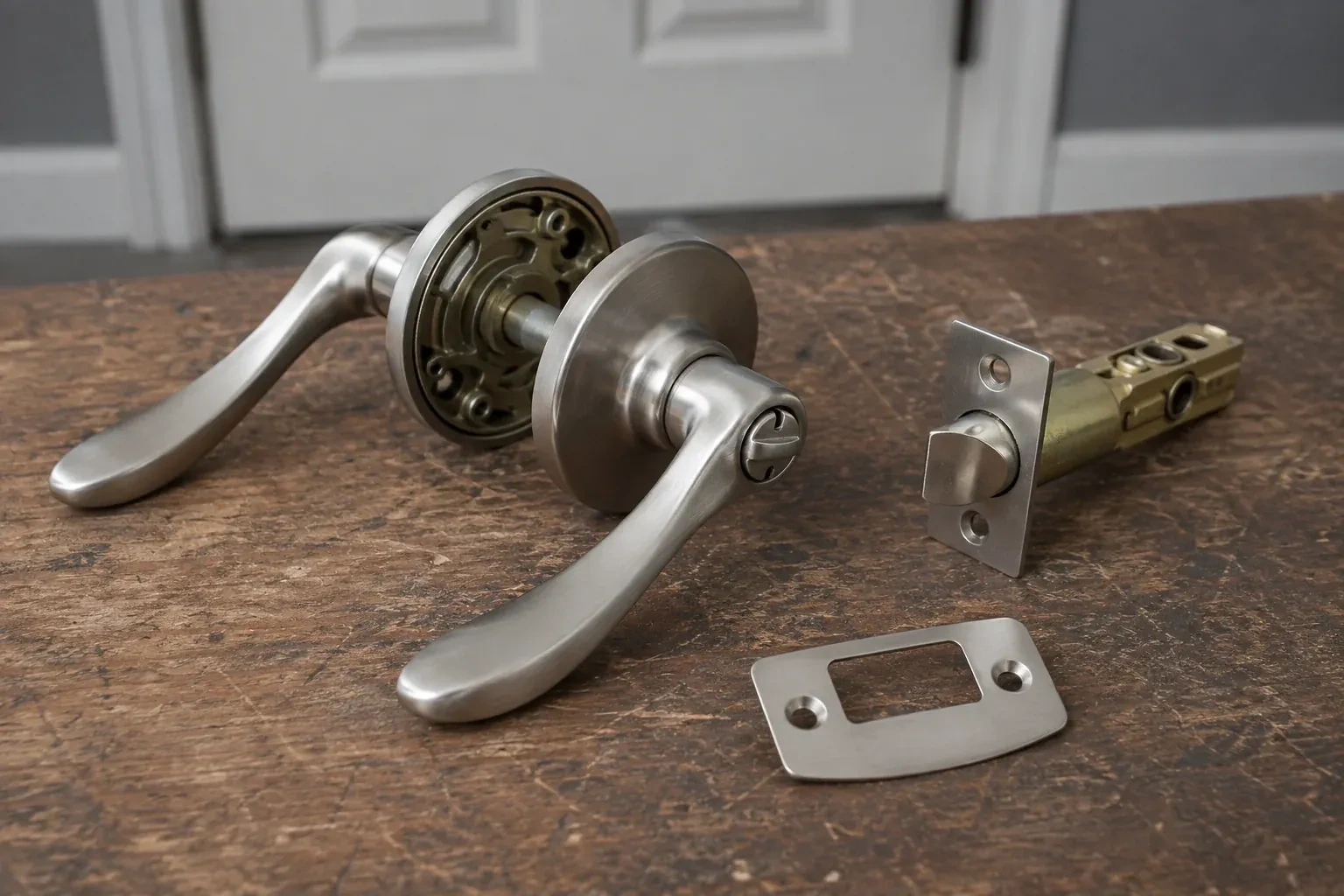
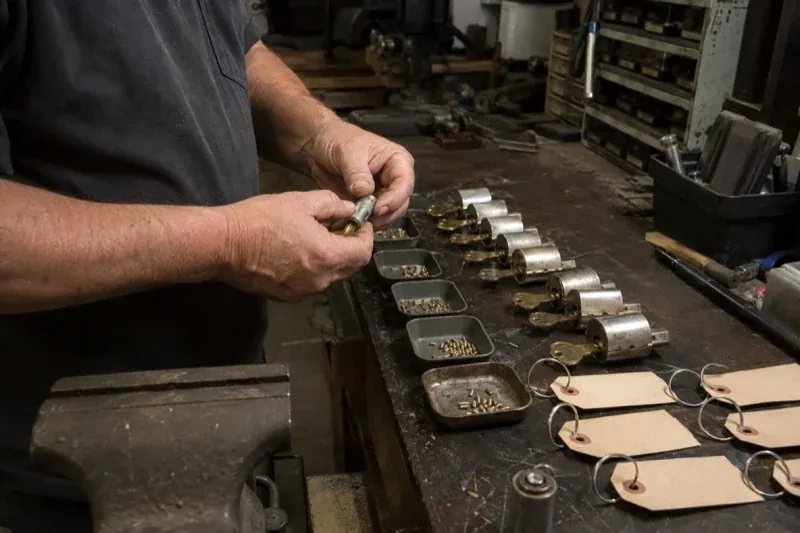
Some doors have been opening for a century, and the hardware on them deserves better than a hacksaw. We take the time to free seized mechanisms, re-pin original cylinders and fabricate keys for locks whose blanks went out of production long ago.
Some doors have been opening for a century, and the hardware on them deserves better than a hacksaw. We take the time to free seized mechanisms, re-pin original cylinders and fabricate keys for locks whose blanks went out of production long ago.
Old locks respected, new locks fitted right.
Good locksmithing is mostly measuring. Backset, bore, door thickness, the gap at the strike, the swing of the hinge: get those right and the hardware fits and turns without a struggle. Get them wrong and a new lock is worse than the old one. We measure twice, order once, and test every door with the key in hand before packing up.
The key you reach for. The door you come home to. Good locksmith work begins with understanding how you use them.
30years in business
24/7open every day
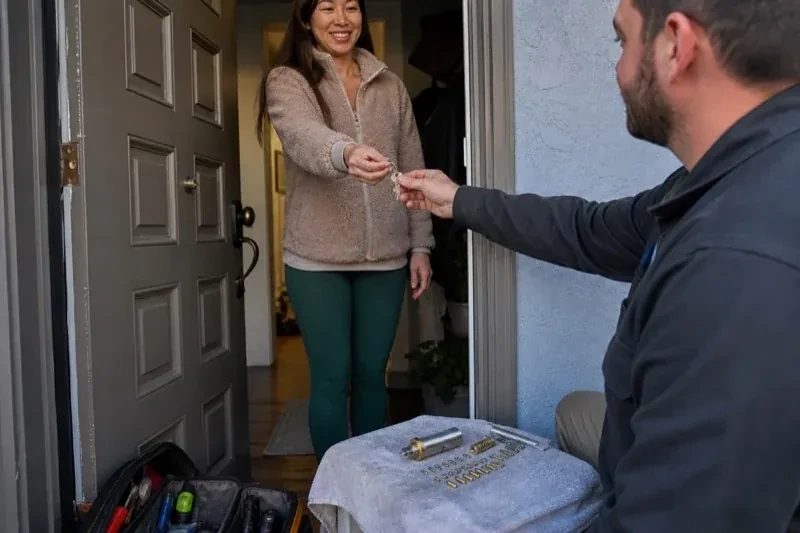
You know what is happening. From the first look to the last turn of the key, we narrate the job in plain terms. You should never wonder what we are doing to your door.
Suggestions, not pressure. If we think an upgrade would help, we say so once and explain why. If you decline, that is the end of it.
The old parts handled. Removed locks and keys are given to you or taken away as you prefer. Old keys that no longer work are worth destroying, and we will do that if you like.
Our work covers doors and the things that secure them: locks, keys, cylinders, safes, keypads and the electronic hardware that has quietly replaced keys in many buildings. The groups below help you find the right page, and the phone number helps when reading is not the mood.
Three months of renovation are finally done. The kitchen looks wonderful, and along the way a general contractor, a tile installer, a plumber and an electrician each carried a key to your front door at one point or another.
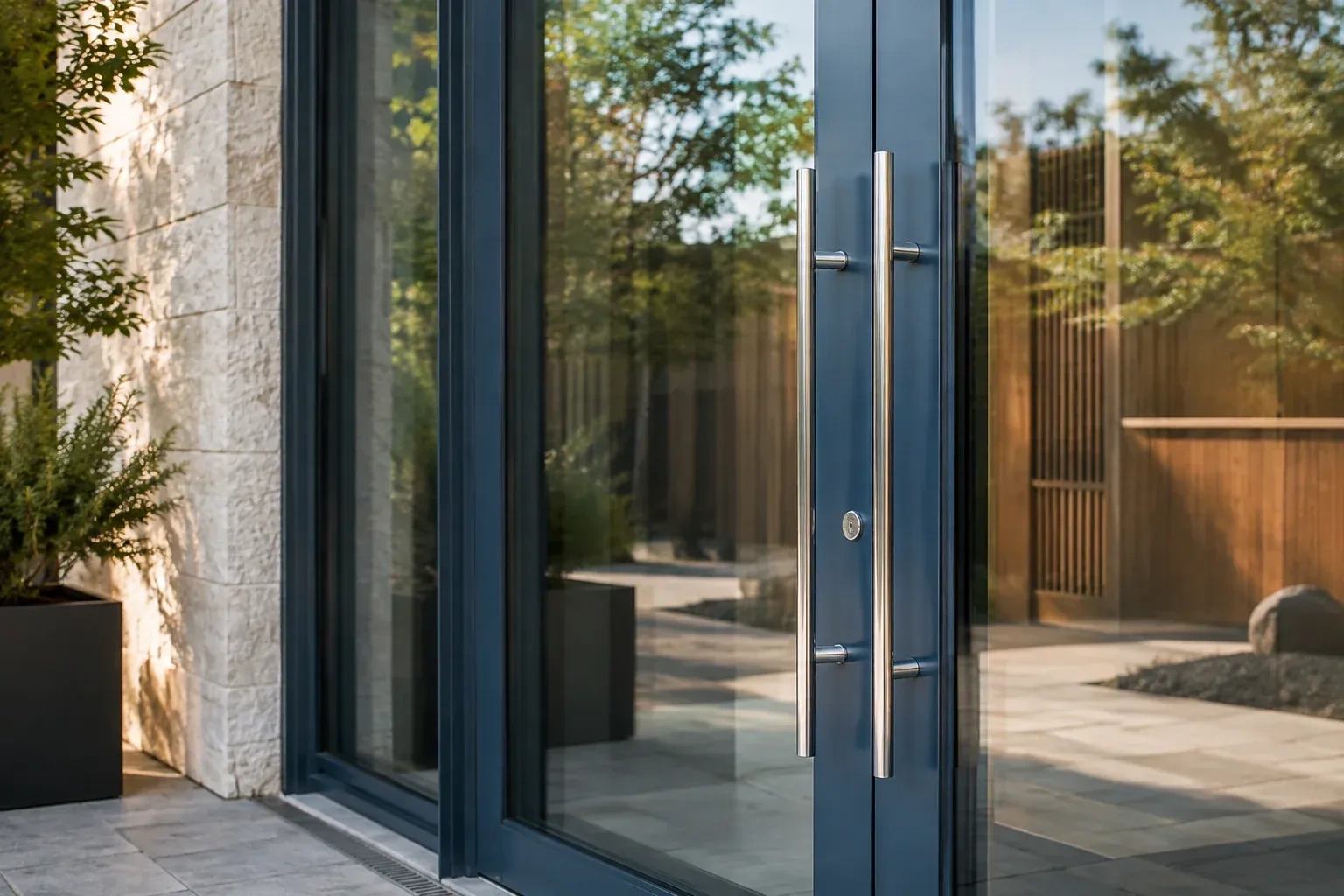
The heavy glass door has been scraping the threshold for weeks. This morning the key turns, you can hear the bolt trying to move, but it is jammed hard in the strike and the door stays shut no matter how the handle is pulled.
The keys fell out of a gym bag somewhere between the arena and the parking lot. The ring has a tag from the building with the unit number on it. Whoever finds it has an address and a key that fits.
High security locks answer the question most people eventually ask about their door: who else has a key, and how hard would it be to get past it? Rated cylinders, heavy deadbolts, reinforced strikes and keys that cannot be copied without your say-so.
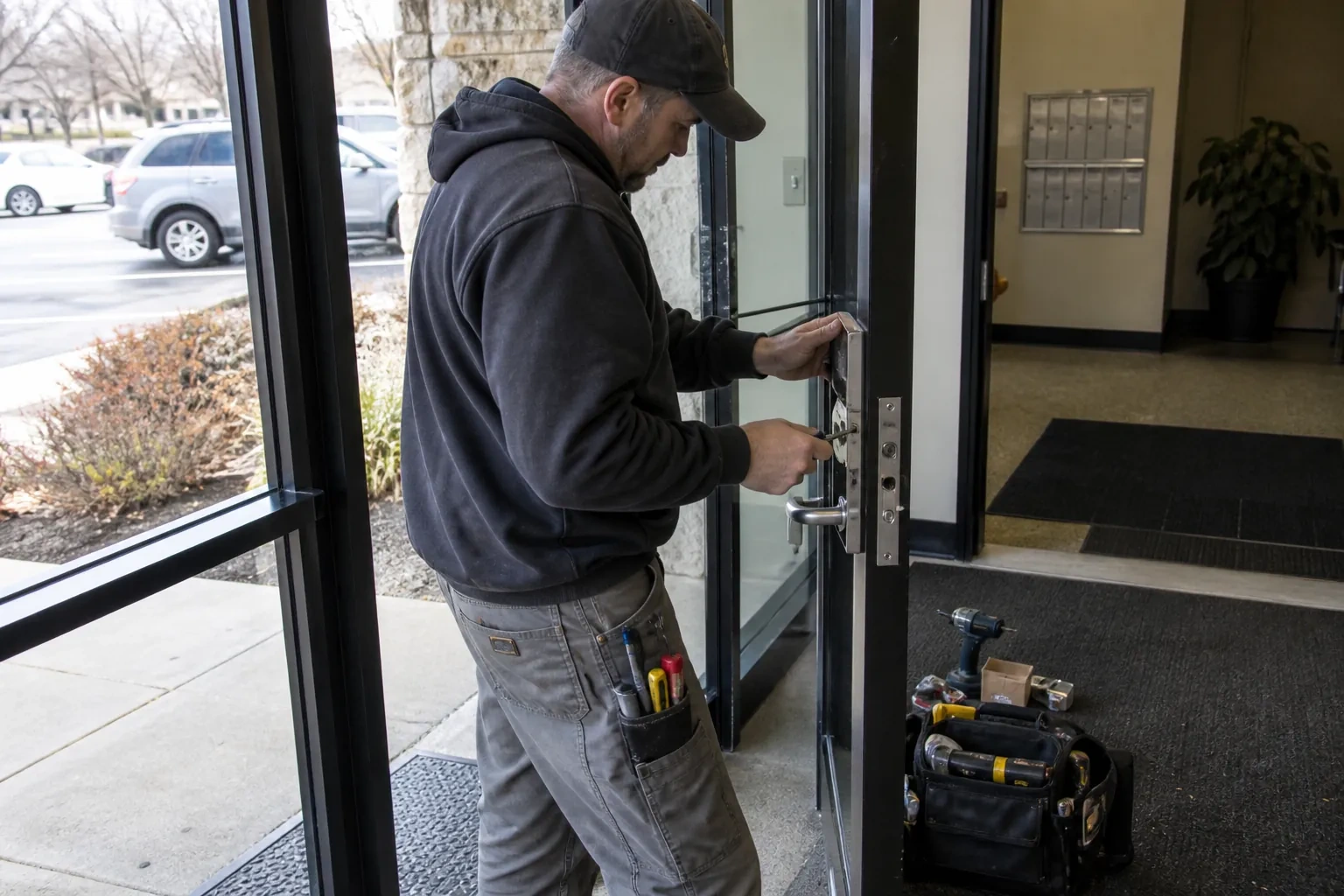
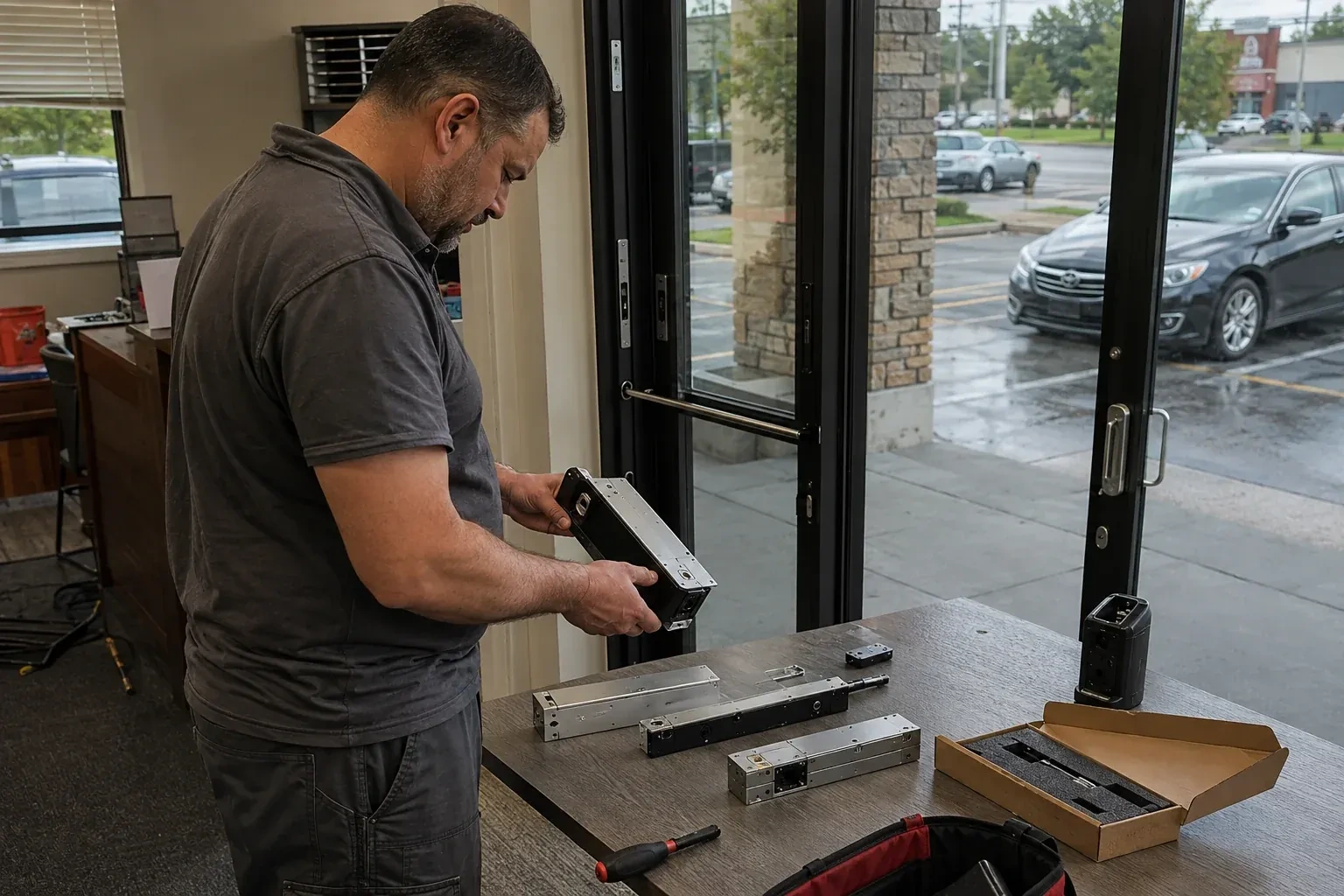
A business needs its doors to open reliably for the right people and stay shut for everyone else, every day, without fuss. That is the whole brief for commercial work, and the pages here show how rekeying, master keying and access control each serve it.
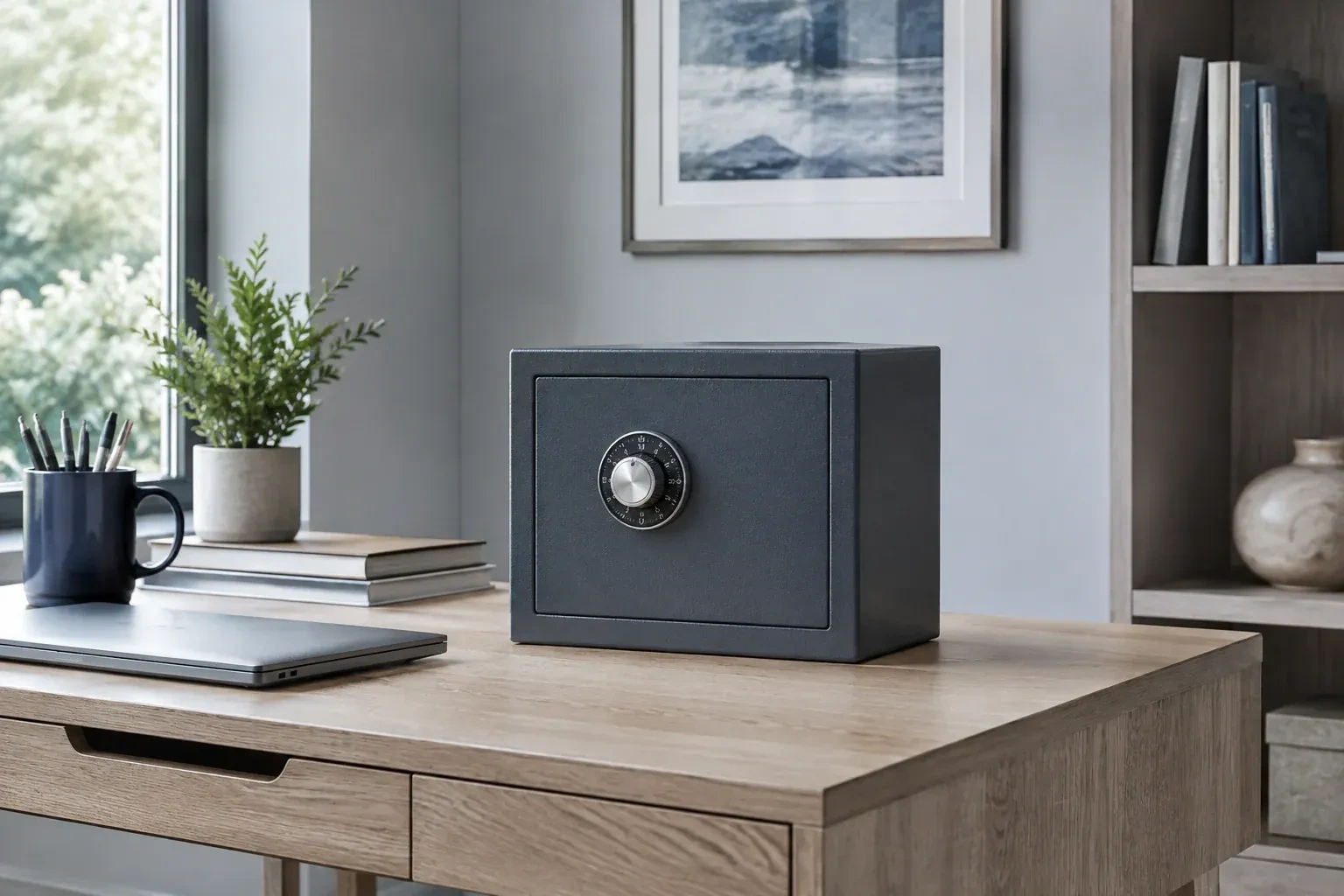
The office is moving three blocks over, and the old commercial safe that has sat bolted to the concrete for fifteen years now needs to come out, travel across town, and go back down just as solidly.
Which fix fits?
The shop's back door only latches if someone slams it.
Sensible optionAdjust the closer and realign the strike.
WhyUsually the closer is out of adjustment or the strike has drifted; both are set, not replaced.
The fire exit alarm sounds every time staff use that door.
WhyExit alarms are meant to sound; if staff need that door daily, an arrangement that still lets everyone leave freely is found.
The storefront lock is worn and the key barely catches.
Sensible optionReplace the cylinder with a commercial-grade one.
WhyStorefront cylinders take a beating; a heavier grade is built for that traffic.
Head office wants every branch keyed alike under one system, and half the locations are still running whatever lockset the original contractor happened to install years ago.
WhyA business door rarely fails the same way a house door does, because it opens far more often and often has to satisfy a fire or egress rule a home door never faces.
You stepped out to grab the recycling bin and the door swung shut behind you.
WhyHeavy commercial doors move, and a good share of business lockouts are really door problems.
How a visit goes
Describe the property, the hardware and what has changed, and the visit starts from what you have seen.
1
2
3
01
Deciding what to replace
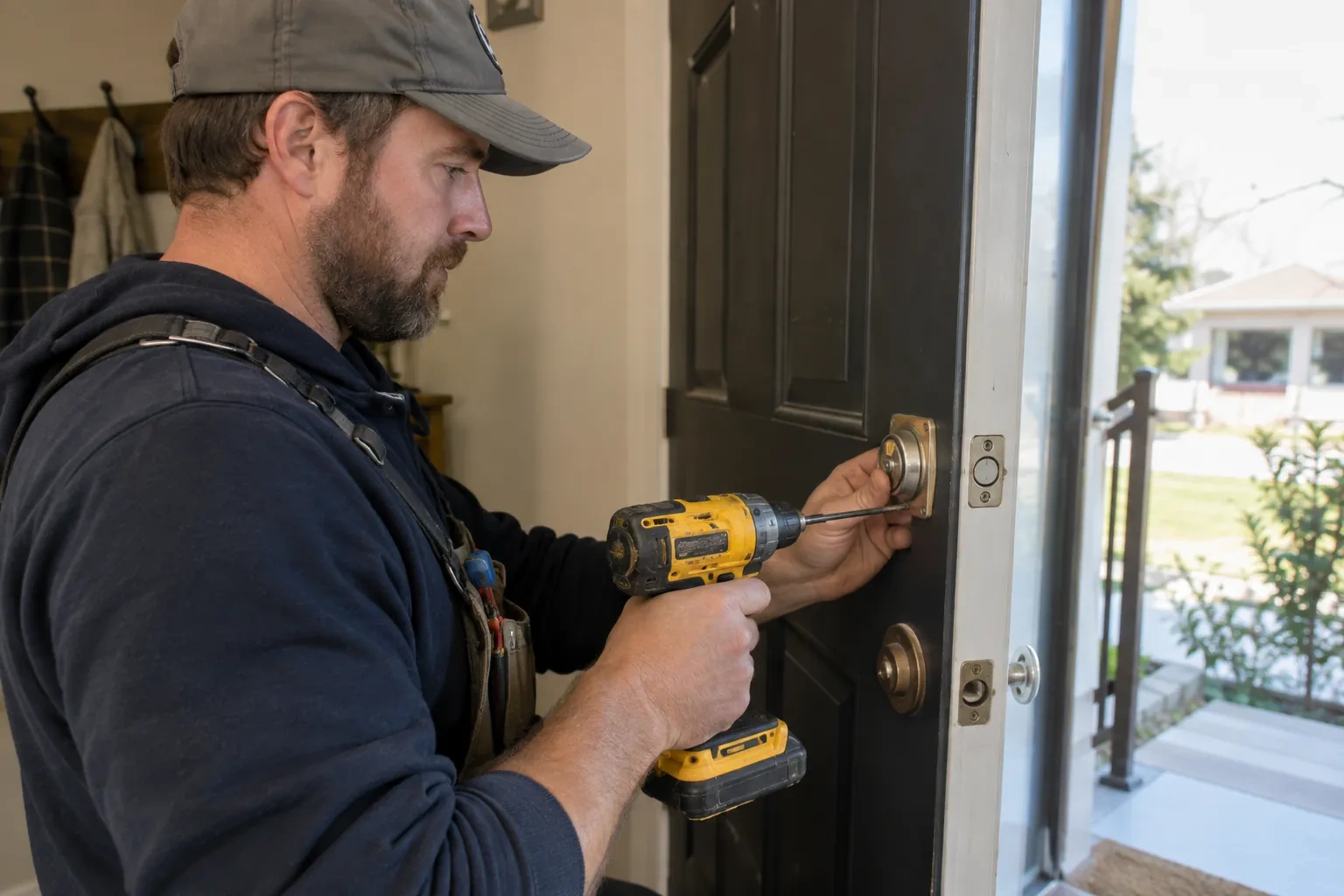
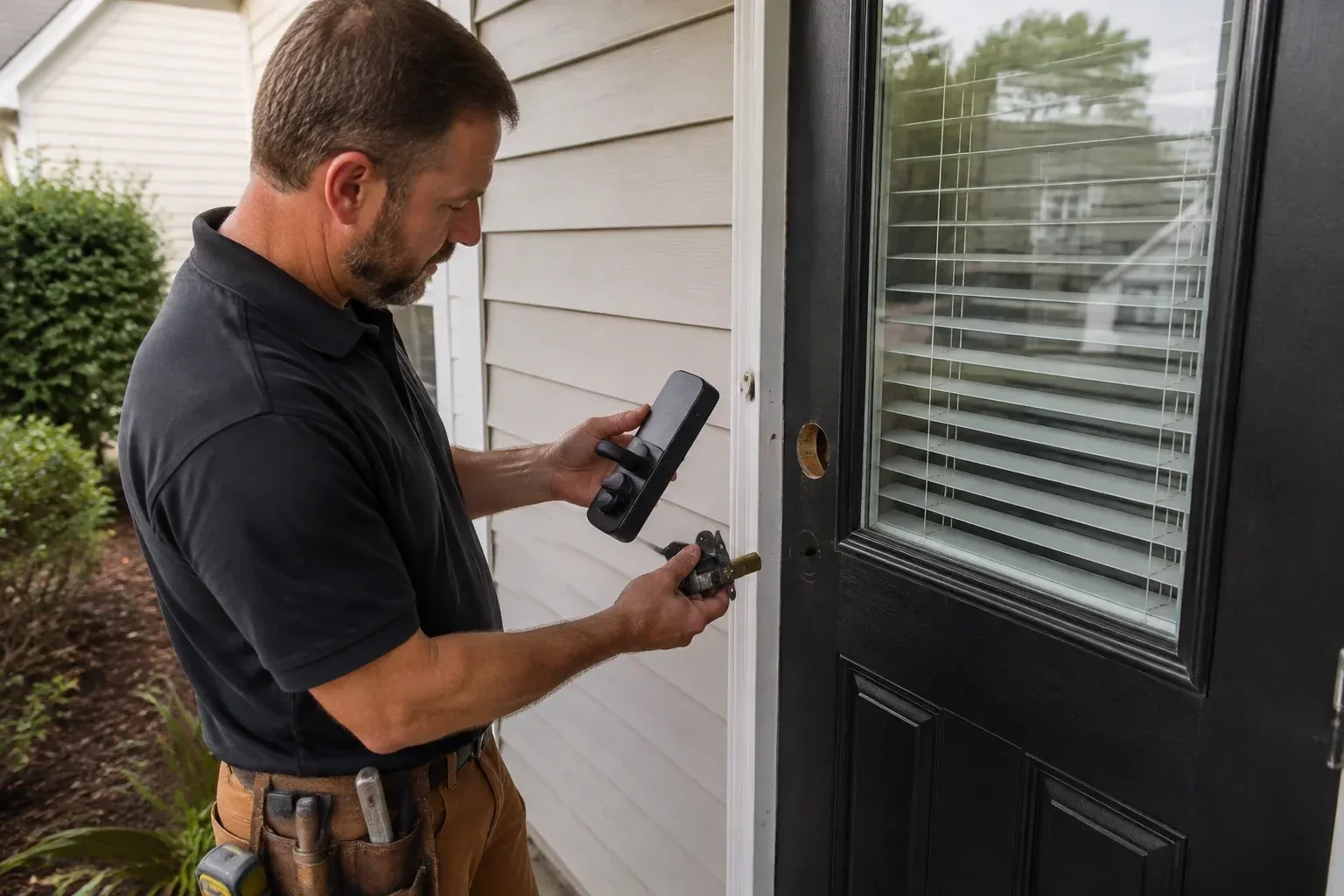
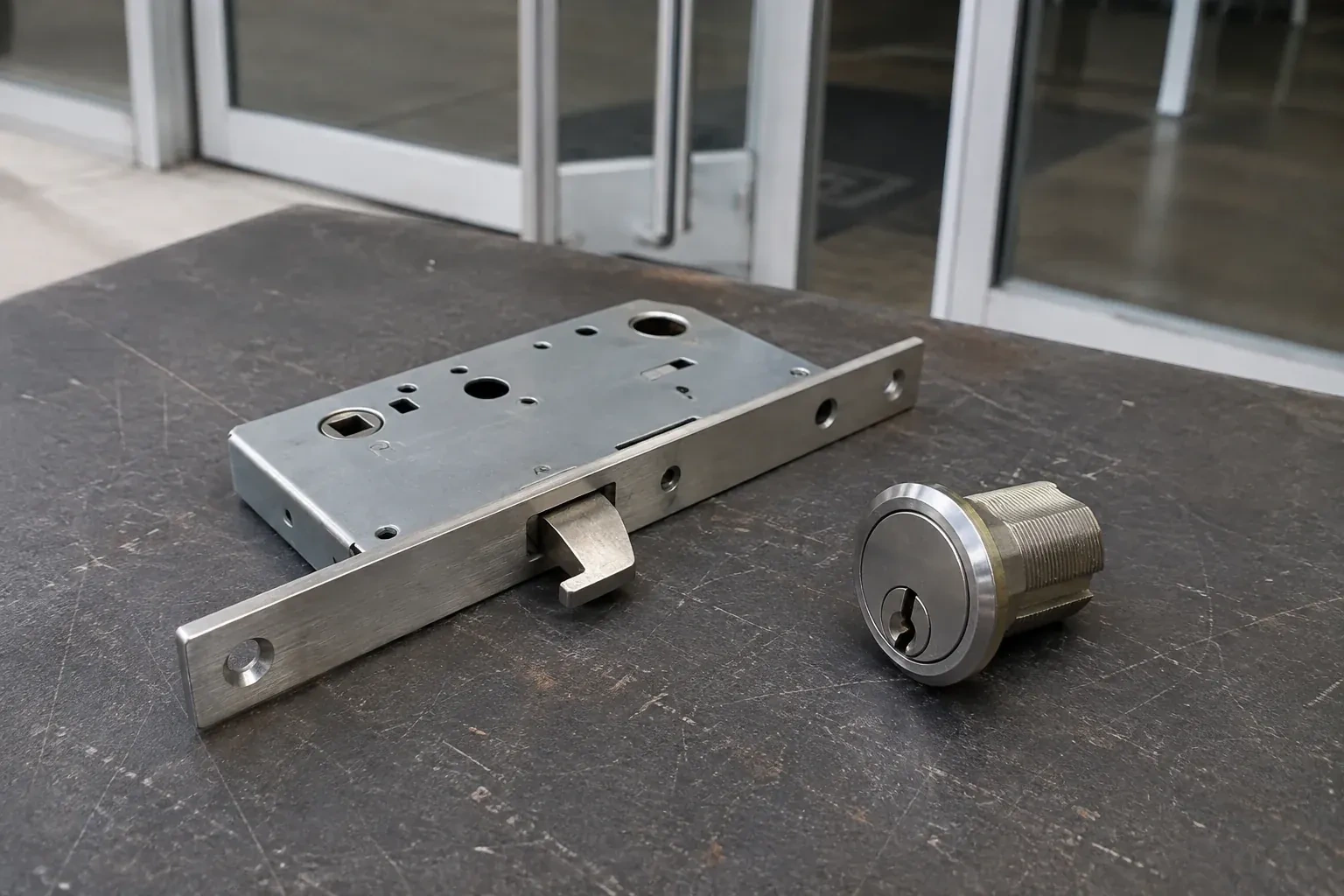
We look at the existing lock, the door thickness and the holes already drilled. Sometimes a new cylinder is enough; sometimes the whole lockset has earned its retirement.
02
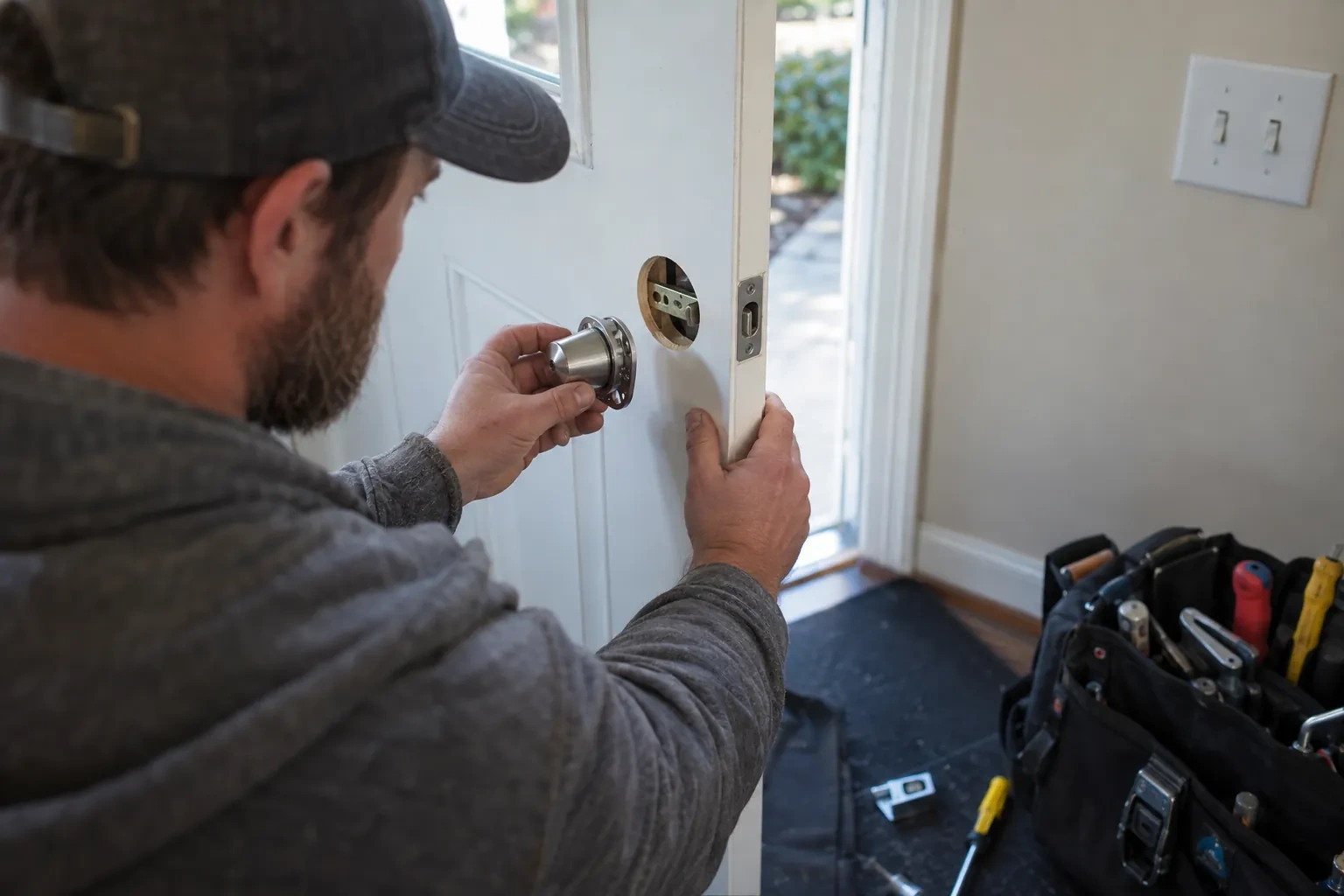
Fitting the new hardware
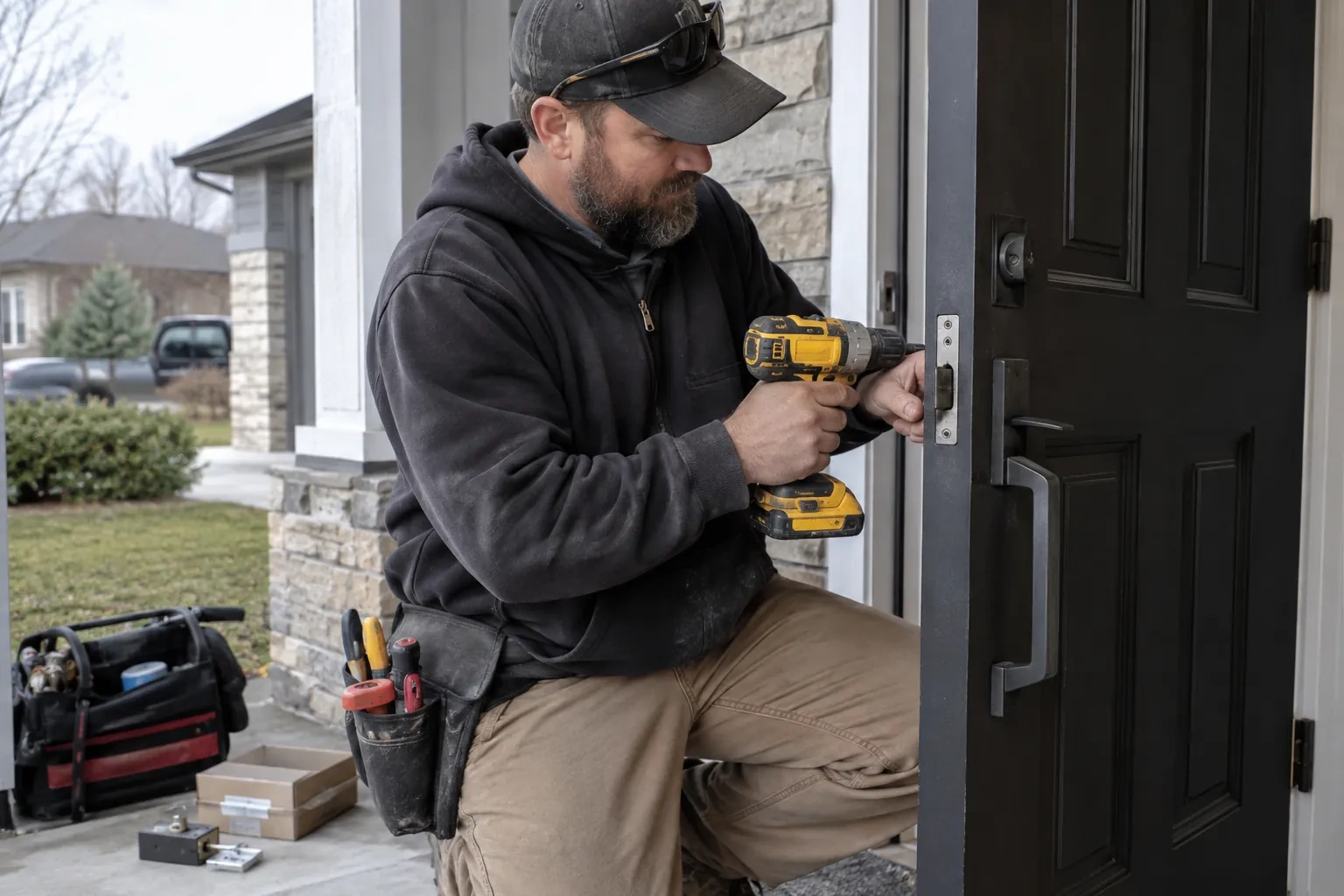
The new lock goes in with the strike adjusted so the bolt throws fully. If the old holes need filling or enlarging, that is done neatly.
03
Checking fit and finish
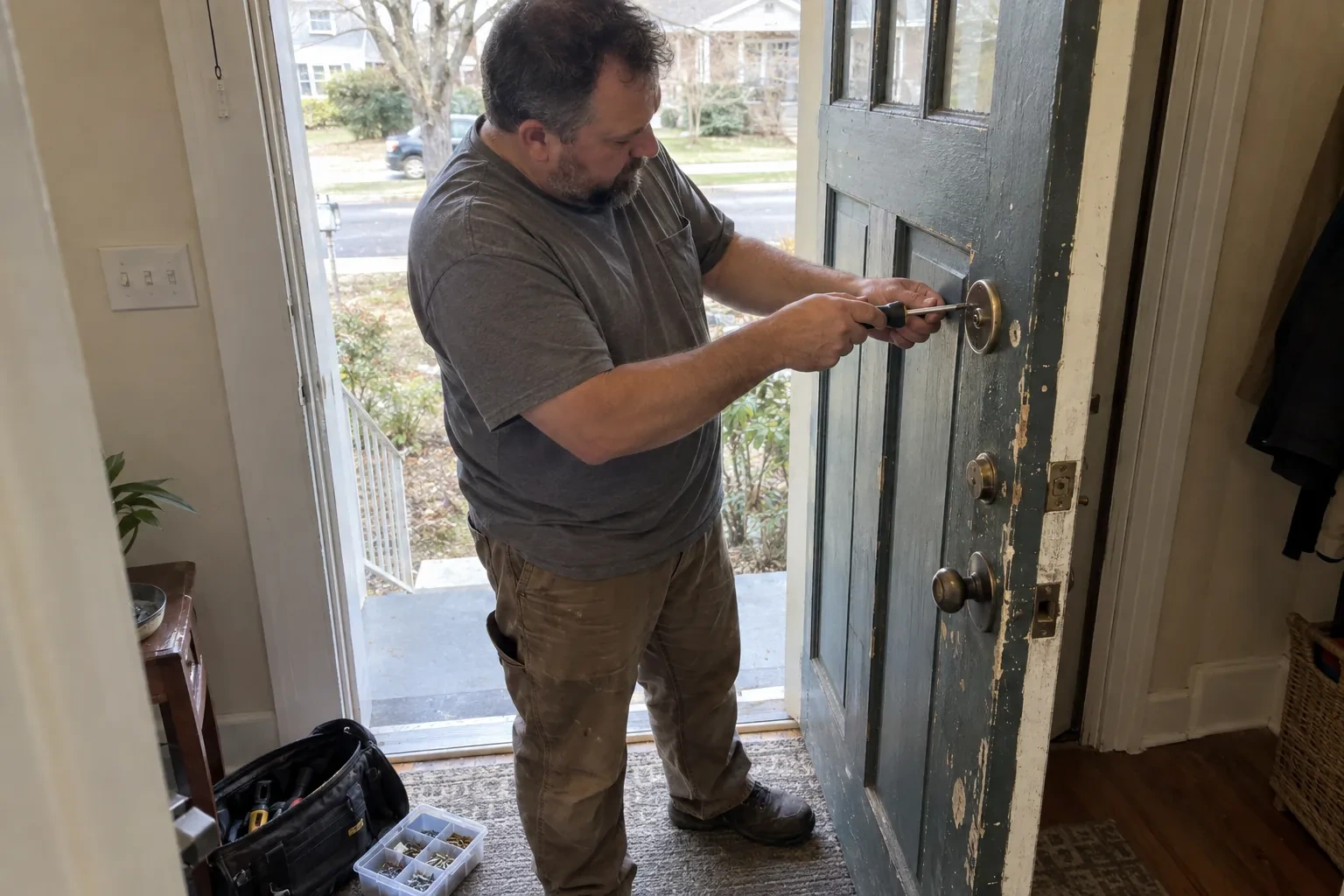
We test the lock with the door open and closed, from both sides, check the key turns without effort and clean up the doorstep before leaving.
About 47% of homes in Woolwich were built in 1980 or earlier, according to the 2021 Census.
In areas with homes from many decades, a locksmith gets to match the solution to the house rather than apply one answer everywhere. Period hardware stays on the houses that suit it; modern security goes where the door and the household want it.
Single-detached houses make up about 76% of homes in Woolwich (2021 Census).
Mostly houses
Where homes are mostly detached, patio and sliding doors deserve attention alongside the hinged ones. Auxiliary locks, pin locks and better latches for sliders are routine additions that a locksmith brings on the same visit as the front door work.
How many keys should a business have, and who should hold them?
Fewer than most businesses think, and every one of them named. Two people who can open, one of whom can be reached on a day off, cover the door. Cleaners and contractors get a key only if they need one and hand it back when the arrangement ends. Write down who has what, collect keys when people leave, and rekey when one does not come back. Interior keys for the cash office or stockroom follow the same rule on a shorter list.
The key snapped off inside the lock. What happens now?
The broken blade is removed with extractors that grip it and draw it out toward the face, then the cylinder is opened normally. Keys rarely break in a healthy lock, so the cylinder is cleaned, the cam behind it checked for stiffness, and a dry lubricant applied. A new key is cut from the code or from the two pieces rather than from a worn spare, since a tired copy is usually what broke.
Our alarm is armed. What happens when you open the door?
The opening is planned around it. Before any work, the person with the alarm code is ready to disarm, and where a monitoring company is involved they can be told to expect an entry at that address. If the contact trips anyway, the authorised person speaks to the station with the account password. Nothing about the alarm is bypassed; the door is opened, the system is disarmed normally, and the event is logged like any other.
Can a hardware store or kiosk copy my new key?
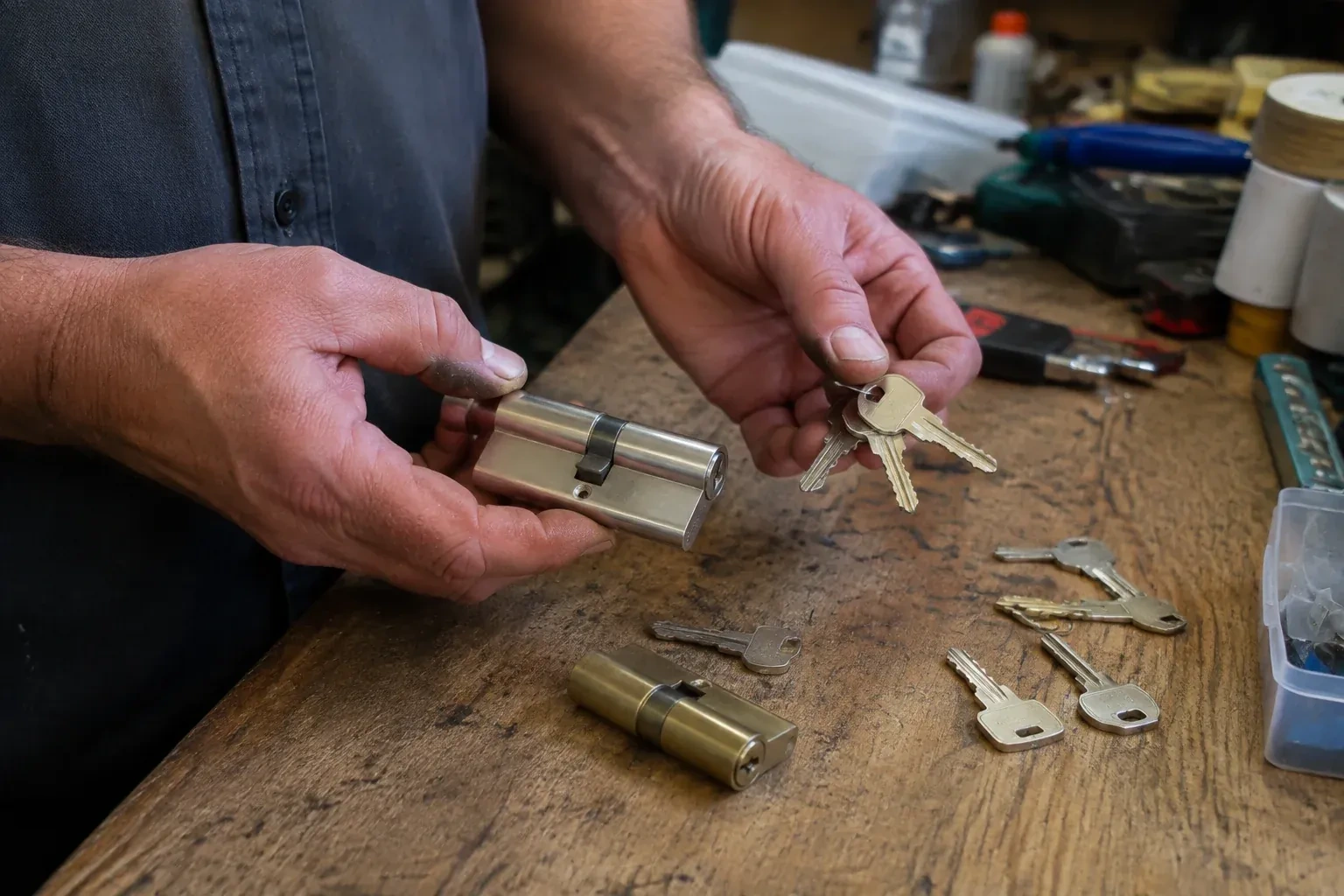
No. The blank for a patented keyway is distributed only through the manufacturer's network to locksmiths who hold the system, and the side milling or angled cuts need a machine set up for that line. A kiosk would have neither the blank nor the cut. Extra keys come through your locksmith, cut from code, once an authorised person has approved the order. That routine is a small inconvenience compared with never knowing who has a copy.
Request a visit
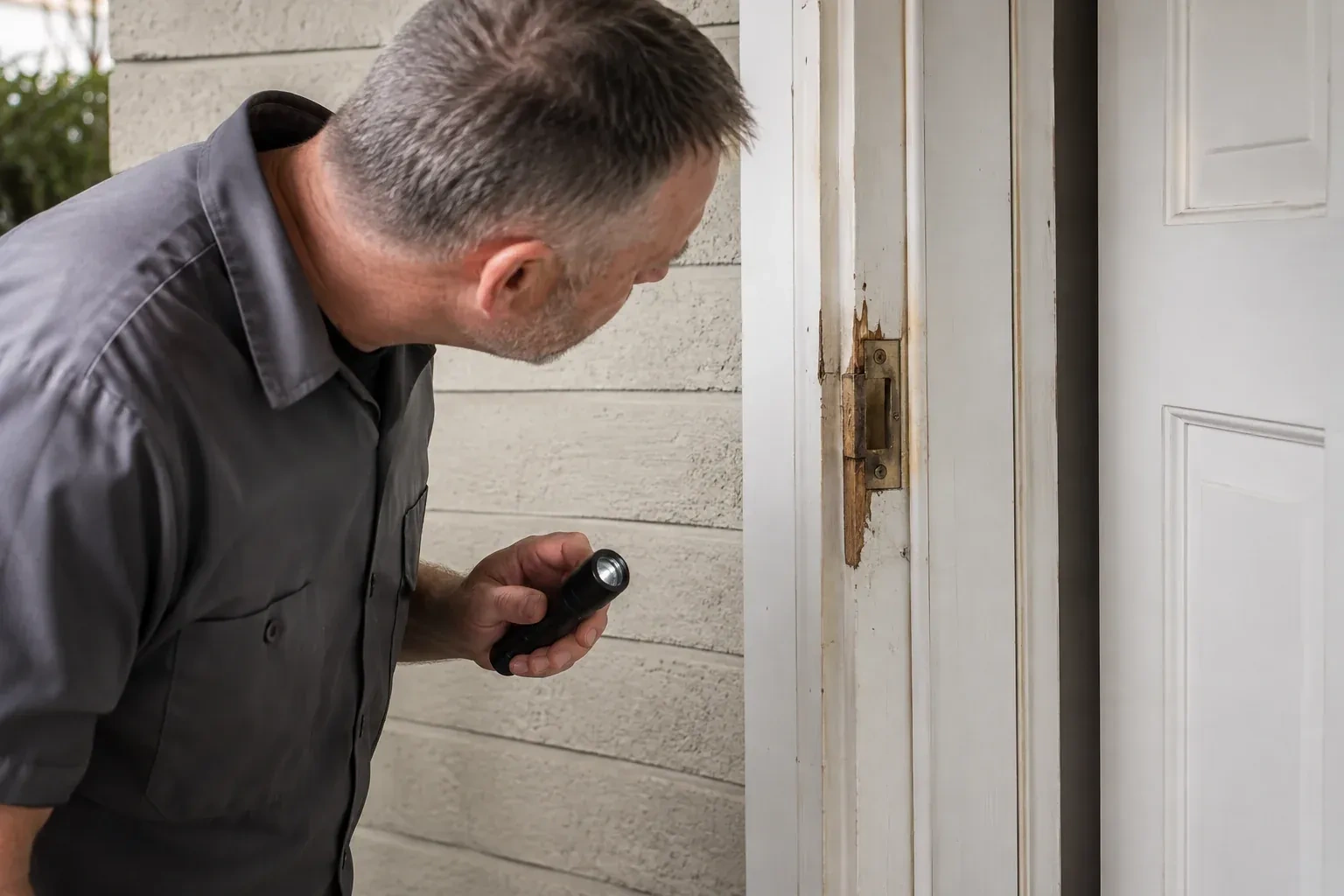
After a break-in, households in Woolwich need the door secured tonight and the decisions made later. We come out, board or repair what is damaged, replace or rekey anything that might have been compromised, and leave you with a locked house. Conversations about strike plates and better cylinders wait until the shock has passed and you are ready to have them.