Lockouts · Woolwich
Home Lockout Service
After a week of humid weather the back door has swollen in its frame.
In plain words
Where your key is decides most of what happens after the door opens. If it is sitting on the counter inside, the job is simply to open the door and hand the house back to you with the lock untouched. If the key has been lost somewhere in town, opening the door solves tonight but leaves a working key in circulation, so the sensible follow-up is to rekey the cylinder to a new key while the locksmith is already there. Either way the service begins with confirming you belong at that address and ends with a door that locks and unlocks normally.
How the visit goesYou stepped out to grab the recycling bin and the door swung shut behind you. Through the glass you can see your keys hanging on the hook by the stairs, exactly where they always are, and the latch has caught.
Home Lockout Service
How the visit goes
Reading the lock itself
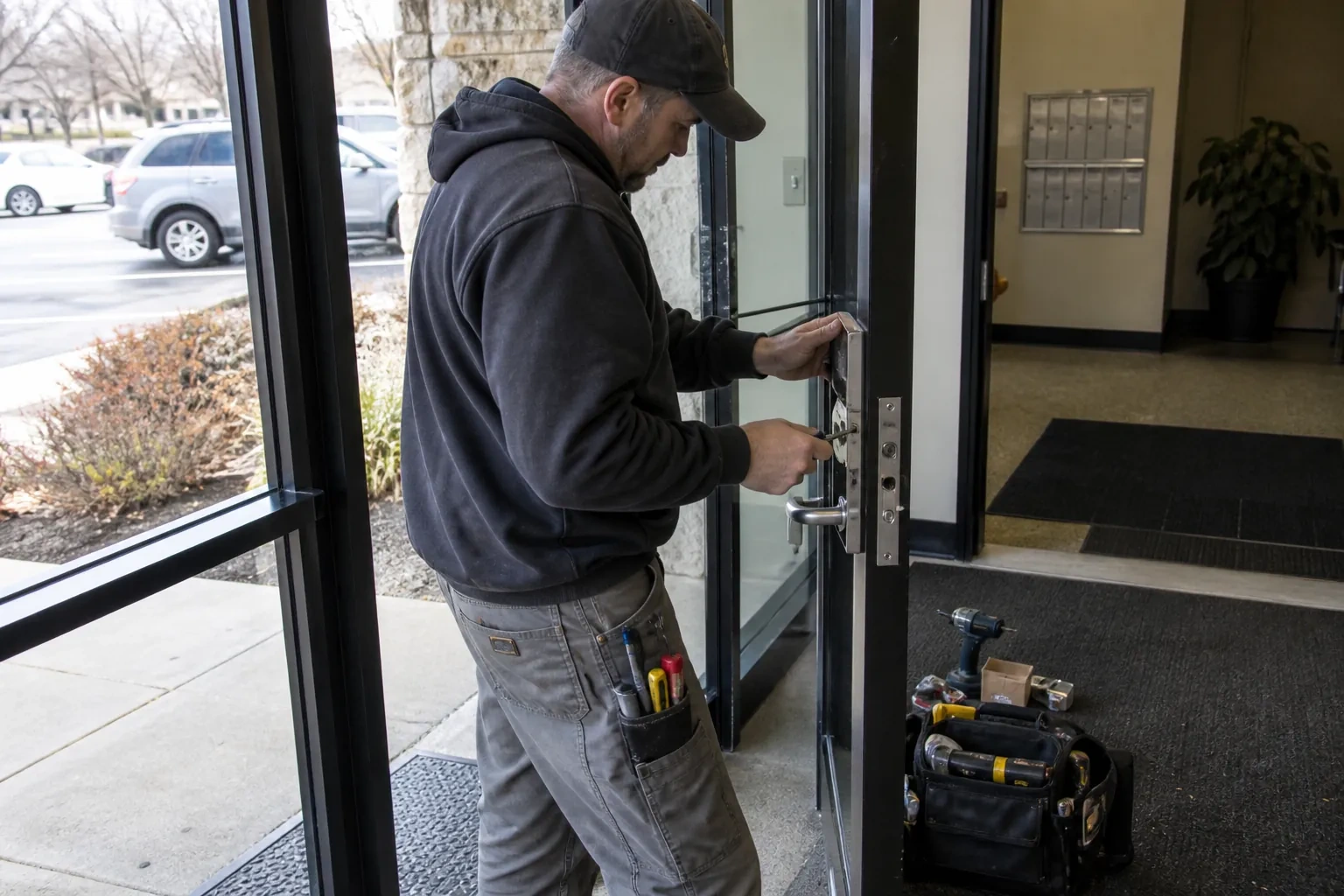
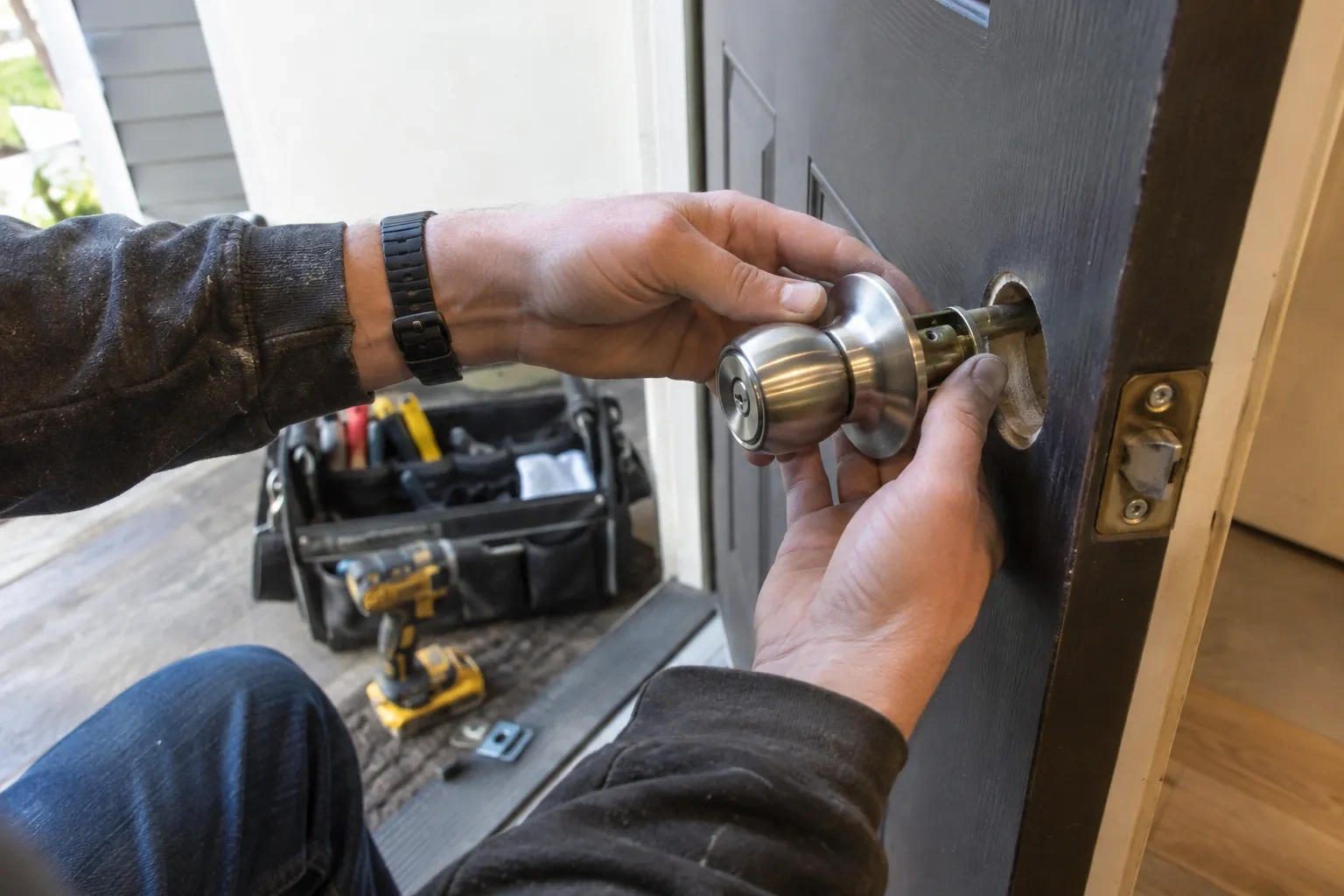
Every lock announces what it is to someone who knows where to look. The shape of the keyway, the maker's mark on the face, the presence of a thumb-turn or a second keyed side, and whether the door has a separate deadbolt above a latching knob all tell the locksmith which family of hardware they are dealing with. A residential pin-tumbler cylinder, a mortise case in a century home, a restricted keyway with security pins and a keypad lock with a hidden override each respond to different techniques. Identifying the lock correctly before touching it is what makes a clean, non-destructive opening the usual outcome.
Relieving a bound door
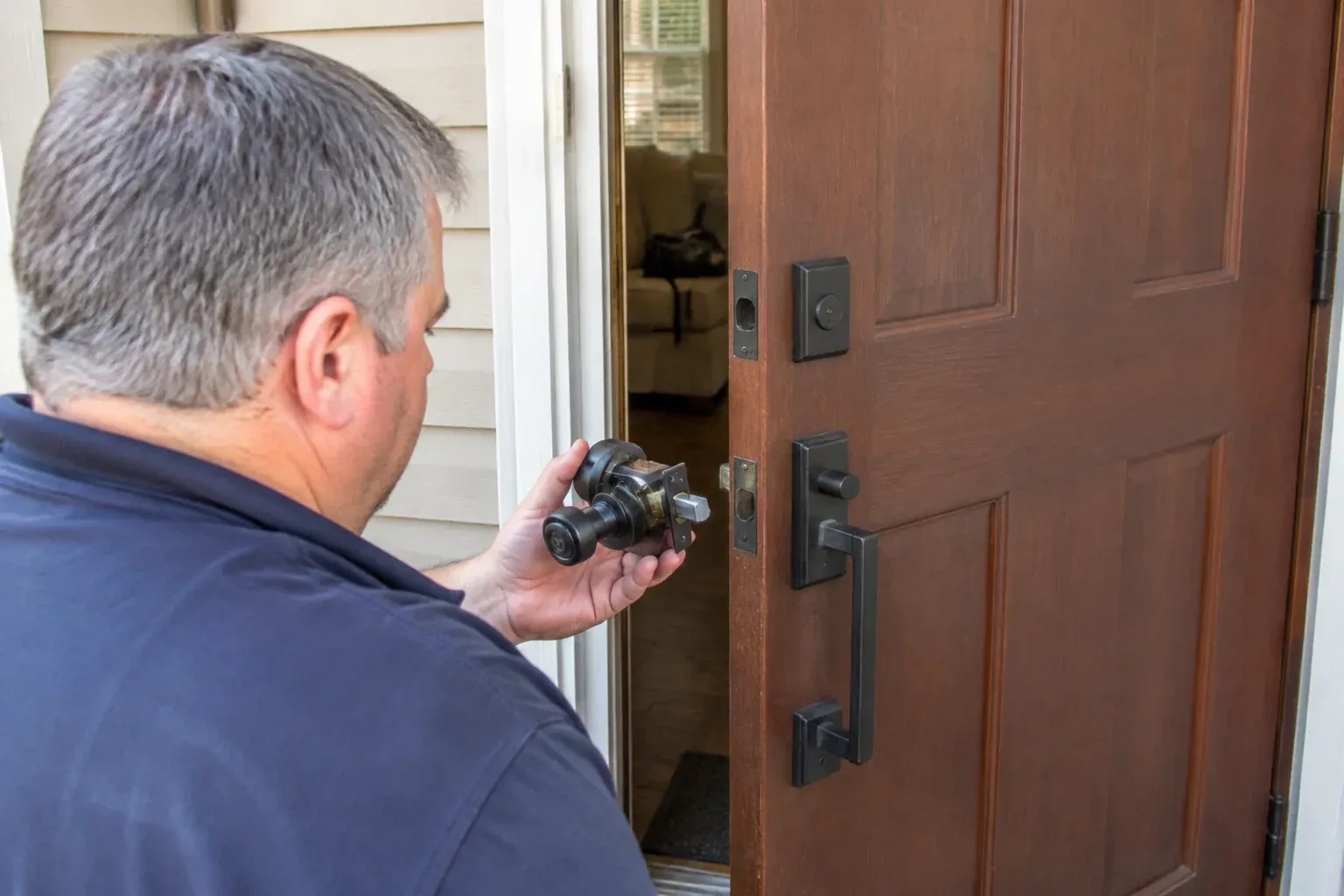
When the bolt is jammed against the strike because the door has swollen or sagged, picking achieves nothing until the pressure comes off. The locksmith lifts or leans on the door to bring the bolt back into line with its pocket while the key or pick turns the cylinder, and the bolt slides home. With the door open, the cause is addressed so it does not lock you out again: tightening or shimming a hinge that let the door drop, dressing the strike pocket so the bolt has room, or trimming a weatherstrip that pushes the door out of square. The lock was never the problem; the door simply moved around it.
A door and frame that line up again
When the lockout traced back to a door that had sagged or swollen, you get more than an open door: the reason is dealt with. Hinge screws that had worked loose are tightened or replaced with longer ones that bite into the framing, the strike plate is adjusted or its pocket deepened so the bolt has room to throw fully, and any weatherstrip that was pushing the door out of square is trimmed. Afterwards the bolt should slide with a fingertip on the thumb-turn and no shoulder on the door. Check it again at the turn of each season, since wood keeps moving with the humidity, and a two-minute screw check saves a return visit.
Home Lockout Service
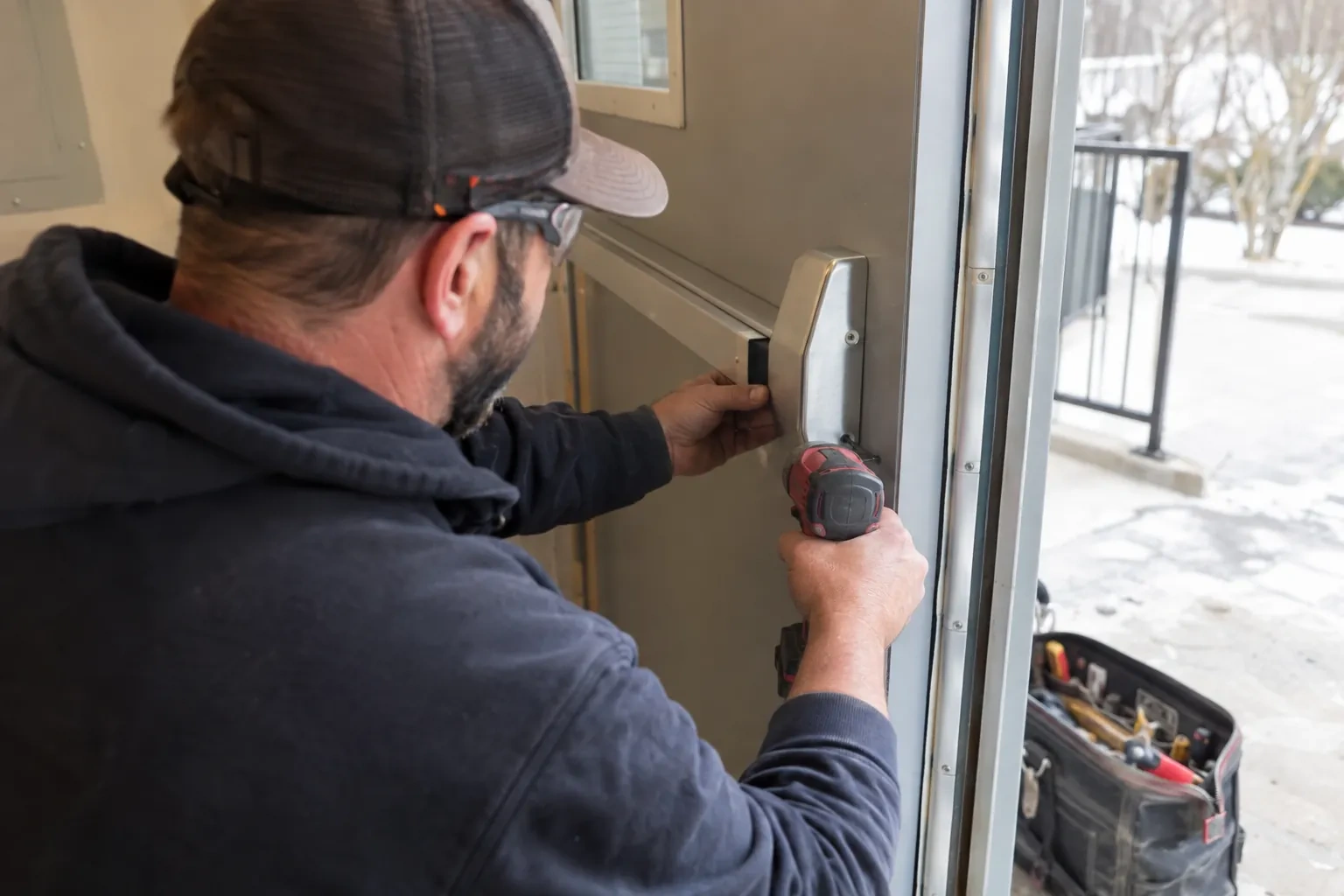
In the van
Pick and tension tools
Cylinder decoder
Dry graphite or PTFE lubricant
Broken key extractors
Strike plate and long hinge screws
Home Lockout Service
What affects the quote
Interior door or exterior door
A bathroom privacy lock or a bedroom door is generally a lighter job than an exterior deadbolt, and an old keyed interior mortise lock sits somewhere between. The quote follows the hardware, not the room.
Distance to your door
Travel is part of every call-out. A house across town and a rural property at the end of a long road involve different driving time, and the quote reflects the trip as well as the work.
Restricted or high-security keyways
Security pins, sidebars and patented keyways take longer to open and, if replaced, cost more as hardware than a standard cylinder. Restricted keys also have to be cut from the system's records rather than duplicated.
What to have ready
- Is there a second door, a garage entry or a spare key nearby you could use?
- Has anyone already tried to open the door with a card or tool?
- Which door are you locked out of, and what kind of lock is on it?
Home Lockout Service: questions
QuestionsWhat should I have ready when I call about a lockout?
The address and which door you are outside of, what kind of lock is on it as far as you can tell, and where the key is: inside, lost, broken or simply refusing to turn. Mention whether the door is a rental, whether anyone is inside, and whether the lock is electronic. If you have photo identification on you, say so; if not, say that too so the verification route is agreed before the locksmith arrives.
My lock is a high-security model. Can it still be opened?
Yes. High-security cylinders with security pins, sidebars or restricted keyways are designed to slow an intruder, and they do slow a locksmith too, but they open with the right technique, a decoder made for that keyway, or as a last resort a precise drill through the cylinder followed by a like-for-like replacement. Bring any key card or code card that came with the lock, since restricted keys are cut from those records rather than copied.
How long does a home lockout usually take once the locksmith arrives?
The opening itself is often the shortest part of the visit; verifying identification, examining the lock and testing the door afterwards take a share of the time too. A standard knob or deadbolt on a well-fitting door is generally a matter of minutes, while a high-security cylinder, a frozen lock or a swollen door takes longer. If a cylinder has to be drilled and replaced, or locks are rekeyed while the locksmith is there, allow extra time for that work.
Related services
- Broken Key ExtractionOvernight the deadbolt froze, and this morning the key would only turn partway.
- Break-In Damage Lock RepairYou came home to find the front door standing open.
- Seized & Jammed Lock OpeningIt is the coldest morning of the winter and the key goes halfway into the side door and stops.