Lockouts · Woolwich
Business Lockout Service
The key went in stiffly, turned a quarter of the way, and came out in two pieces.
In plain words
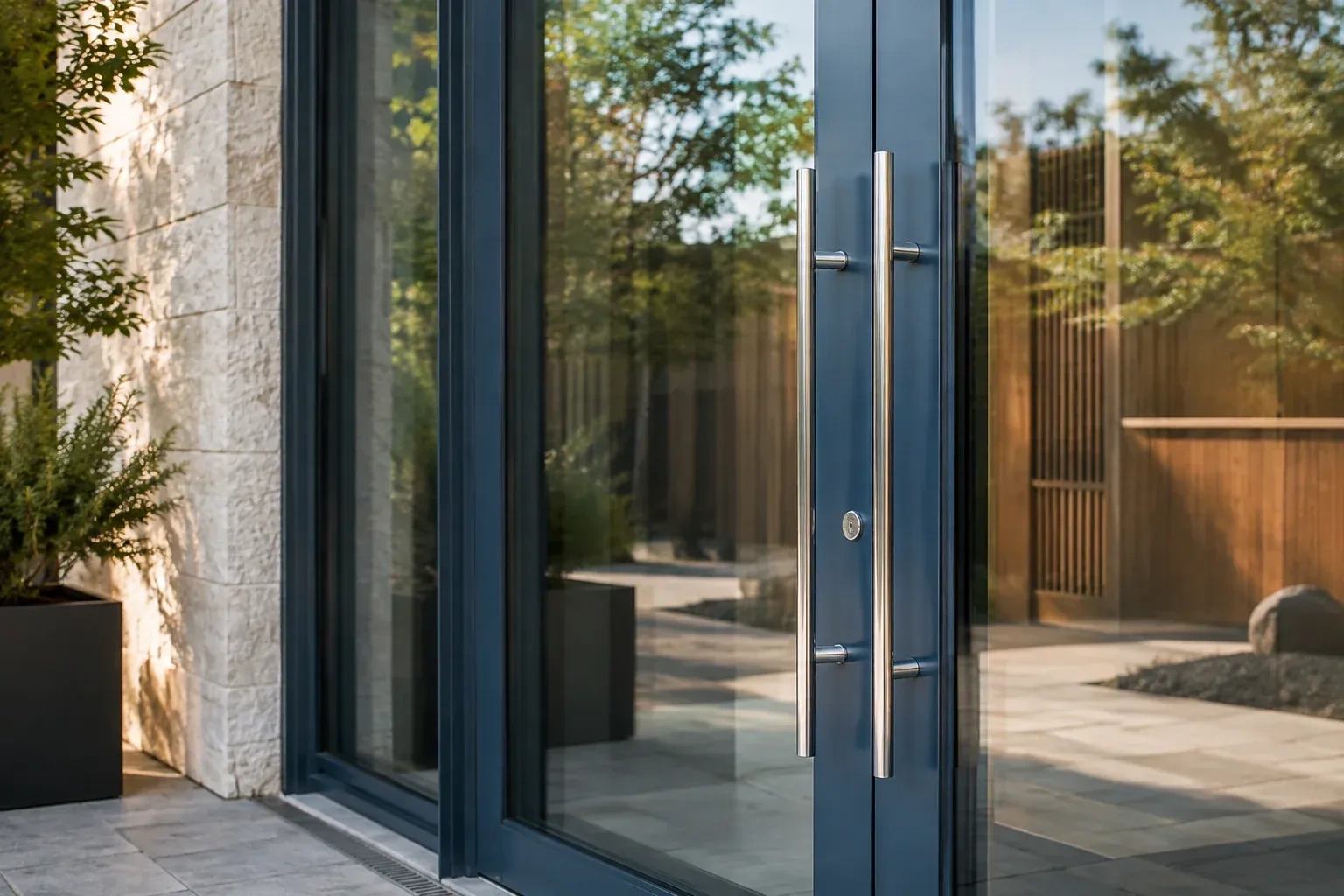
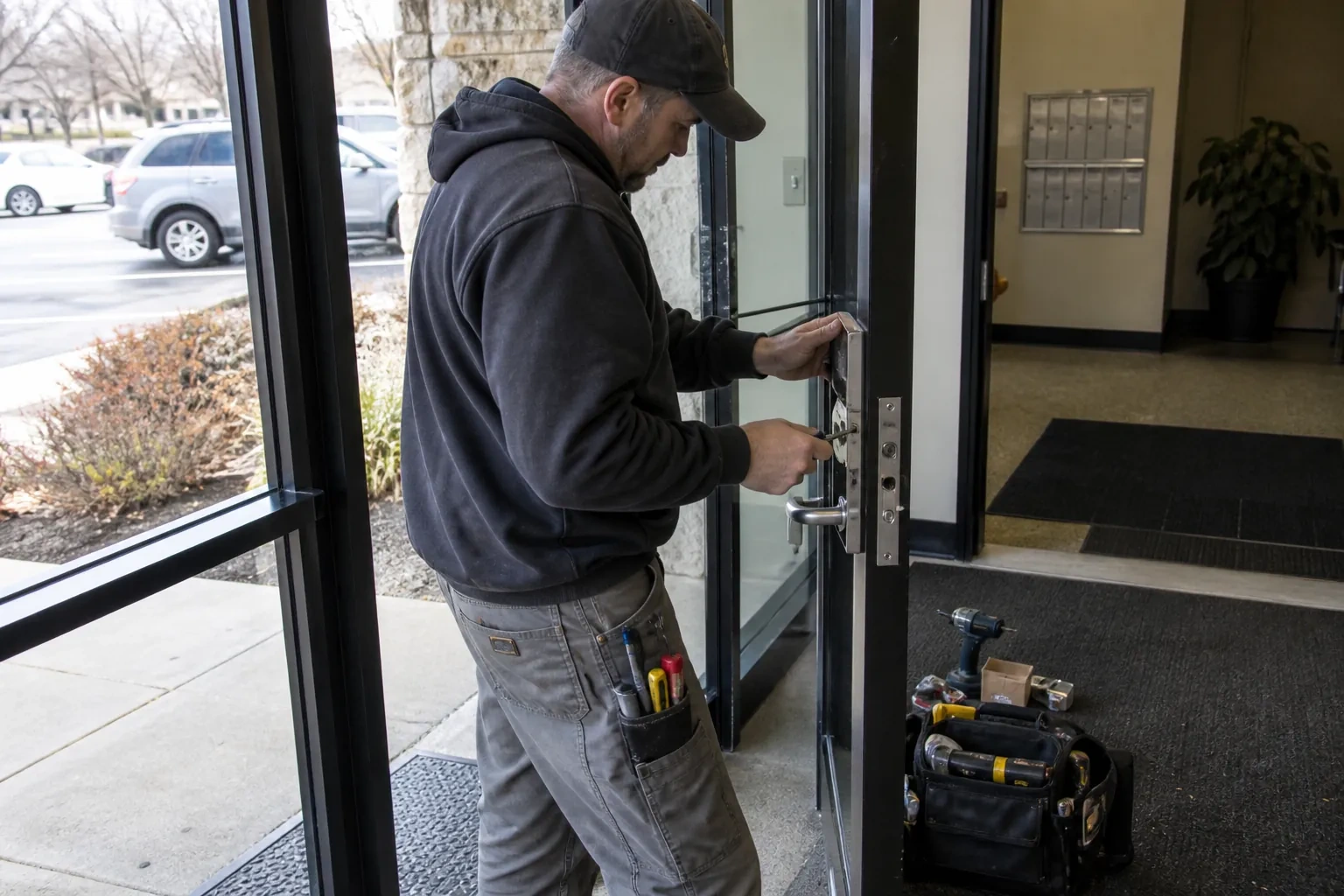
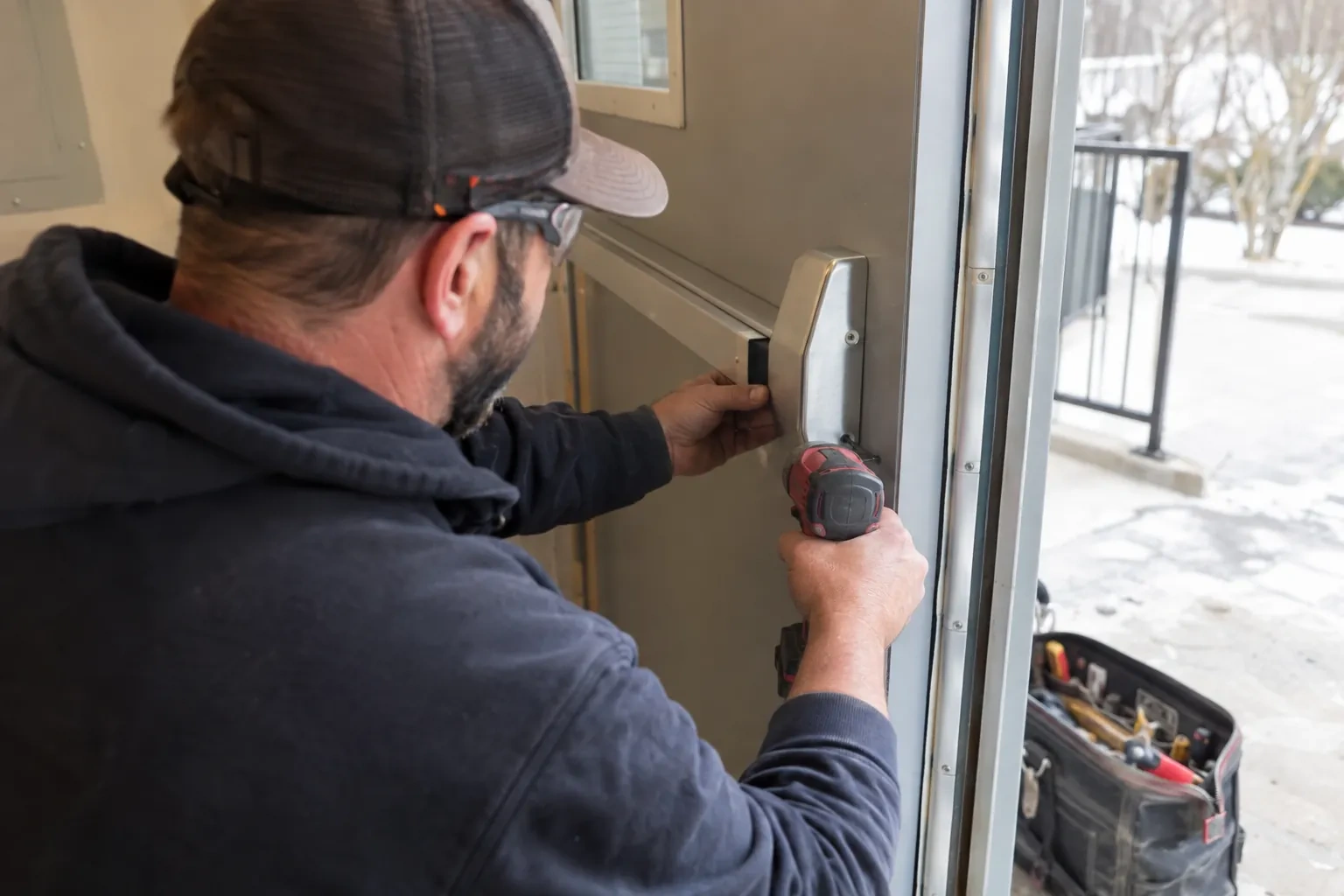
Heavy commercial doors move, and a good share of business lockouts are really door problems. A glass storefront door hangs on pivots or a continuous hinge that wear with thousands of openings a week, and once the door drops a few millimetres the hookbolt or latch binds against its strike. A hydraulic closer that has stiffened in the cold or lost its adjustment leaves a door that never latched properly the night before. Part of a lockout visit is reading the door: lifting it back into line, adjusting the strike and closer, and making sure the lock is asked to do only what a lock should do.
How the visit goesThe heavy glass door has been scraping the threshold for weeks. This morning the key turns, you can hear the bolt trying to move, but it is jammed hard in the strike and the door stays shut no matter how the handle is pulled.
Business Lockout Service
How the visit goes
Which door and what is fitted to it
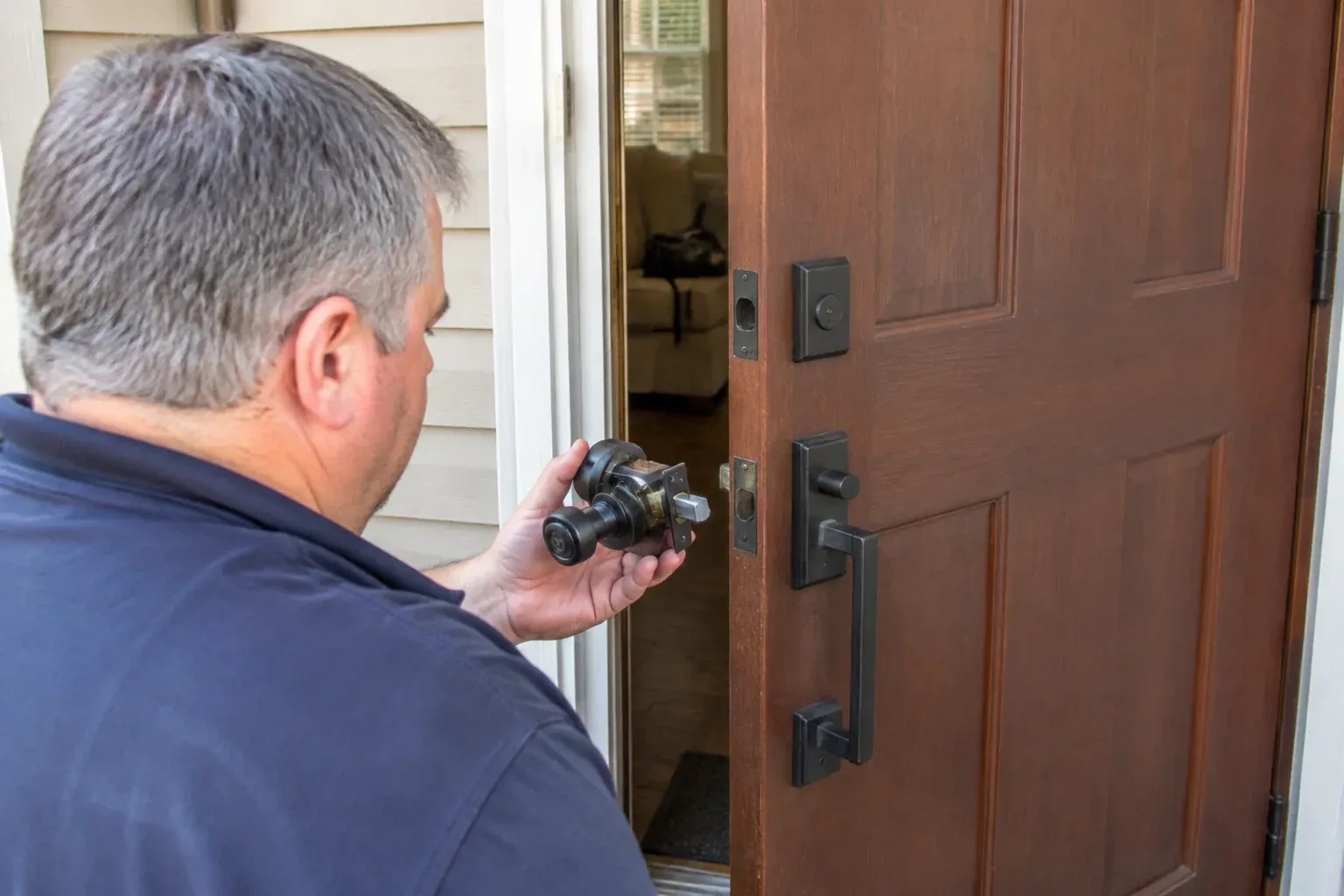
Commercial hardware is identified before it is touched. On a glass storefront door the locksmith looks at the narrow stile for a mortise cylinder, a paddle or thumb-turn inside, and the shape of the bolt in the edge: a hookbolt, a swing bolt or a spring latch with a deadlocking plunger. On a wood or steel door the tell is a lever with a small cylinder in its face, a full mortise lock with a separate deadbolt, or the outside trim of an exit device. A figure-eight core face means an interchangeable core system. Each of these points to a different opening method and a different set of spares from the van.
Extracting a snapped key and finding out why
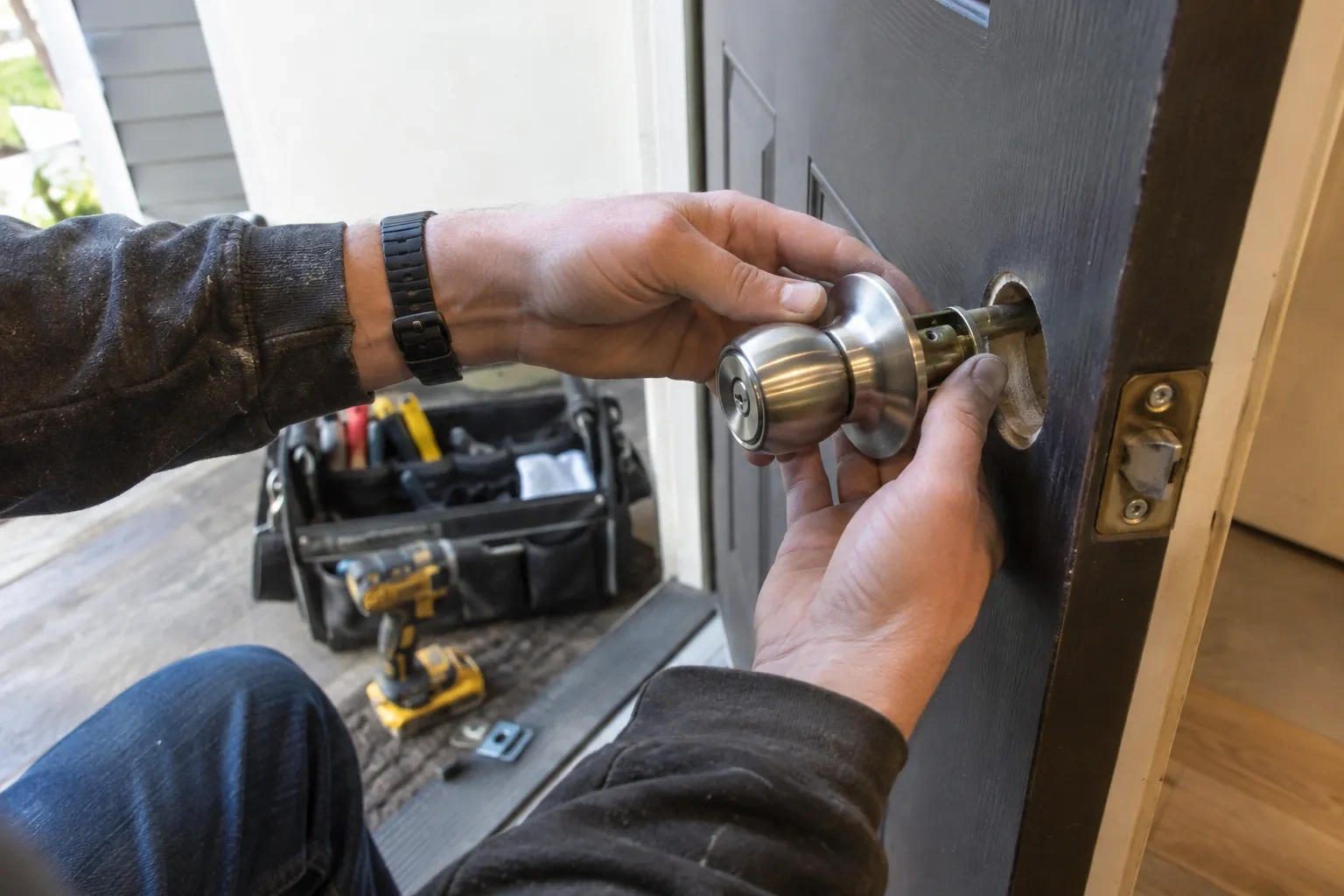
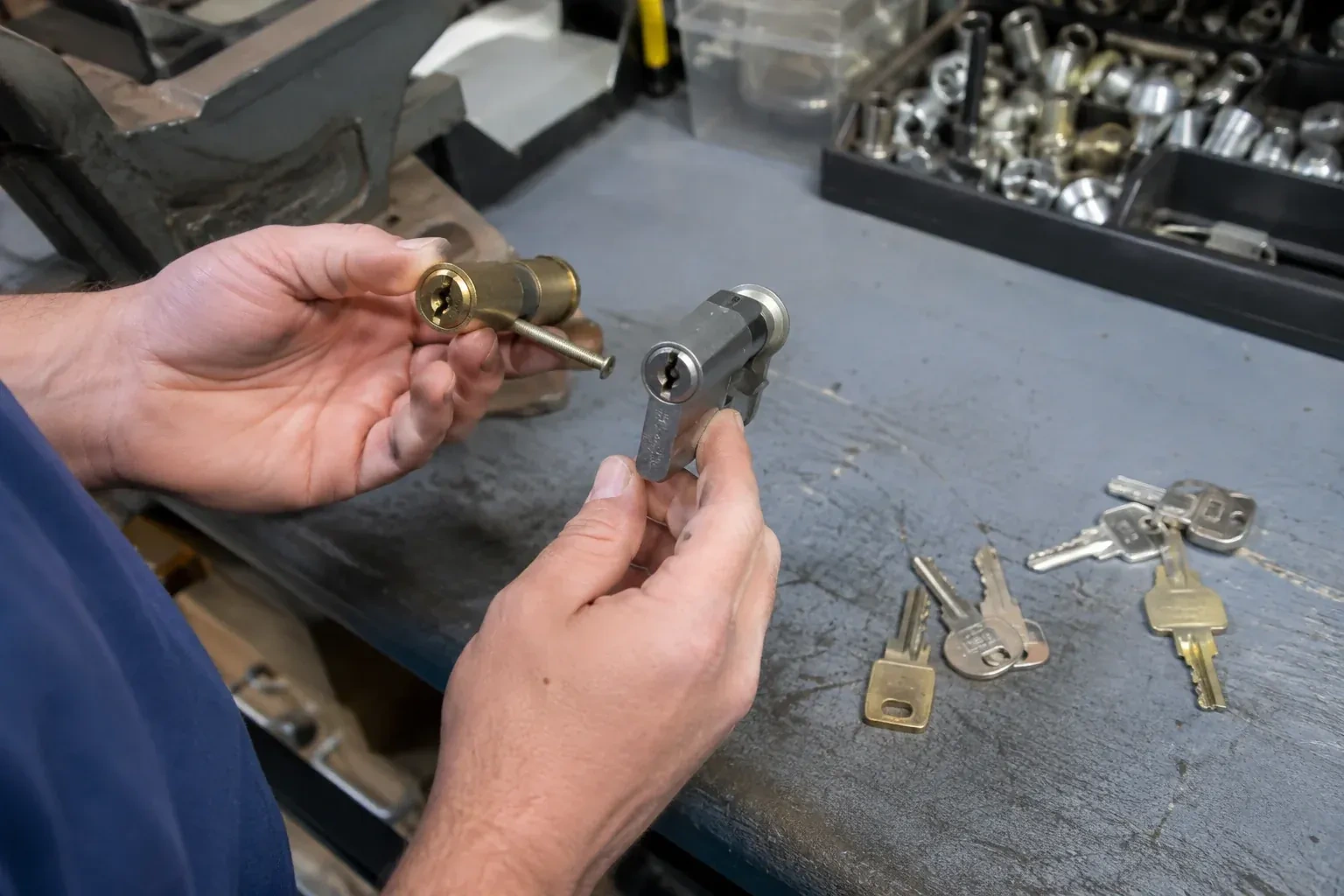
A key that broke off in a commercial cylinder is drawn out with extractor tools that grip the blade and pull it toward the face, never pushing it deeper. With the fragment out, the cylinder is picked or decoded and the door opened. The two halves of the key are then compared with a fresh blank, because a key rarely breaks in a healthy lock: a bent or thin copy, a cylinder full of grit, or a stiff cam behind it is usually the cause. The cylinder is cleaned and lubricated with a dry product, the cam checked for wear, and a new key cut from the code or from the pieces rather than from another tired copy.
Keys you can account for
After a rekey or a core swap you receive a counted set of new keys, cut from the fresh combination rather than copied from a worn original. The sensible next step is a key register: a page or spreadsheet naming each keyholder, the key they carry and the date it was issued, updated when someone leaves. Manufacturers put it plainly: locks only limit access if the keys that work them are controlled. A restricted keyway, where blanks are supplied only through authorised channels, puts real controls around duplication, though the exact process varies by program, and can be introduced now or later. Interchangeable cores make future staff changes a matter of swapping a core rather than a rekey.
Business Lockout Service
In the van
Replacement mortise and rim cylinders
Commercial pick and tension tools
Control keys and core-removal tools
Exit device trim cylinders and dogging keys
Interchangeable cores pinned to system
Business Lockout Service
What affects the quote
Standard or high-security cylinder
Restricted keyways, security pins and patented cylinders take longer to open and cost more to replace, and their keys are cut from system records rather than copied at a counter.
Door, pivot and closer adjustment
When the lockout was really a dropped door or a tired closer, lifting the door, adjusting pivots or a continuous hinge, moving the strike and resetting the closer are quoted as their own item beside the opening.
How many doors are involved
One front door is the simplest visit. A front door, a rear exit device, a roll-up padlock and a cash office add hardware to open and, often, cylinders to key alike afterwards.
What to have ready
- Which door are you locked out of, and what does the lock on it look like?
- Has anyone already tried to force or pry the door?
- Does the door use a card reader, keypad or intercom, and is it showing any lights?
Business Lockout Service: questions
QuestionsWhat is a restricted keyway and is it worth having for a business?
A restricted or patented keyway is one whose blanks are supplied only through the manufacturer's authorised channels, so duplication is controlled rather than available at an ordinary counter, though the exact authorisation step varies by program and is not always a signed letter. For a company with staff turnover, cleaners and contractors, it means the keys in circulation are far easier to track. It can be introduced during a rekey, on the exterior doors only or across the whole premises, and works alongside a key register.
What should I have ready when I call?
The address and unit number, which door you are outside, what the lock looks like, and where the keys are: with someone, lost, broken or simply refusing. Say whether there is an alarm or a card reader on the door, who can disarm or confirm your authority, and whether the building has a property manager. If you can send a photo of the lock and the door edge, the right cylinders and cores come on the first trip.
I am an employee, not the owner. Can you still open the door for me?
Yes, with the owner or a manager in the loop. Tell the locksmith who can confirm you work there and how to reach them. A call to the business owner, the regional manager or the property manager, ideally on a number that can be looked up rather than one you supply, settles it. Staff on an opening shift arrange this on the phone before the locksmith arrives so nothing waits at the door.
Related services
- Broken Key ExtractionOvernight the deadbolt froze, and this morning the key would only turn partway.
- Break-In Damage Lock RepairYou came home to find the front door standing open.
- Seized & Jammed Lock OpeningIt is the coldest morning of the winter and the key goes halfway into the side door and stops.