Commercial · Elmira
Commercial Rekeying in Elmira
The renovation is finished and the contractors have gone, along with the loaner keys they used for six weeks.
In plain words
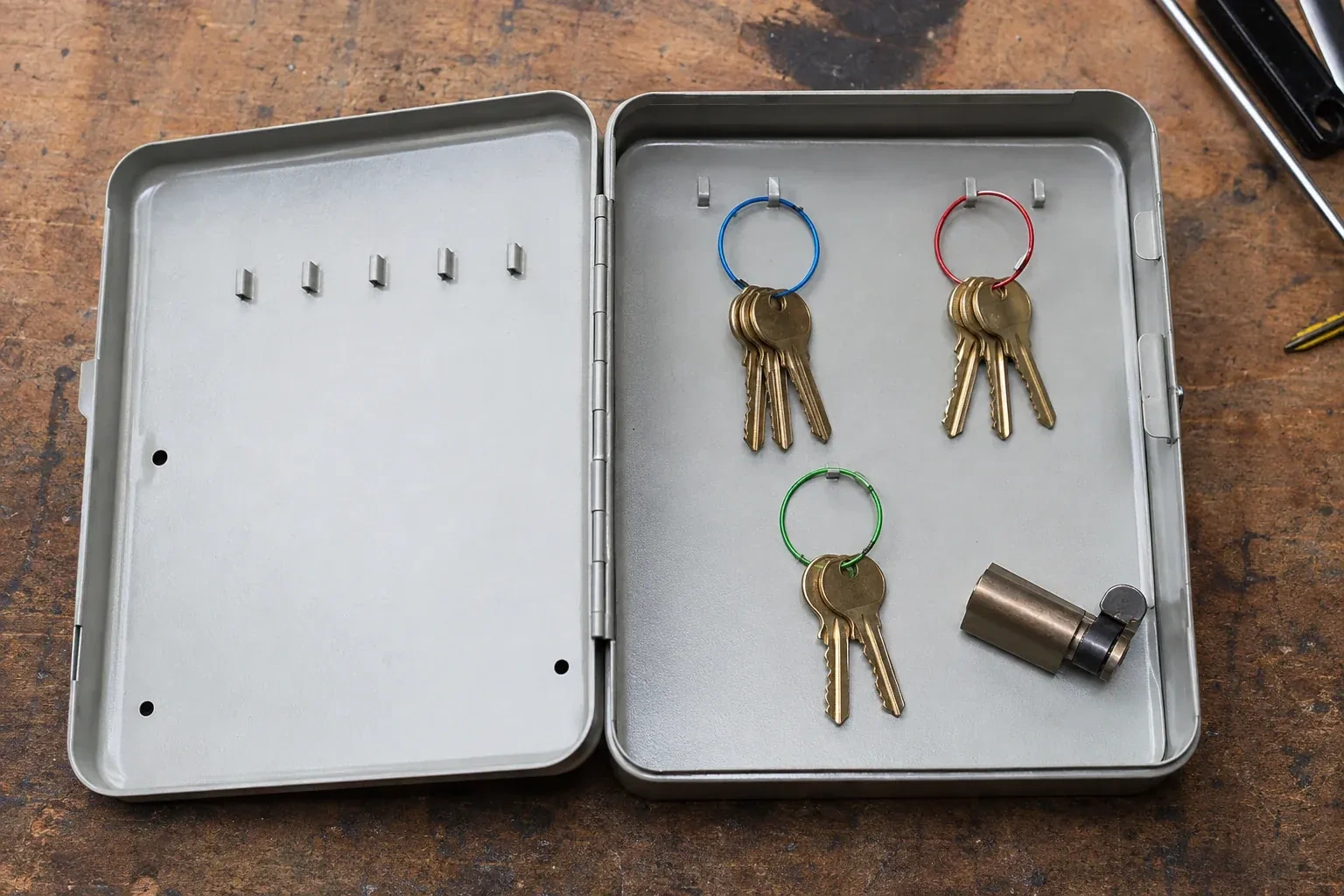
Changing the locks answers today's question; key control keeps it answered. During a commercial rekey the new keys are stamped with a serial code rather than the business name or address, so a dropped key tells its finder nothing. Each key is logged against the person who receives it, and the old keys are collected and cut up on the spot. For premises that want copies kept out of hardware stores, the cylinders can be set up on a restricted keyway, with blanks released only against a signed authorization. What you end up with is a set of locks whose keys you can account for years later.
How the visit goesA key turned up in the parking lot with the shop's name on its fob. It came back to you, which is lucky, but it means keys are leaving the building on rings you have never seen, and the shop's locks have not changed since opening day.
Commercial Rekeying
How the visit goes
The state of the cylinders and the doors
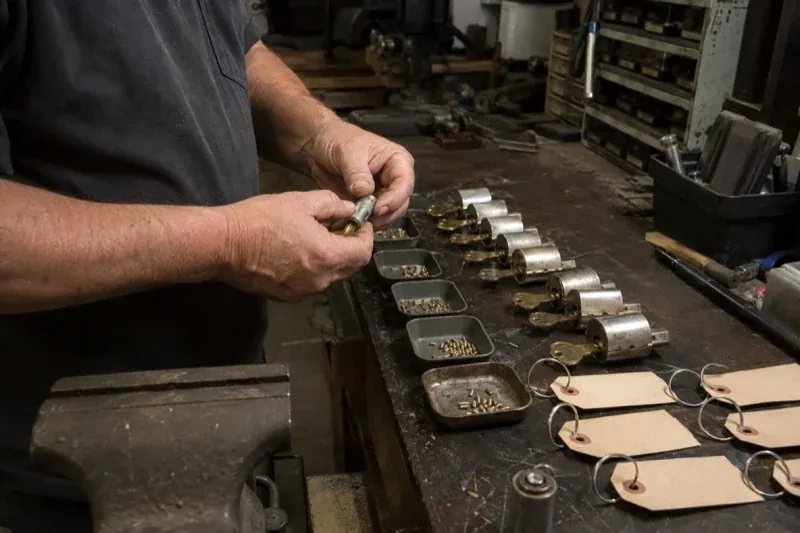
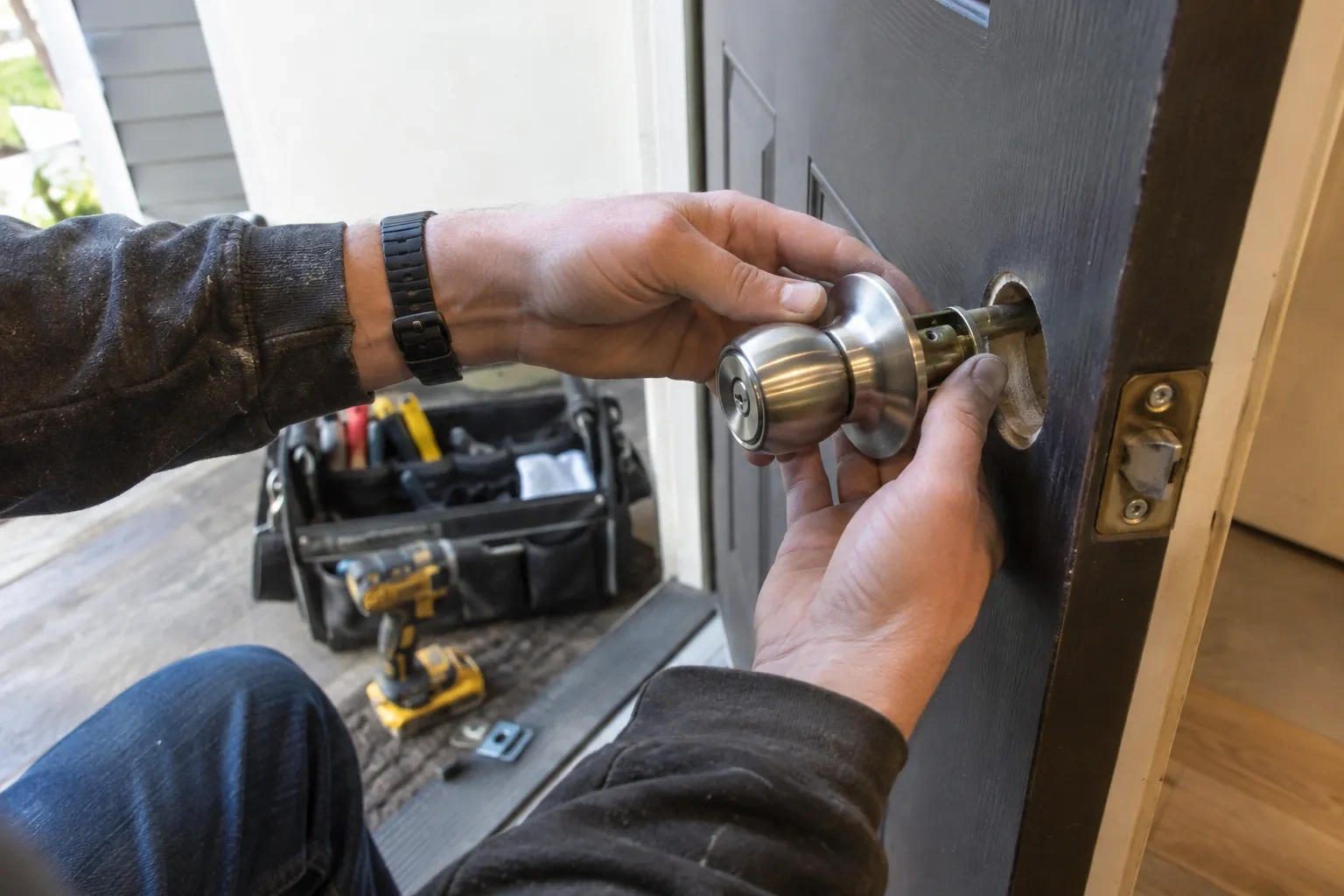
A cylinder about to be repinned is examined the way a mechanic looks over a part before rebuilding it. The plug should turn smoothly with the right key, the pins should spring back cleanly, and the face should be free of the green bloom that salt spray leaves on storefront hardware after a few winters. The locksmith also checks how the door closes: a strike that no longer lines up, a closer that slams, or a deadlatch that fails to catch will keep a freshly rekeyed door from locking properly. Most cylinders pass and are repinned; a worn or corroded one is pointed out so you can choose a replacement for that opening.
Door by door, never a gap
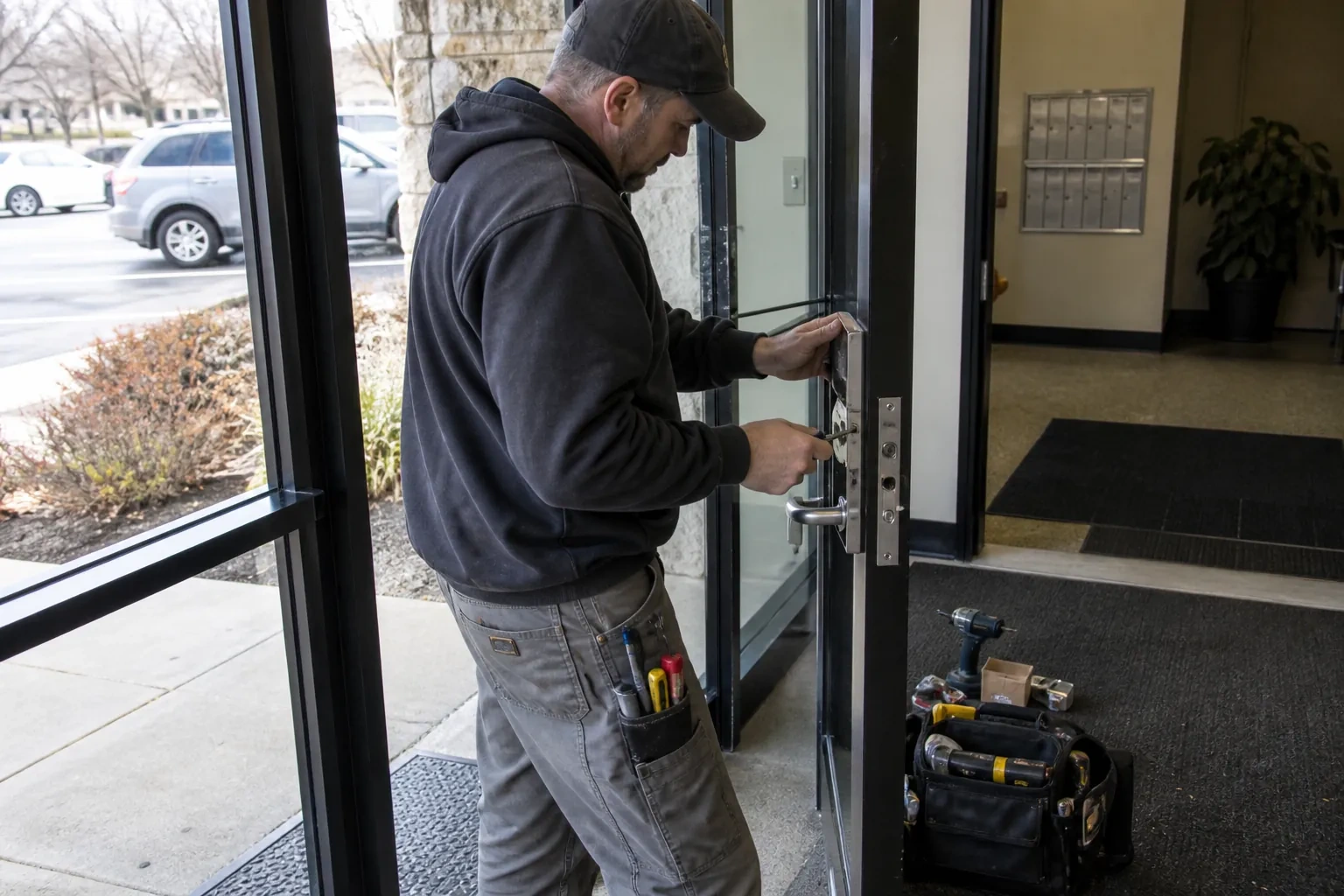
The sequence agreed at the assessment is followed on the day. The locksmith finishes one opening entirely before beginning the next: cylinder out, repinned, refitted, tested with both the new key and the old, and locked again. Only then does the next door come apart. The main entrance is usually left for last and done while someone from the business is present, so there is never a moment when the premises has a door that will not lock. Staff who are working during the visit are handed their new key before the door they use is changed, and a short note goes to anyone off shift about where to collect theirs.
Storefront hardware ready for the salt
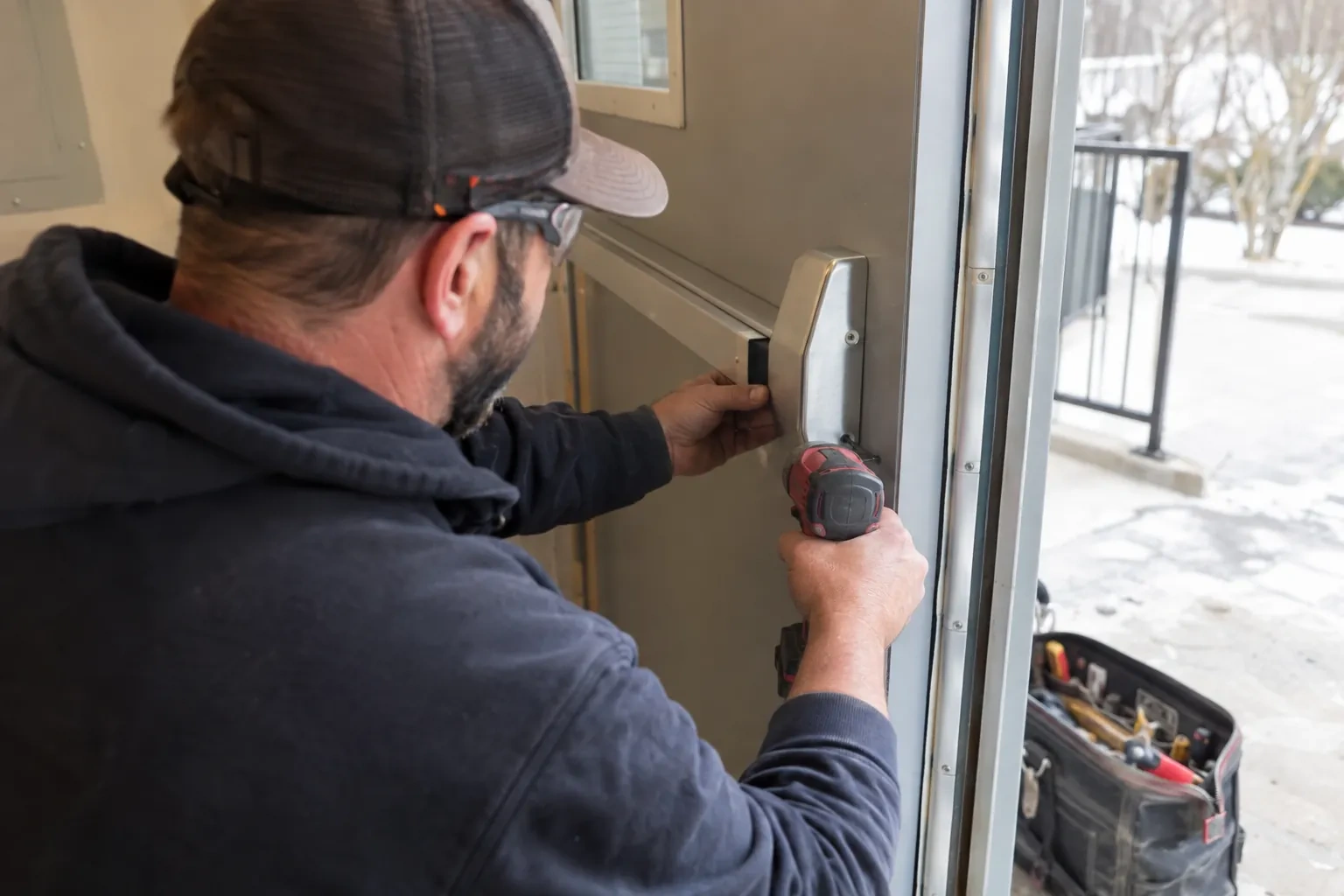
Cylinders on a street-facing door live a hard life: slush, salt spray from the sidewalk plough and a dozen freeze-thaw swings a winter. Each cylinder handled during the rekey is cleaned and dressed with the lubricant approved for that model, a dry graphite, PTFE or specified liquid lubricant applied sparingly, since too much graphite can gum a cylinder just as oil traps grit. Keep it that way with a puff of the same lubricant each autumn and a wipe of the key before it goes in on a slushy morning. A set screw snugged, a cam aligned and a bolt that throws fully are part of the handover, so the rekeyed door also locks more cleanly than it did before.
Commercial Rekeying
In the van
Key stamp set and tags
Rekeyable padlocks
Key gauge and decoder
Commercial pin kit
Plug follower
Commercial Rekeying
What affects the quote
Interchangeable cores versus repinning
Cores swapped with a control key are the shortest work on site, while cylinders that must come apart on a bench take longer. Supplying spare cores for the manager to hold is priced as its own line.
Padlocks, cabinets and mailboxes
Small locks add up. Each padlock repinned to the door key, each cabinet keyed alike and each mailbox cylinder replaced is listed on its own so you can decide what to include.
Distance to the premises
Travel to the site is part of the call-out, and a unit in a downtown plaza and one at the end of a rural industrial road are different trips.
What to have ready
- Can you gather every existing key so they can be read on site?
- Are any of the locks interchangeable cores, and where is the control key?
- How many doors, padlocks and cabinets do you want included, and where are they?
Commercial Rekeying: questions
QuestionsCan the aluminum storefront door on our unit be rekeyed?
Yes. The narrow stile of a storefront door houses a screw-in mortise cylinder secured from the edge, and it unthreads, is repinned and screws back in like any other. What the locksmith watches is the cam: it has to suit the hook or deadbolt mechanism inside the door and sit at the correct depth, or the bolt throws short. Weather-facing cylinders showing salt wear are pointed out so you can decide on replacement.
What do you do with the old keys?
They are gathered, tested at each rekeyed door to confirm they no longer work, and then cut through so they can never be used or copied. You can keep the pieces or the locksmith takes them away. Any old key that still operates a door you chose to leave unchanged is handed back and noted on the chart, so it is clear which keys remain live and which are scrap.
How many keys should we have cut?
Count the people who need each group, add one spare per group for the safe, and stop there. Extra keys cut 'just in case' are the ones that end up unaccounted for. Because the keys are cut to code from the pinning records, more can be produced later to the same standard, so there is no need to stockpile on the day. Restricted keys are ordered by the named signatories when needed.
Related services
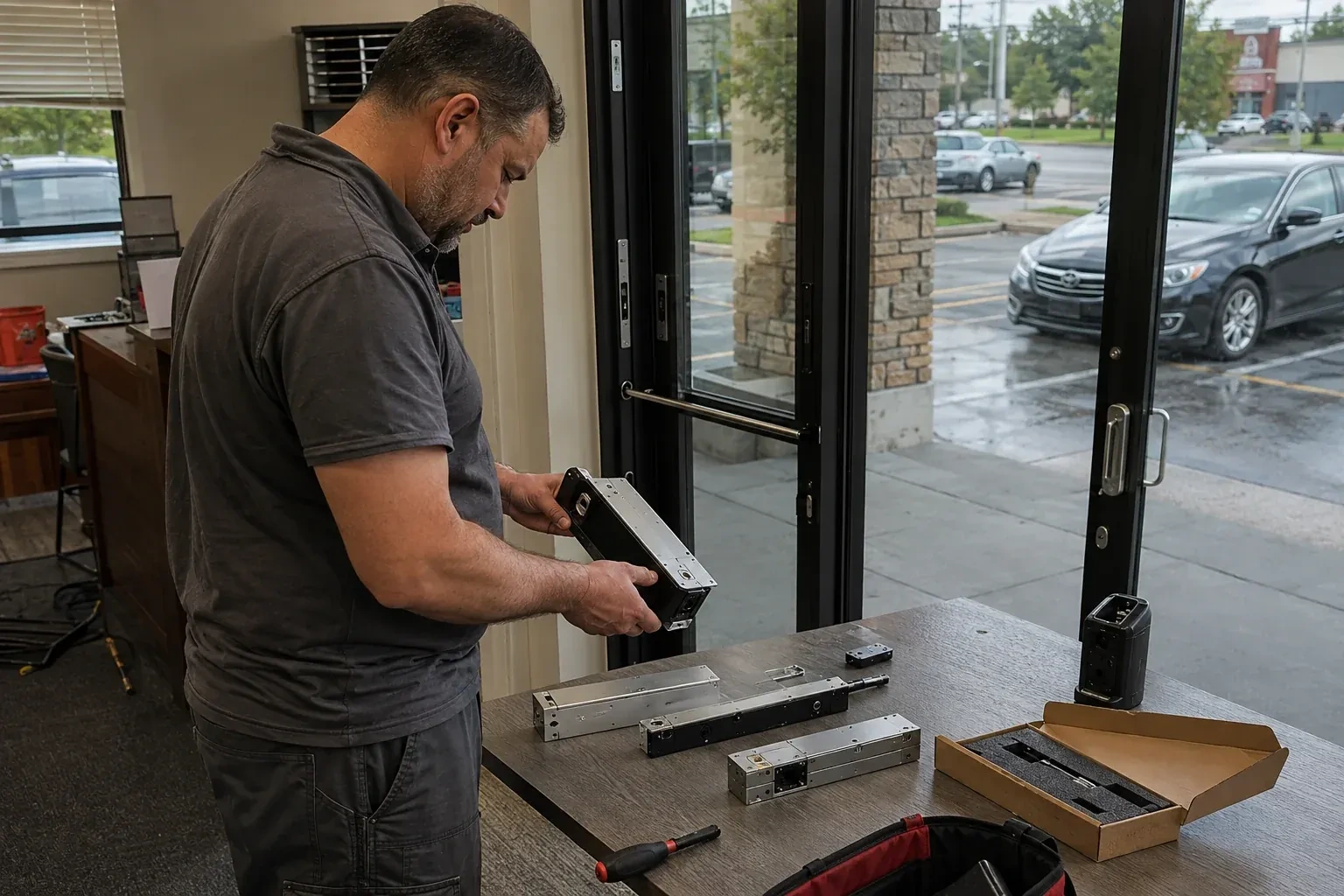
- Access Control InstallationHead office wants a record of who opens the branch and when, tied to an actual name rather than a shared code scrawled on a sticky note taped under the till.
- Panic & Exit HardwareThe fire inspector's note is blunt: the banquet hall's second exit still turns on a deadbolt, and the crowd it is rated to hold needs a door that opens under one motion, no key involved.
- Commercial-Grade Lock ReplacementThe kitchen delivery door gets shouldered open more than a hundred times a shift, and lately the latch slips past the strike plate instead of catching it on the first push.