Commercial · Woolwich
Commercial Rekeying in Woolwich
The renovation is finished and the contractors have gone, along with the loaner keys they used for six weeks.
In plain words
Changing the locks answers today's question; key control keeps it answered. During a commercial rekey the new keys are stamped with a serial code rather than the business name or address, so a dropped key tells its finder nothing. Each key is logged against the person who receives it, and the old keys are collected and cut up on the spot. For premises that want copies kept out of hardware stores, the cylinders can be set up on a restricted keyway, with blanks released only against a signed authorization. What you end up with is a set of locks whose keys you can account for years later.
How the visit goesThe office has been reshuffled twice since the locks were last touched. Reception can open the server room, the warehouse crew has a key to accounting, and the chart that once explained who could open what has not been seen since the move.
Commercial Rekeying
How the visit goes
A walk of every door and lock
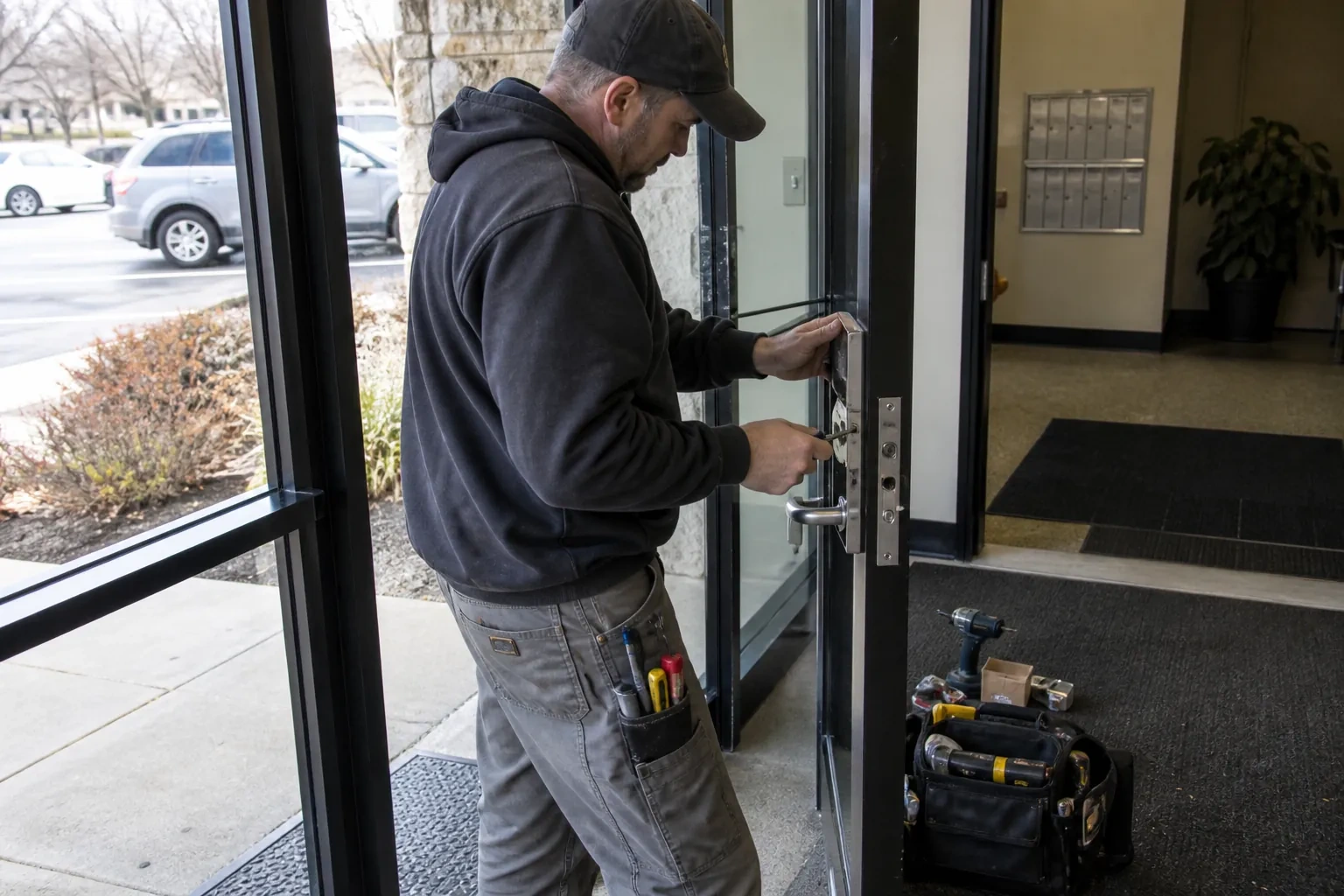
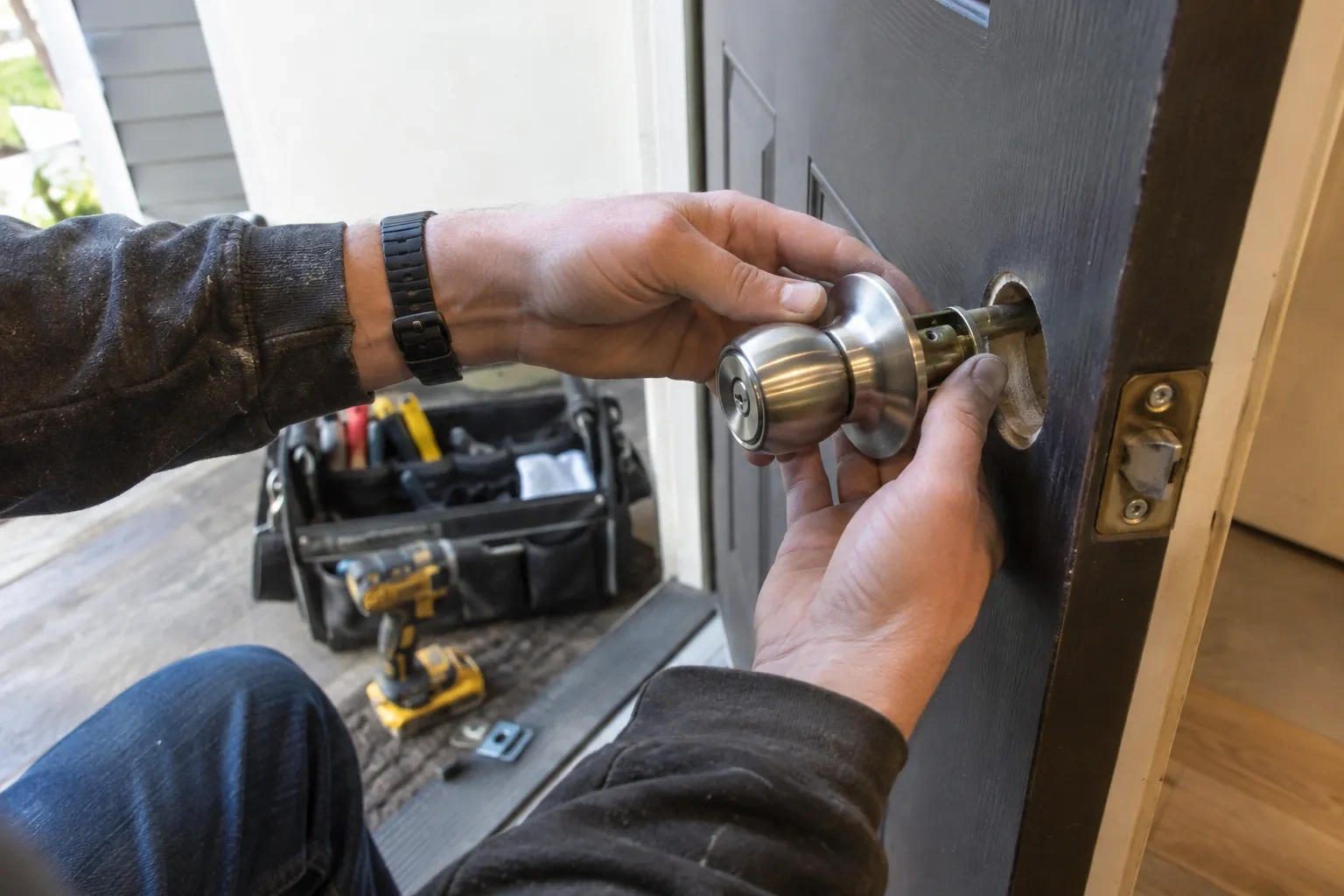
The locksmith walks the premises with you and lists every opening that should be in the plan: the customer entrance, the receiving door, offices, stockroom, cash room, server closet, the mailbox, cabinets, and any padlocks on gates, compounds or roll shutters. Each lock is identified by type, since a mortise cylinder in an aluminum storefront door, a key-in-lever set on an office, a rim cylinder on a back door and an interchangeable core in a stockroom each come out and go back in differently. The keyway and the maker's mark are noted, and the condition of each cylinder is checked, so the list from the walk is what the quote and the work are built on.
Cutting and marking the new keys
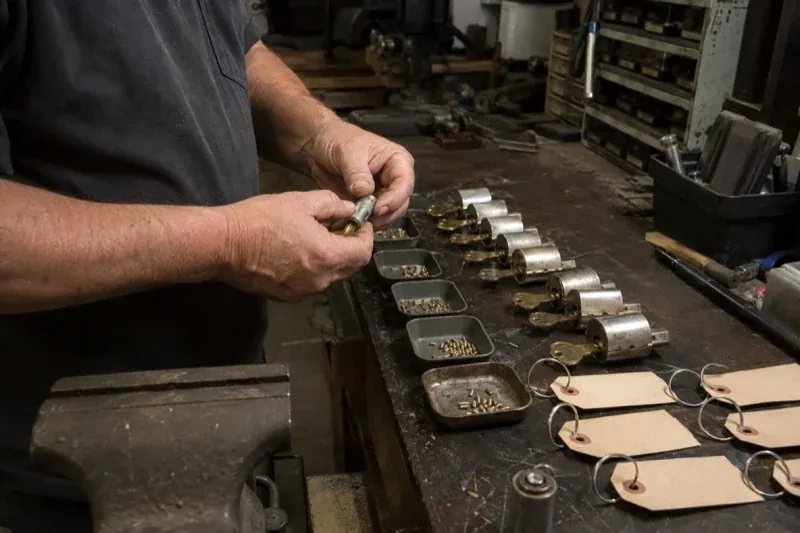
Keys are cut to the new combinations on a code machine rather than traced from another key, so every copy is exact and the tenth key fits as cleanly as the first. Each key is stamped with a short code that means something only on the keying chart; the business name, the address and the word for the door it opens stay off the metal, so a lost key gives nothing away. Keys are counted out by group, tagged, and listed against the names of the people who will carry them. Where the plan uses a restricted keyway, the blanks are drawn against the authorization letter, and that letter is filed with the chart for future orders.
Keys counted into named hands
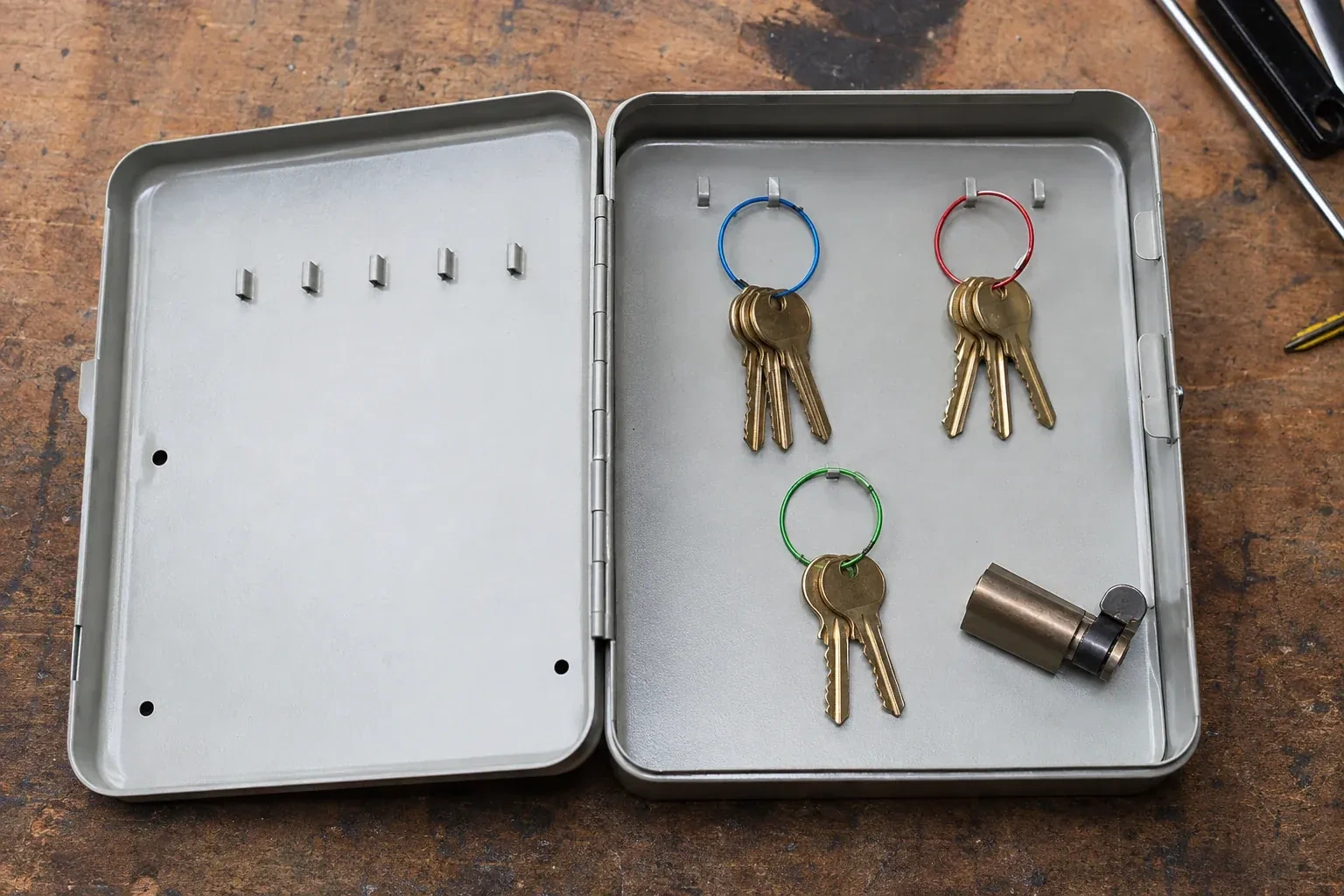
Alongside the chart comes a key register: each key's stamped code, the person it was issued to, the date, and a line for the date it comes back. Filling it in as keys are handed out on the first morning takes ten minutes and pays off at every departure afterwards, because the question becomes 'return key A-07' rather than 'did she have a key?'. Spare keys are counted too and kept somewhere locked rather than in the drawer where the old tangle lived. When the register and the chart agree with the keys on the hook, the business knows exactly who can open it, which is the whole point of the exercise.
Commercial Rekeying
In the van
Key stamp set and tags
Rekeyable padlocks
Key gauge and decoder
Commercial pin kit
Plug follower
Commercial Rekeying
What affects the quote
Doors out of alignment
A door whose cam, strike or closer needs adjusting so the freshly rekeyed cylinder throws the bolt fully is corrected during the visit, and that adjustment is a separate item.
Upgrades chosen on the day
Some businesses use the visit to move to interchangeable cores, add a lockbox for the alarm company or fit a heavier cylinder on the cash room. Each is a separate line you can accept or leave.
Interchangeable cores versus repinning
Cores swapped with a control key are the shortest work on site, while cylinders that must come apart on a bench take longer. Supplying spare cores for the manager to hold is priced as its own line.
What to have ready
- When is the premises quiet or empty enough for the work?
- How many keys do you need cut, and for whom?
- Which doors, if any, belong to the landlord or a shared corridor?
Commercial Rekeying: questions
QuestionsCan the aluminum storefront door on our unit be rekeyed?
Yes. The narrow stile of a storefront door houses a screw-in mortise cylinder secured from the edge, and it unthreads, is repinned and screws back in like any other. What the locksmith watches is the cam: it has to suit the hook or deadbolt mechanism inside the door and sit at the correct depth, or the bolt throws short. Weather-facing cylinders showing salt wear are pointed out so you can decide on replacement.
What do you do with the old keys?
They are gathered, tested at each rekeyed door to confirm they no longer work, and then cut through so they can never be used or copied. You can keep the pieces or the locksmith takes them away. Any old key that still operates a door you chose to leave unchanged is handed back and noted on the chart, so it is clear which keys remain live and which are scrap.
How many keys should we have cut?
Count the people who need each group, add one spare per group for the safe, and stop there. Extra keys cut 'just in case' are the ones that end up unaccounted for. Because the keys are cut to code from the pinning records, more can be produced later to the same standard, so there is no need to stockpile on the day. Restricted keys are ordered by the named signatories when needed.
Related services
- Access Control InstallationHead office wants a record of who opens the branch and when, tied to an actual name rather than a shared code scrawled on a sticky note taped under the till.
- Panic & Exit HardwareThe fire inspector's note is blunt: the banquet hall's second exit still turns on a deadbolt, and the crowd it is rated to hold needs a door that opens under one motion, no key involved.
- Commercial-Grade Lock ReplacementThe kitchen delivery door gets shouldered open more than a hundred times a shift, and lately the latch slips past the strike plate instead of catching it on the first push.