Car keys · Maryhill
Motorcycle & Scooter Keys in Maryhill
The dash lights come on, the starter cranks, and the engine simply refuses to catch, though the same key has run this bike since it was new.
In plain words
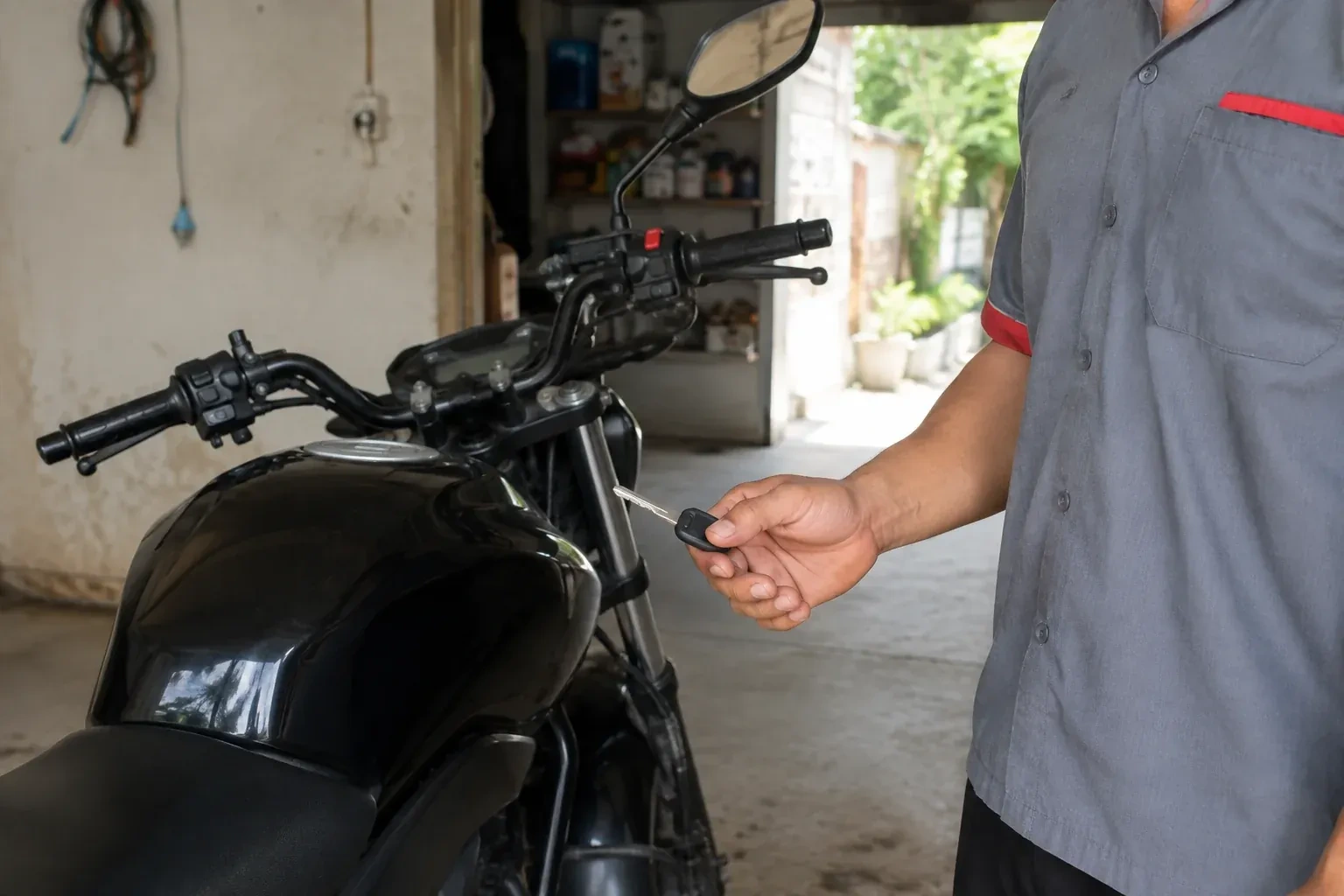
A machine bought without a full history often arrives with one worn key and no idea what, if anything, opens the seat or the fuel cap. Key service in that situation starts by identifying every lock on the machine and testing whichever key came with it against each one, then decoding or cutting whatever the existing key does not already cover. The result is a full, known set of keys for the machine rather than a single blade of uncertain origin.
How the visit goesThe key turns half a rotation in the ignition, catches, then the blade lets go with a small snap. The bow is still in your hand; the rest of it is somewhere inside a lock that now has nothing to grip.
Motorcycle & Scooter Keys
How the visit goes
Any prior work or damage
Before starting, the locksmith asks whether anyone has already tried to open or copy the lock: a hardware-store duplicate that never worked well, a bent key left in the barrel, or an attempt with an improvised tool that scratched the keyway. Any of this changes what is found once the lock is opened up, and knowing about it in advance means the owner is told plainly what was already there rather than assuming new damage happened during the visit. It also sometimes explains a wafer that has been sitting slightly out of place for months.
Freeing a seized steering lock
A steering lock seized by rust, dried grease or months of disuse is worked open with the cleaning method the lock's own maker directs and small, repeated movements rather than a harder push on the key. The locksmith lets the fluid sit, works the lock gently from both directions, and repeats rather than reaching for more force, since a stuck lock forced past its resistance is more likely to break internally than release cleanly. Once it turns freely through its full range, it is cycled several times and dressed with whatever lubricant its maker specifies so it moves easily the next time the machine is parked.
The old key is no longer a concern
Where locks were rekeyed rather than simply cut around, whoever holds an old key is left with a blade that fits the keyway but normally will not turn the plug once it is rekeyed. That is worth mentioning to anyone who previously had access to the machine, such as a former co-owner or a shop that kept a copy on file, since the new combination makes their old key no more useful than a spare piece of metal. Keeping the new keys distinct in a bag or on a labelled ring avoids mixing them up with anything cut before the visit.
Motorcycle & Scooter Keys
In the van
Manufacturer-approved lock cleaner or lubricant
Torx and security bits
Motorcycle key blanks
Pick and tension tools
Replacement transponder chips
Motorcycle & Scooter Keys
What affects the quote
Whether a working key already exists
Whether a working key still exists changes the job considerably: cutting or duplicating from one is the more direct route, while decoding a lock with nothing to reference takes longer and shapes the time reflected in the total.
Number of new keys cut
Keys cut on site are counted individually. Two for a rider and a partner, or several for a household that shares the machine, is reflected directly in the total.
Condition of the existing lock
A clean, well-maintained lock accepts a new key with little extra work. One affected by corrosion or grit may need cleaning or light service before a key can be tested reliably against it.
What to have ready
- Do you have registration or a bill of sale on hand?
- Do you have a key already, even one that works poorly?
- Is the machine's VIN accessible on the frame or paperwork?
Motorcycle & Scooter Keys: questions
QuestionsCan the seat, fuel cap and ignition all be set to the same key?
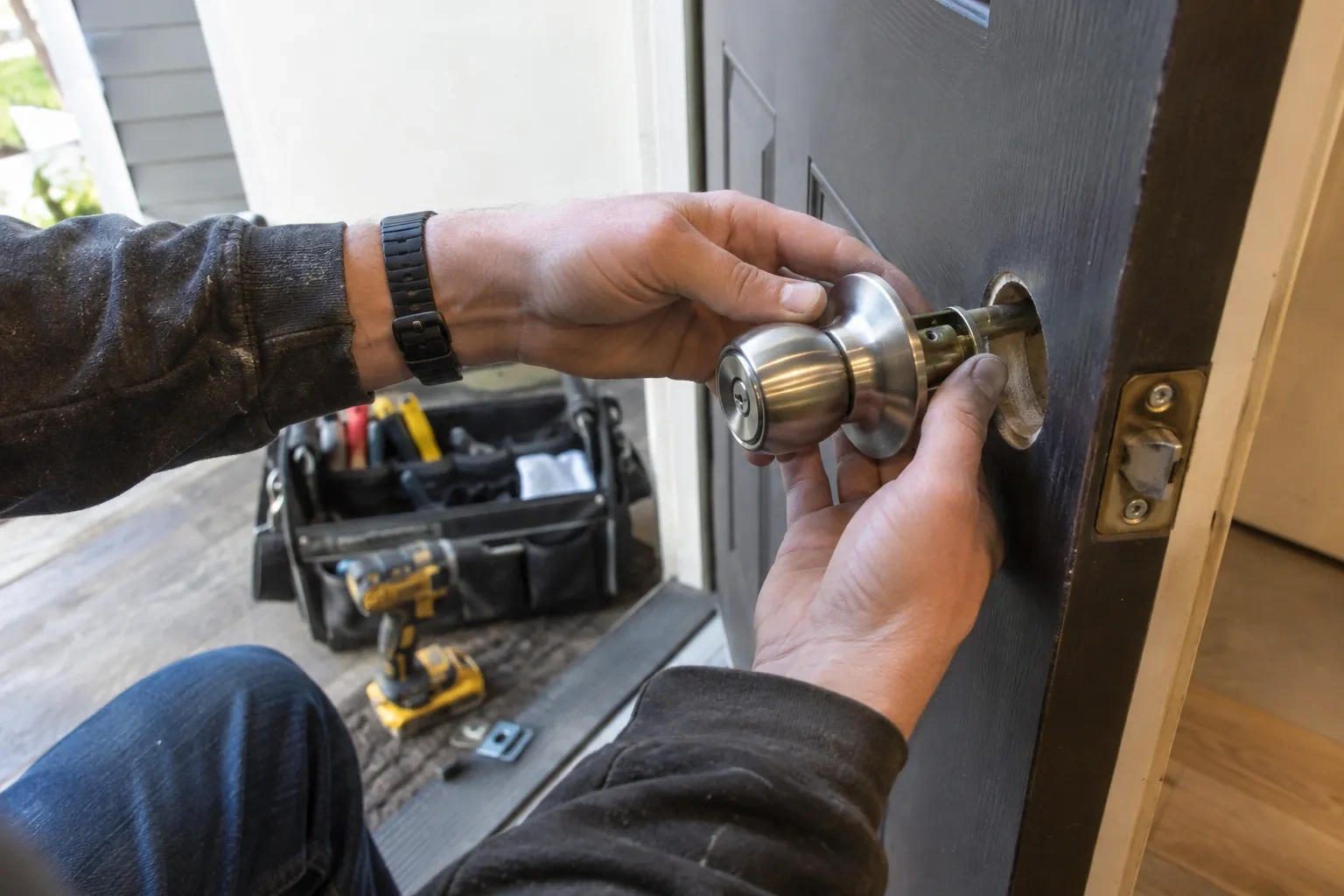
On many serviceable, compatible systems, yes. Each lock is opened and its internal wafers are replaced with a set cut to match the ignition's combination, the same principle used to rekey a house lock applied to smaller hardware. Every lock is tested individually afterward so the finished key is confirmed against each one rather than assumed to work. Locks that were never on the same key from the factory can usually be brought together this way during one visit.
Do you need the vehicle's VIN to make a key?
It helps but is not always required. The VIN can confirm the exact model and sometimes points to a factory key code on file, which speeds up cutting a key without reading the lock from scratch. Where the VIN is not available or does not lead anywhere useful, the locksmith works directly from the lock or an existing key instead, so a missing VIN slows the process rather than stopping it.
Do all motorcycles have an immobiliser these days?
Not all of them. Many machines built in roughly the last two decades carry a transponder chip and an ignition module that checks it, but plenty of smaller-displacement bikes, scooters and older machines still use a purely mechanical lock with no electronic layer at all. The locksmith checks for a coil around the ignition barrel and asks how the engine behaves with the current key to tell which type is on hand.
Related services
- Car Key ReplacementYou bought the car privately and it came with a single key on a shoelace.
- Spare Car Key DuplicationThe proximity fob has ridden in a pocket for years, the range feels shorter than it used to, and a dashboard warning mentioned a battery a while back.
- Key Fob ProgrammingA fob went missing weeks ago somewhere between a coat pocket and a parking lot, and a spare has covered the gap since.