Car keys · St. Jacobs
Transponder Key Programming in St. Jacobs
The blade snapped off flush with the door lock last winter, and the shop that cut a replacement only matched the metal shape.
In plain words
Transponder-based immobilizers became mandatory equipment on new vehicles sold across the country from September 2007 onward, though many manufacturers had already been fitting them for years before that date. Practically, this means most vehicles on the road today, whatever their age, already expect a key that carries a chip rather than a plain metal blade. A locksmith working on an older, pre-transponder vehicle follows a noticeably different process than one working on a car built after that standard became routine.
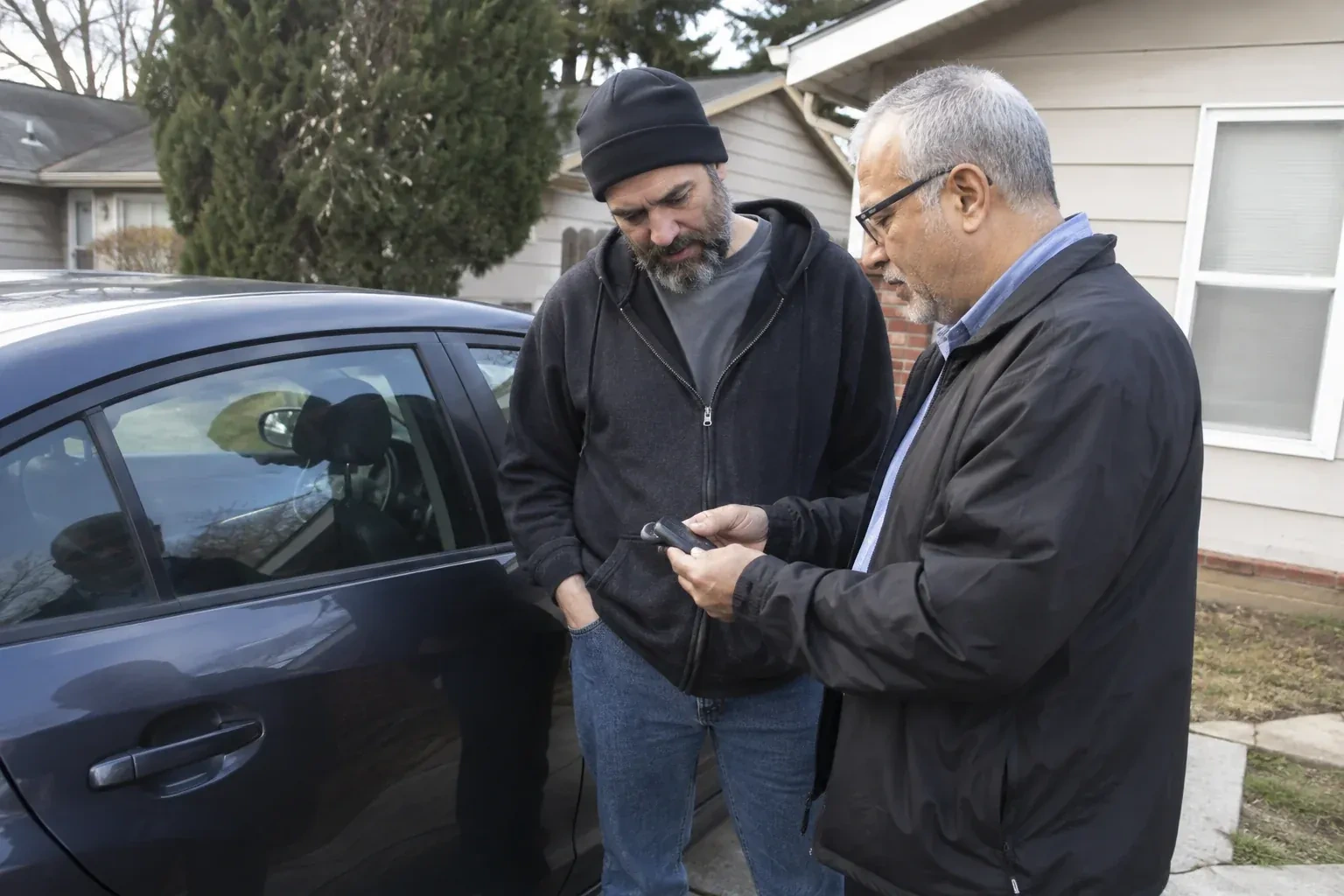
How the visit goesThe car came with a single key when the sale went through, and that key is the only thing standing between the household and being stranded. A second one has been on the list for weeks, quietly moved down every time something more urgent came up.
Transponder Key Programming
How the visit goes
Anything already added to the vehicle
Aftermarket remote starters, alarms, and a used ignition or control module carried over from another vehicle can all leave their own entries in a key list, sitting alongside the factory ones. Before programming anything new, the locksmith asks what has been added or swapped, since a module transplanted from elsewhere sometimes brings a stranger's old key identities with it. Sorting out what belongs to this vehicle and what arrived with a part keeps the finished key list honest rather than cluttered with entries nobody can explain.
Programming through the diagnostic port
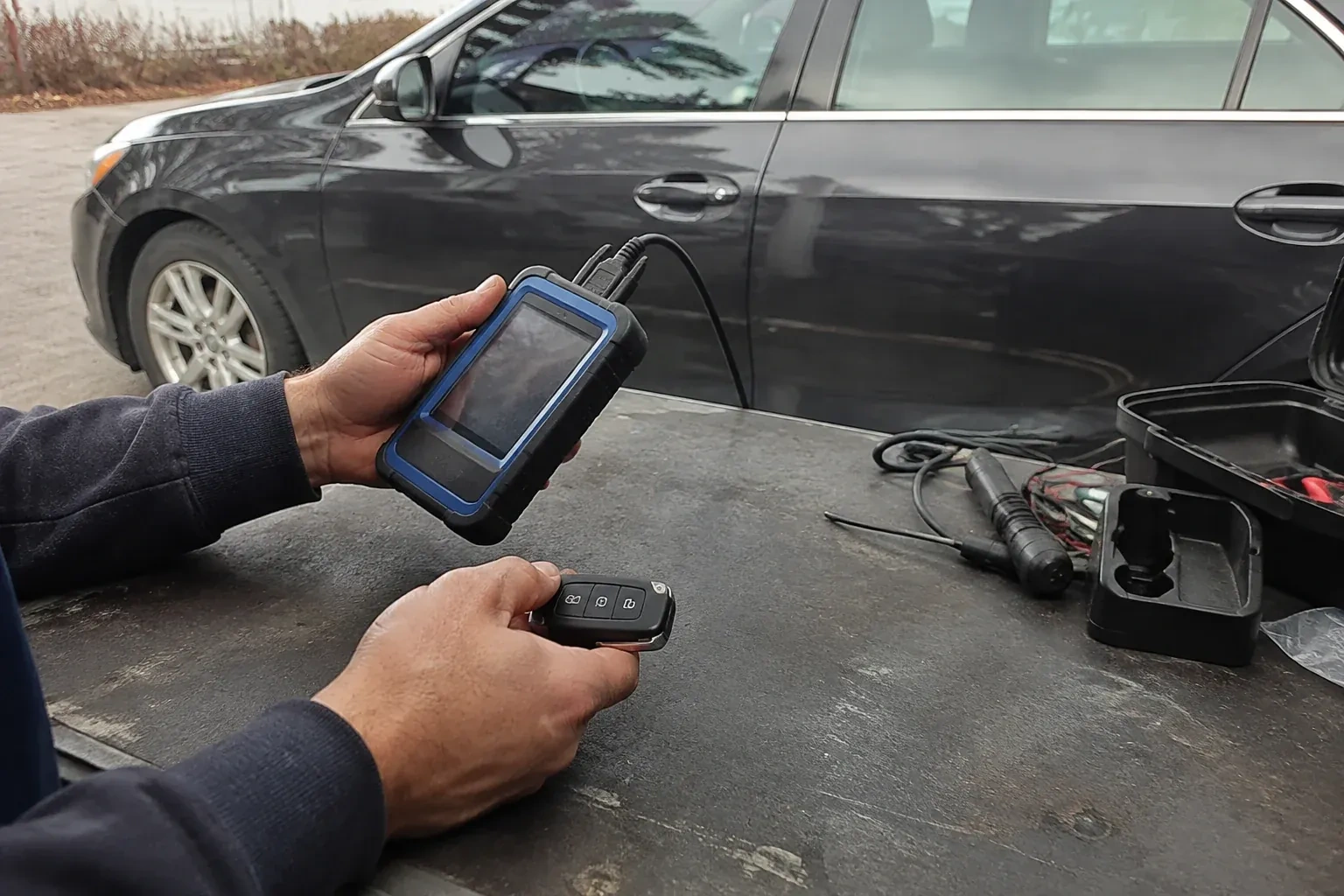
On most vehicles, the new chip's identity is written into the immobilizer through the onboard diagnostic port using equipment built for that vehicle's own protocol. The programmer talks to the vehicle's module in its own language, adds the new key without erasing the others unless asked, and confirms the write was accepted before the tool disconnects. This is the routine path for a spare, an extra key, or a straightforward replacement where at least one working key is still available to authorize the addition.
Leaving with a full set of working keys
The visit ends with every key that should work actually tested in the driver's own hands: the new one, and any older ones that were meant to keep working. Remote functions, if the vehicle has them, are checked at a normal distance, and the emergency insert on a proximity fob is pointed out rather than left for the owner to discover later. Nothing is assumed finished on the strength of a screen reporting success; the engine and the fob both had to prove it directly.
Transponder Key Programming
In the van
VIN reference tool
Diagnostic laptop or tablet
Key cutting machine
Frequency test reader
Bench programming adapter
Transponder Key Programming
What affects the quote
Distance to where the vehicle is parked
Since the visit travels to the vehicle rather than the other way around, how far that is factors into the visit the same way it would for any other call that has to reach a specific location.
Number of vehicles involved in one visit
A household with more than one vehicle needing keys programmed in the same visit is a longer job than a single vehicle, even where the vehicles share a similar system, since each one is read and written separately.
Type of key: blade, remote-head or proximity
A basic transponder blade, a remote-head key with buttons, and a push-button proximity key each involve a different amount of pairing beyond the immobilizer chip itself, which affects both the parts involved and the time the visit takes.
What to have ready
- Is this a lost, stolen, damaged or spare-key situation?
- Where is the vehicle parked right now?
- Do you have the vehicle permit or registration on hand?
Transponder Key Programming: questions
QuestionsWhat does a flashing security light on the dashboard usually mean?
Most commonly it means the immobilizer does not recognize the key currently in the ignition, whether because the chip has failed, the key was never programmed, or the vehicle's module is looking for a different identity than the one it is being shown. It is a useful, specific signal rather than a general warning, and it points fairly directly at a transponder issue.
Can a vehicle from before transponder keys were common have one added now?
It depends on the vehicle and what its factory ignition system supports; some older models can accept an aftermarket immobilizer and matching transponder key, while others were never built with a compatible module at all. This is worth discussing model by model rather than assuming either answer, since the mechanical side of an older ignition is often the easier half of that conversation.
How does a lost or stolen key get made useless?
Its identity is deleted from the immobilizer's memory during the same visit that adds the replacement, using the same connection to the vehicle's module. Once cleared, that key still opens a mechanical lock it happens to fit, but it no longer authorizes the engine, which removes the part of the vehicle that actually matters to whoever might be holding it.
Related services
- Car Key ReplacementYou bought the car privately and it came with a single key on a shoelace.
- Spare Car Key DuplicationThe proximity fob has ridden in a pocket for years, the range feels shorter than it used to, and a dashboard warning mentioned a battery a while back.
- Key Fob ProgrammingA fob went missing weeks ago somewhere between a coat pocket and a parking lot, and a spare has covered the gap since.