Lockouts · Bloomingdale
Seized & Jammed Lock Opening in Bloomingdale
It is the coldest morning of the winter and the key goes halfway into the side door and stops.
In plain words
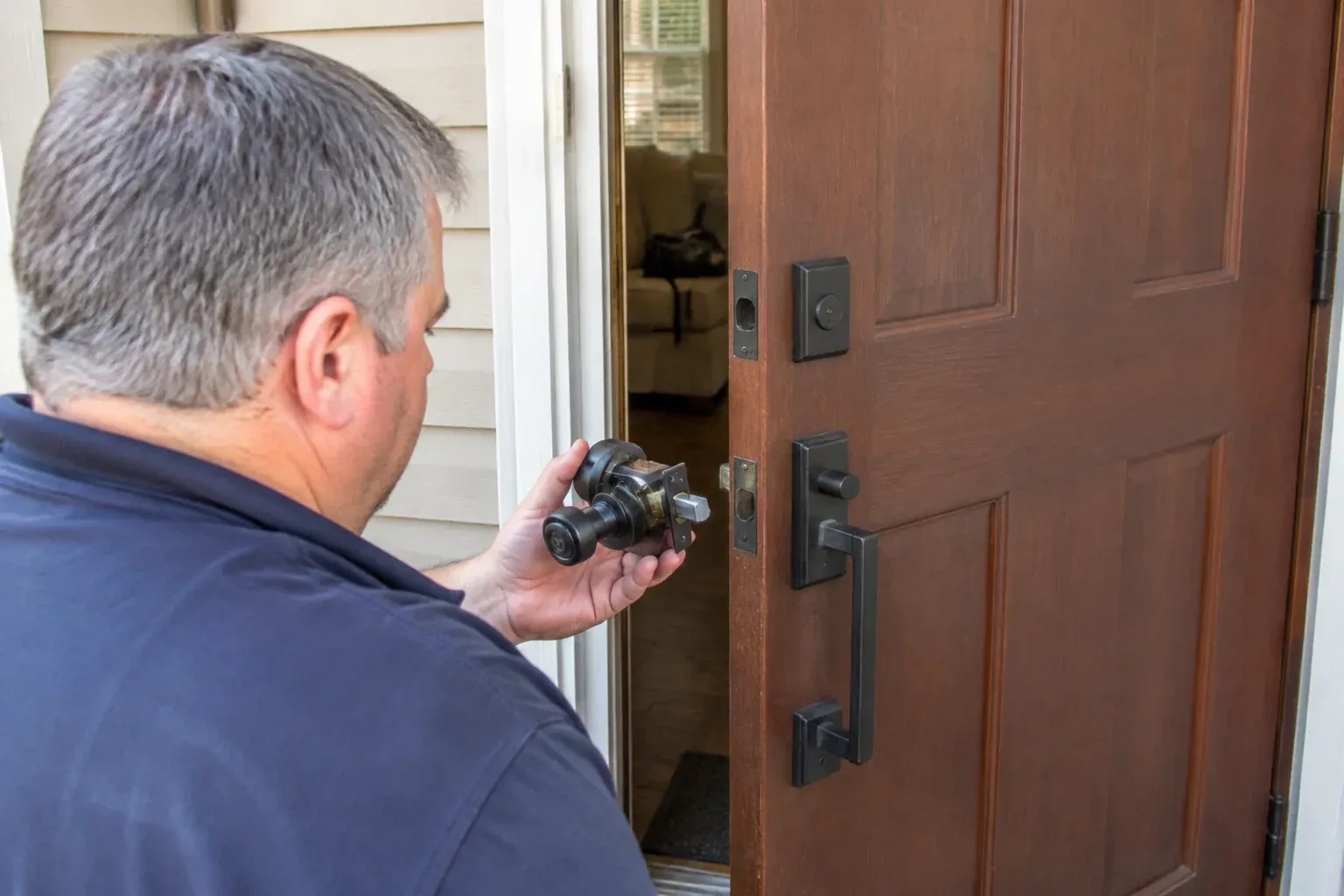
The visit runs in a set order. On the phone you describe what the key does: refuses to turn, spins freely, or works only when the door is pushed. That description tells the locksmith what to bring. At the door, identification and your connection to the property are confirmed. The key, keyway, door fit and strike are examined before anything is forced. The opening uses the least disruptive method the condition allows. Then the failed part is serviced or replaced, the door is adjusted if it caused the jam, and the lock is tested open and closed with every key before the locksmith leaves.
How the visit goesThe key turns a full circle without any resistance and the deadbolt stays exactly where it is. There is no click, nothing moves behind the face of the lock, and the door is as closed as it was before you touched it.
Seized & Jammed Lock Opening
How the visit goes
The key in your hand
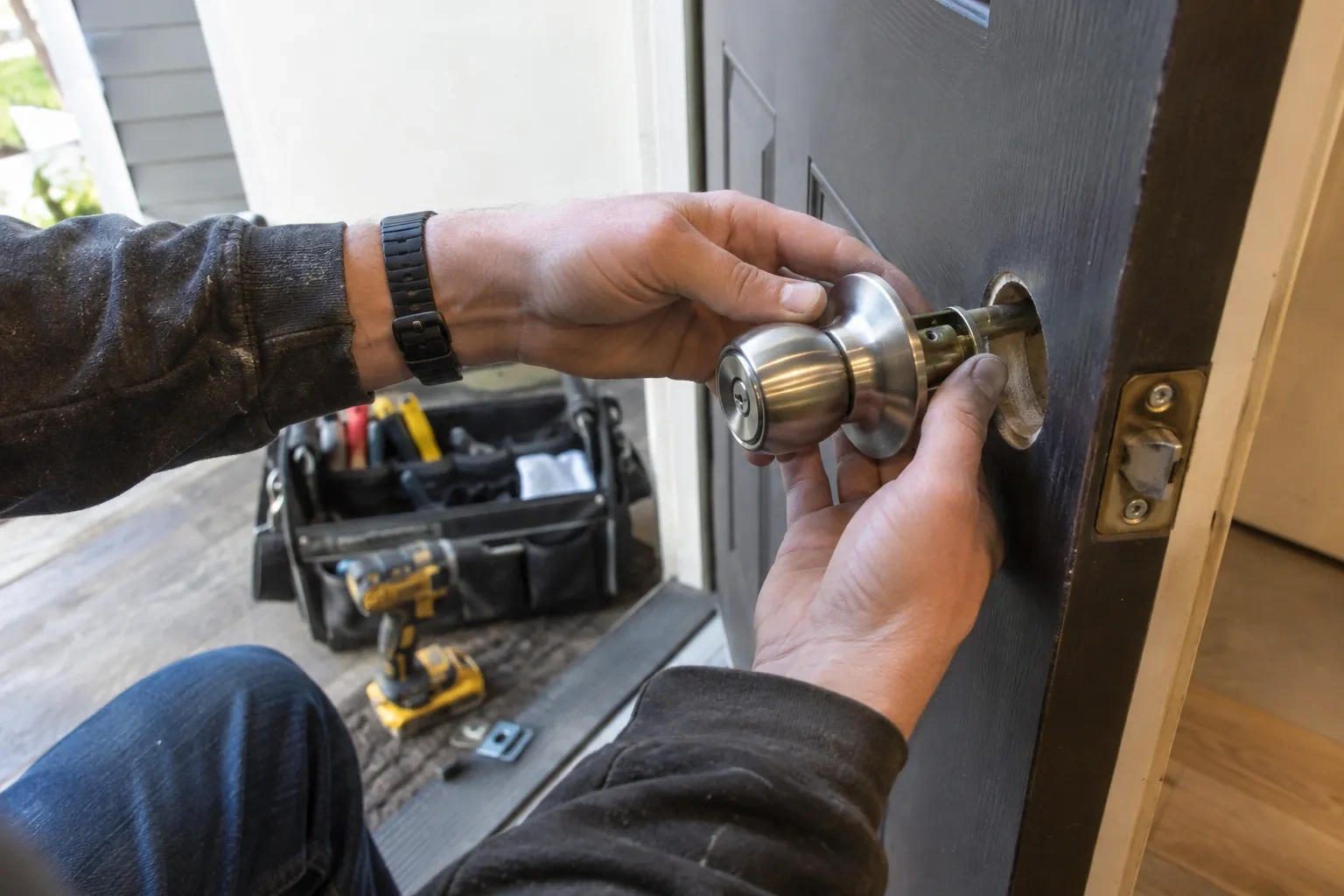
Before blaming the lock, the locksmith looks at the key. A key that has been copied from another copy several times drifts away from the true cuts, a worn key no longer lifts the pins to the shear line, and a bent key binds before it is fully seated. If an original or a rarely used spare exists, it is tried; a lock that opens with the spare has told you the problem. Some cylinders also retain the key until the plug is returned to its neutral position, and a key that seems trapped may simply be a plug that has not come back. A fresh key cut from the code is a common outcome.
Inside a mortise case or lever set
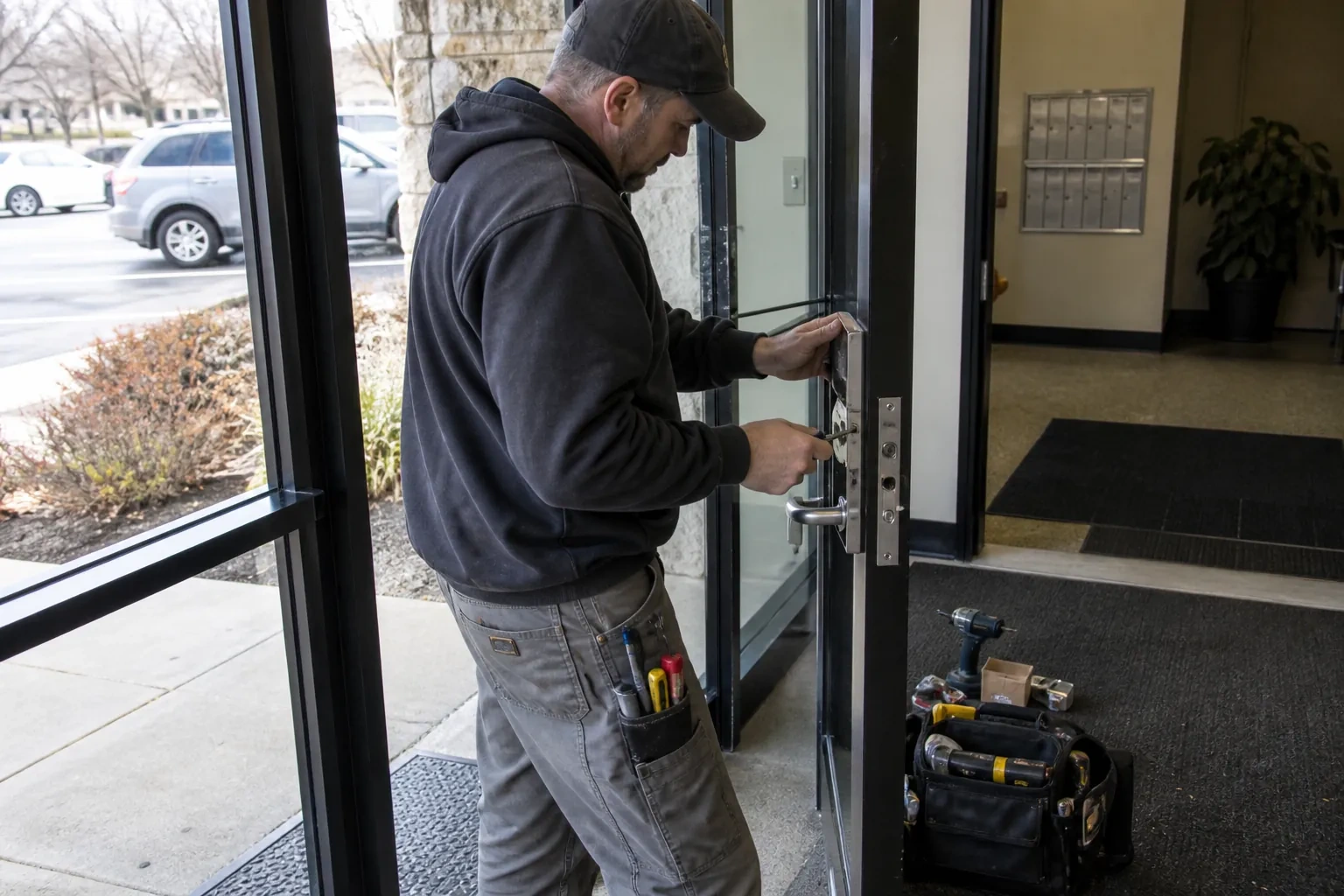
For mortise locks and lever hardware the work moves from the cylinder to the case. The locksmith gets the door open, then removes the trim and draws the case out of the door edge. Inside, a broken lever return spring, a worn hub, a bent spindle or a latch that has lost its spring is replaced with the matching part, and years of dust and hardened grease are cleaned from the contact surfaces before a fresh application of a grease suited to lock mechanisms. The case is reassembled, the spindle and cylinder are refitted, and lever, key and thumb-turn are each tested so the latch and bolt travel fully.
The early warnings to act on
A lock gives notice before it seizes, and now you know the signs. A key that needs a jiggle to seat, a plug that turns stiffly on cold mornings, a bolt that drags in its pocket, a lever that returns slowly, or a key that comes out gritty are all invitations to act while the fix is small. Stop as soon as a key begins to bend; a snapped key turns a service call into an extraction. A puff of dry lubricant or a turn of the strike screws often settles it, and a call while the lock still turns is a shorter visit than a call after it stops.
Seized & Jammed Lock Opening
In the van
Replacement tailpiece or cam
Penetrating lubricant
Lock de-icer
Plug follower and repinning kit
Electronic contact cleaner
Seized & Jammed Lock Opening
What affects the quote
How many locks are affected
One seized side door is the simplest case; a front and back door that both drag, or a storefront with two leaves, adds hardware and time to the visit.
Inside door or outside door
A jammed bedroom or office privacy lock is generally a lighter job than a weather-exposed exterior deadbolt, and a mortise lock on an interior door sits between the two.
Matching finish and keyway
A replacement that has to match an unusual finish or a restricted keyway takes a specific part rather than a stock one, and the quote reflects the part.
What to have ready
- Which side of the building does the door face, and is it near a salted driveway?
- Do you have identification, a lease or a management contact for the property?
- Is there another door you can use in the meantime?
Seized & Jammed Lock Opening: questions
QuestionsCan an old mortise lock in a century home be serviced rather than replaced?
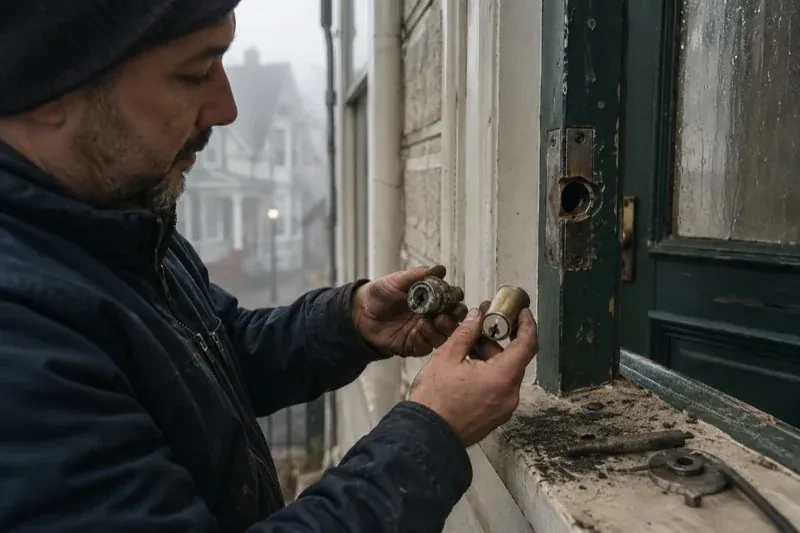
Often, and keeping the original hardware is usually worth trying first, since it fits the door and suits the house, though condition and the availability of matching parts decide whether a repair is realistic. The case comes out of the door edge, the decades of dust and hardened grease are cleaned away, a broken spring or worn hub is replaced with a matching part, and the contact surfaces get fresh grease. If a bit key or a cylinder has worn, a new key is cut or the cylinder rebuilt.
Why did my lock seize when it worked yesterday?
Locks rarely fail in a day; they fail slowly over months and announce it in a morning. Grit and old lubricant build up in the pin stacks until one cold night thickens them past the point the key can overcome, or a door that has been drifting on its hinges finally pins the bolt after a humid week. The wiggle you needed last month was the warning. A lock in this state is usually cleaned or adjusted back to health rather than replaced.
Why do locks jam more in winter?
Two reasons meet in the same season. Freeze-thaw weather sends meltwater into the keyway by day and freezes it by night, and cold thickens any old grease or oil that has been sprayed into the pins. At the same time dry, heated indoor air shrinks wood doors so bolts move in their pockets. Doors on the shaded or windward side get the worst of it. A dry lubricant, a keyhole cover and a check of the strike after the first hard frost take care of most of it.