
Commercial · Floradale
Access Control Installation in Floradale
Head office wants a record of who opens the branch and when, tied to an actual name rather than a shared code scrawled on a sticky note taped under the till.
In plain words
A building already running an intrusion alarm or a camera system gains from an access control installation that speaks to them rather than sitting apart from them: an arm-and-disarm event that lines up with the person who unlocked the door, a camera clip tagged to a specific credential instead of a blank time stamp. The reader and the lock still do the physical work of the opening; the value is in how the record from that opening lines up with everything else the building already tracks.
How the visit goesThe team has grown past the point where one shared key still makes sense. New hires need a way in before a manager arrives, and the current setup cannot tell one person's entry from another's.
Access Control Installation
How the visit goes
Taking stock of what is already on the doors
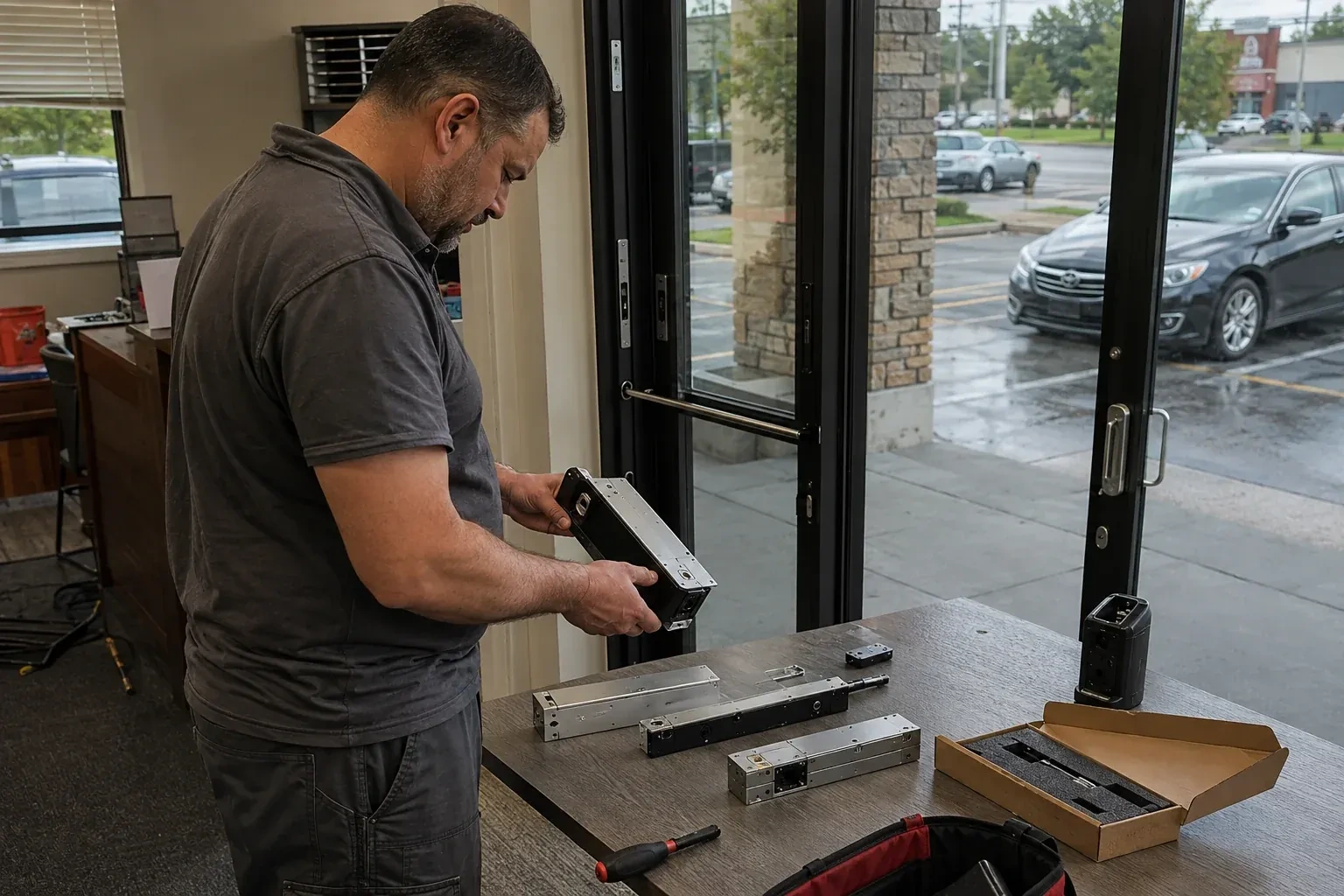
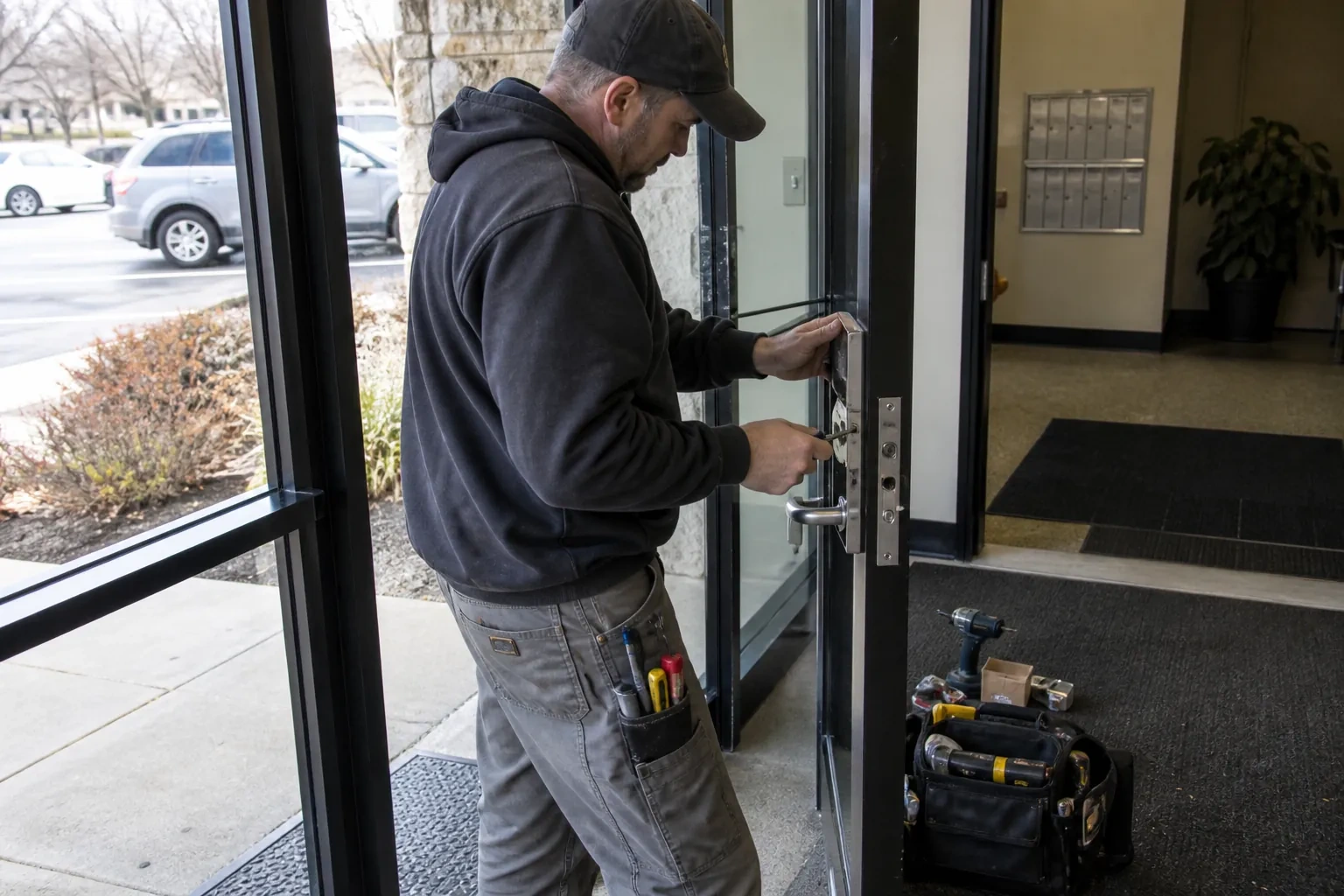
Many commercial buildings already carry some kind of lock, from a plain keyed lever to an older keypad system nobody quite trusts anymore, and the survey starts by identifying exactly what that is. A working mechanical lock can often stay in place as the override once an electric strike or reader is added, saving a step; a failing or unsupported electronic lock is usually replaced outright rather than wired around. The locksmith also checks which doors currently share one key, since that pattern often explains why the business wants individual, revocable credentials in the first place.
Enrolling cards, fobs and codes
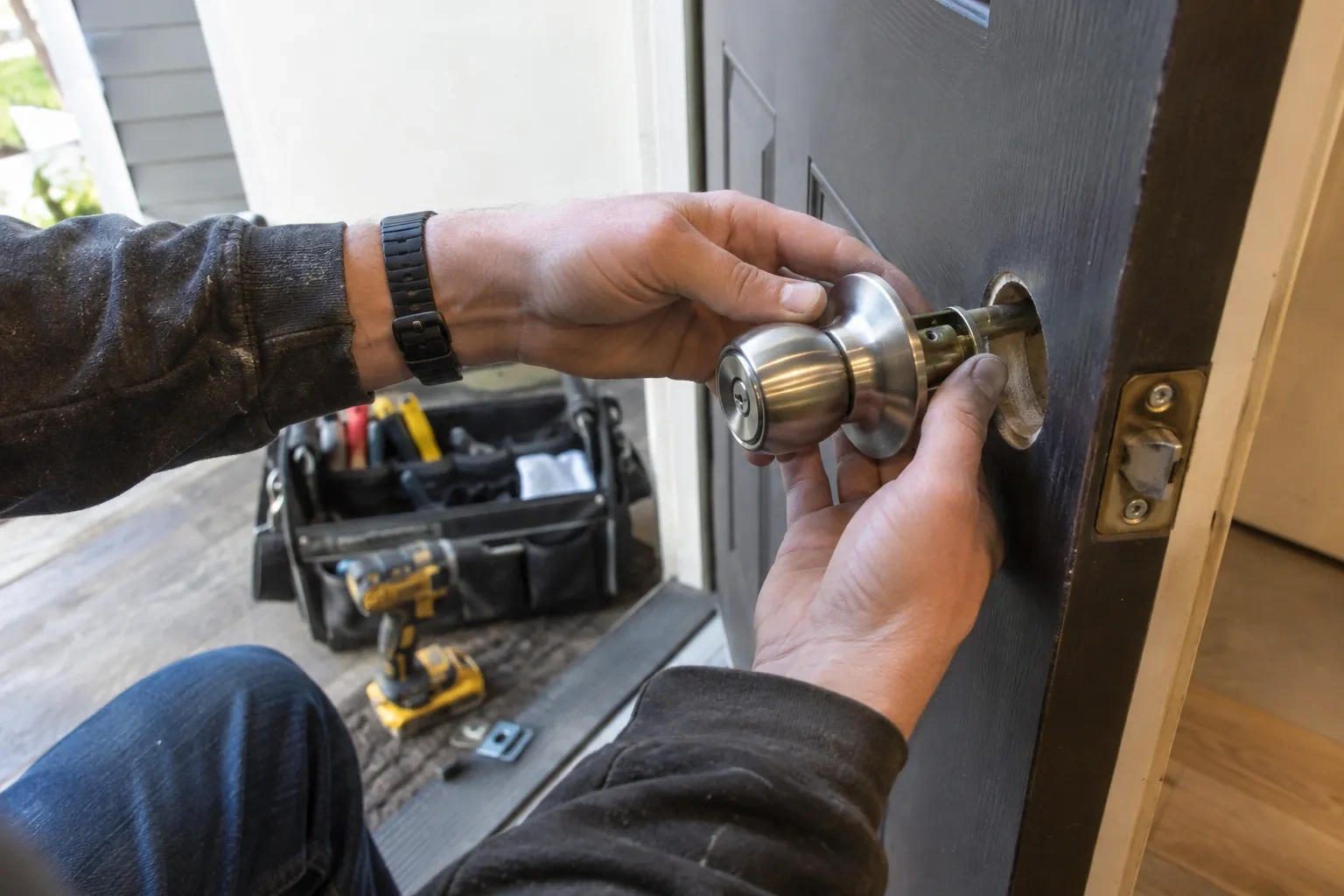
Once schedules and access levels are ready, each credential is enrolled against a name, presented at a reader or entered at an enrolment station, and assigned to the access level matching the person's role. A keypad code is set and confirmed working at the door itself; a card or fob is tested the same way before it is handed over. The locksmith keeps a running list during enrolment so nothing is issued twice and nothing is left unassigned, and hands that list to the administrator as the starting record for the system going forward.
Running the system day to day
From the day the installation is finished, adding or removing a credential is a task the business handles itself, usually in minutes: a new hire is enrolled before their first shift, and someone who has left the company is switched off as soon as it is reported, rather than waiting for a lock to be changed. The administrator account holds this control, and whatever support or maintenance access the installer keeps beyond that is set out at handover rather than assumed either way. Most businesses find this the biggest day-to-day change from a mechanical key: entry stops being tied to a physical object that has to be tracked down and collected.
Access Control Installation
In the van
Door position switches
Low-voltage cable
Keypad readers
Credential cards and fobs
Fire alarm interface relay
Access Control Installation
What affects the quote
Condition of the existing hardware
A working mechanical lock that can stay in place as the override is a simpler starting point than an old, failing keypad system that has to be removed before new hardware goes on in its place.
Network readiness for a networked system
A networked controller needs a suitable connection point and technology-department approval to join the building's network; where that is not already in place, preparing it is a separate piece of the job from the door hardware itself.
Whether any door is also a fire exit
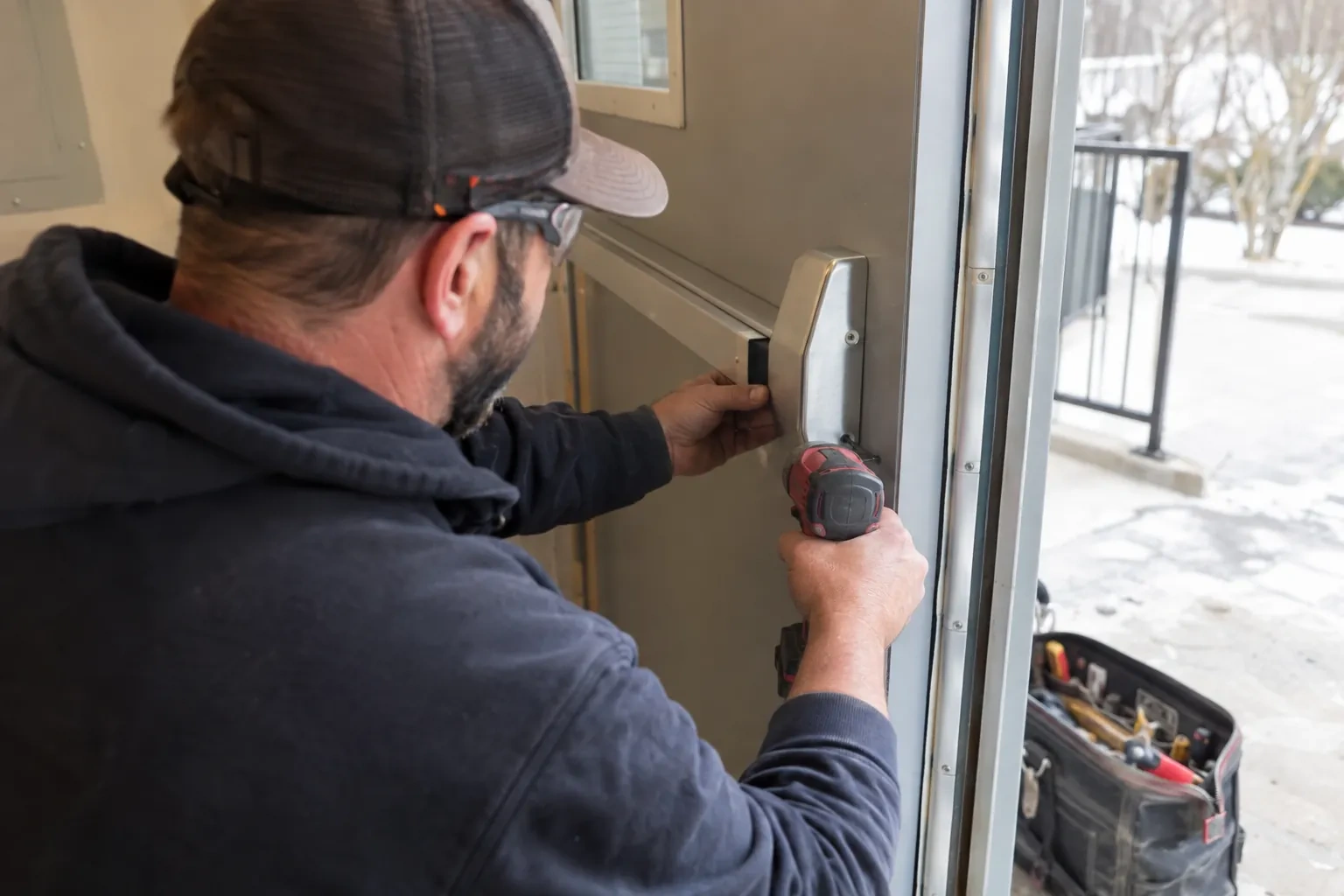
An exit route on a magnetic lock brings its own hardware — a request-to-exit device and a fire alarm tie-in — while an electric strike paired with a free-egress lockset can meet the same one-motion exit without those extra components, unlike a purely interior door.
What to have ready
- Is any of these doors also a fire exit or required exit route?
- Do you expect to add more controlled doors later on?
- What are the doors and frames made of, as far as you know?
Access Control Installation: questions
QuestionsWhat information should we have ready before the visit?
It helps to know which doors should be controlled, roughly how many people will need a credential, whether any of those doors are also fire exits, and who in the business will administer the system afterward. A floor plan or a walk-through on site fills in anything easier to show than describe, and neither is required in advance.
What happens to our records if we later work with a different provider?
That depends on the platform: the entry log and configuration can live on a local controller and its on-site software, which stay with the business regardless of who installed them, or on a cloud-managed subscription service, where continued access and data export follow that provider's own terms. It is worth confirming at the time of installation which arrangement applies, so the business knows what happens to its records if it later changes providers.
Can the system be expanded to more doors later?
Yes. A system installed with some spare capacity in its controller and power supply can usually take another door or two by adding a reader and lock and wiring it back in. A door far from the existing wiring can instead run its own standalone unit. Either way, existing schedules and credentials do not need to be rebuilt from scratch.
Related services
- Master Key System DesignA dental office wants the front desk to lock up at night without ever holding a key to the room where patient records and controlled supplies are stored.
- Panic & Exit HardwareThe fire inspector's note is blunt: the banquet hall's second exit still turns on a deadbolt, and the crowd it is rated to hold needs a door that opens under one motion, no key involved.
- Commercial-Grade Lock ReplacementThe kitchen delivery door gets shouldered open more than a hundred times a shift, and lately the latch slips past the strike plate instead of catching it on the first push.